
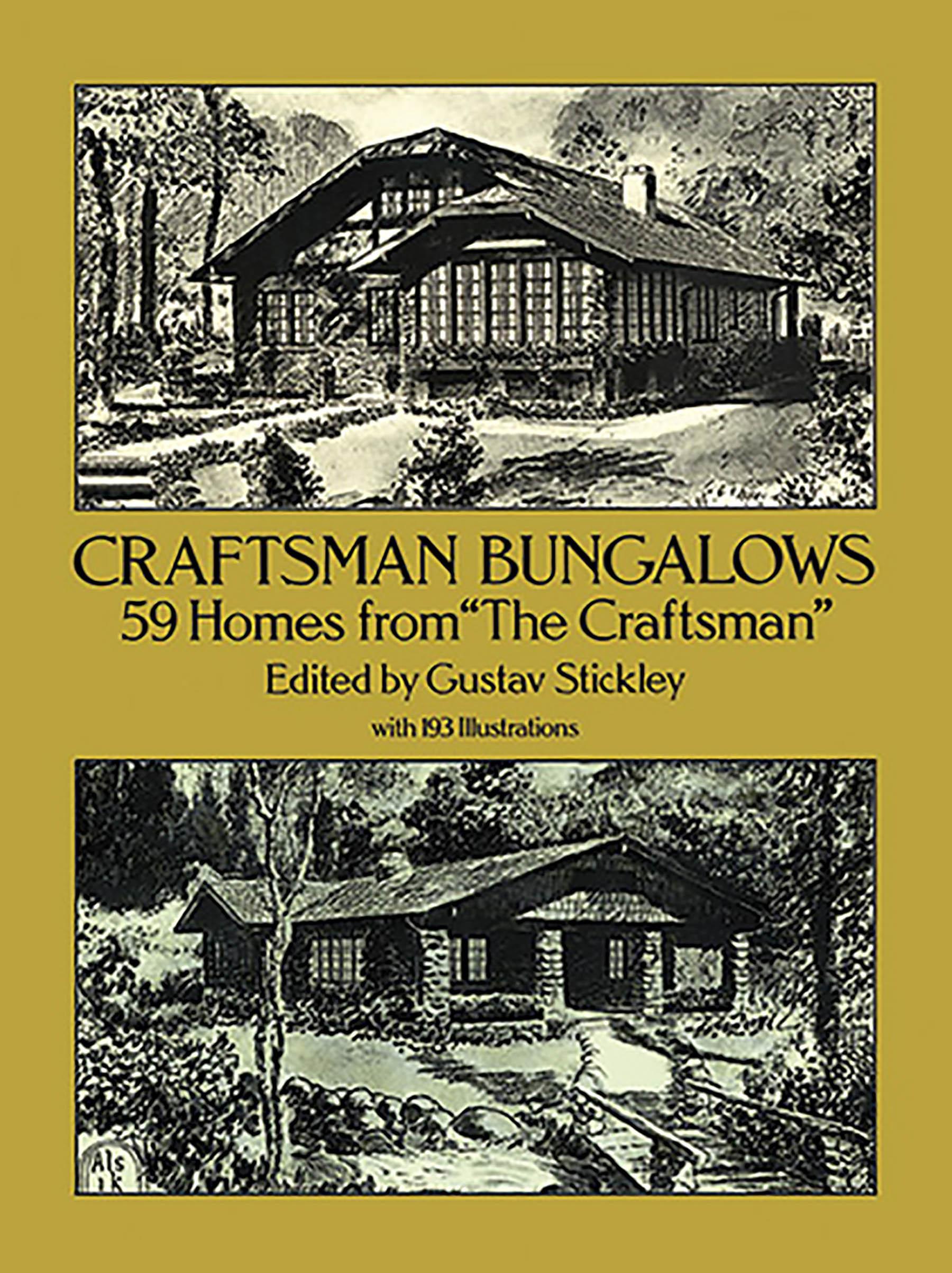
Gustav Stickley (1858–1942) was one of the leading lights of the Arts and Crafts movement in America, an organized effort which sought beauty in simple organic design. His magazine, The Craftsman, was a major forum for the movement's ideas and concepts ― ideas which today are enjoying a renaissance in the design community.
The present publication features 36 articles that appeared in The Craftsman between 1903 and 1916. Included are graphic descriptions of 59 "bungalows" (Most of which were actually spacious, year-round homes), floor plans for 35 dwellings, and many sketches or photographs of houses in landscaped settings.
Characterized by its functional simplicity and integrated with the outdoor environment, the Craftsman home was typically composed of locally obtainable materials. A few of the most modest homes ― according to the magazine ― could even be constructed by persons with a minimum of masonry and carpentry experience. Interiors reflected the simple lines of the exteriors and generally included an ample fireplace (often of fieldstone construction), fireside benches, built-in bookcases and sideboards, plus walls, floors, and ceiling beams decorated ― preferably ― in colors that would harmonize with the structure's natural surroundings.
This inexpensive volume of selected Craftsman articles provides collectors of Americana with a fascinating glimpse of an influential and thoroughly American style of architectural design and construction. Craftsman Bungalows will be welcomed as a primary source of information and ideas by architects, students, and historians of architecture, preservationists, restorers ― anyone interested in the Arts and Crafts movement in America.
Dover (1988) republication of 36 articles from The Craftsman magazine, 1903–1916.
The present publication features 36 articles that appeared in The Craftsman between 1903 and 1916. Included are graphic descriptions of 59 "bungalows" (Most of which were actually spacious, year-round homes), floor plans for 35 dwellings, and many sketches or photographs of houses in landscaped settings.
Characterized by its functional simplicity and integrated with the outdoor environment, the Craftsman home was typically composed of locally obtainable materials. A few of the most modest homes ― according to the magazine ― could even be constructed by persons with a minimum of masonry and carpentry experience. Interiors reflected the simple lines of the exteriors and generally included an ample fireplace (often of fieldstone construction), fireside benches, built-in bookcases and sideboards, plus walls, floors, and ceiling beams decorated ― preferably ― in colors that would harmonize with the structure's natural surroundings.
This inexpensive volume of selected Craftsman articles provides collectors of Americana with a fascinating glimpse of an influential and thoroughly American style of architectural design and construction. Craftsman Bungalows will be welcomed as a primary source of information and ideas by architects, students, and historians of architecture, preservationists, restorers ― anyone interested in the Arts and Crafts movement in America.
Dover (1988) republication of 36 articles from The Craftsman magazine, 1903–1916.
Zahle einfach mit Karte, Klarna, Apple Pay oder Google Pay. Nicht zufrieden? Du hast immer ein 14-tägiges Widerrufsrecht. Lies mehr in unseren AGB. Hast du Fragen, schreib uns eine E-Mail an hello@memmo.org.
Memmo macht das Lernen einfacher – wo auch immer du bist. Bei uns findest du deine Kursbücher und smarte Lerntools an einem Ort: Zusammenfassungen, Quizzes, Podcasts und Lernkarten. Und Ted, dein Lernbuddy, beantwortet alles, was du wissen möchtest. Über 50.000 Studierende lernen bereits hier – gemacht, damit du schneller lernst und weniger Stress hast.
Das könnte dir auch gefallen
Buch kaufen0