
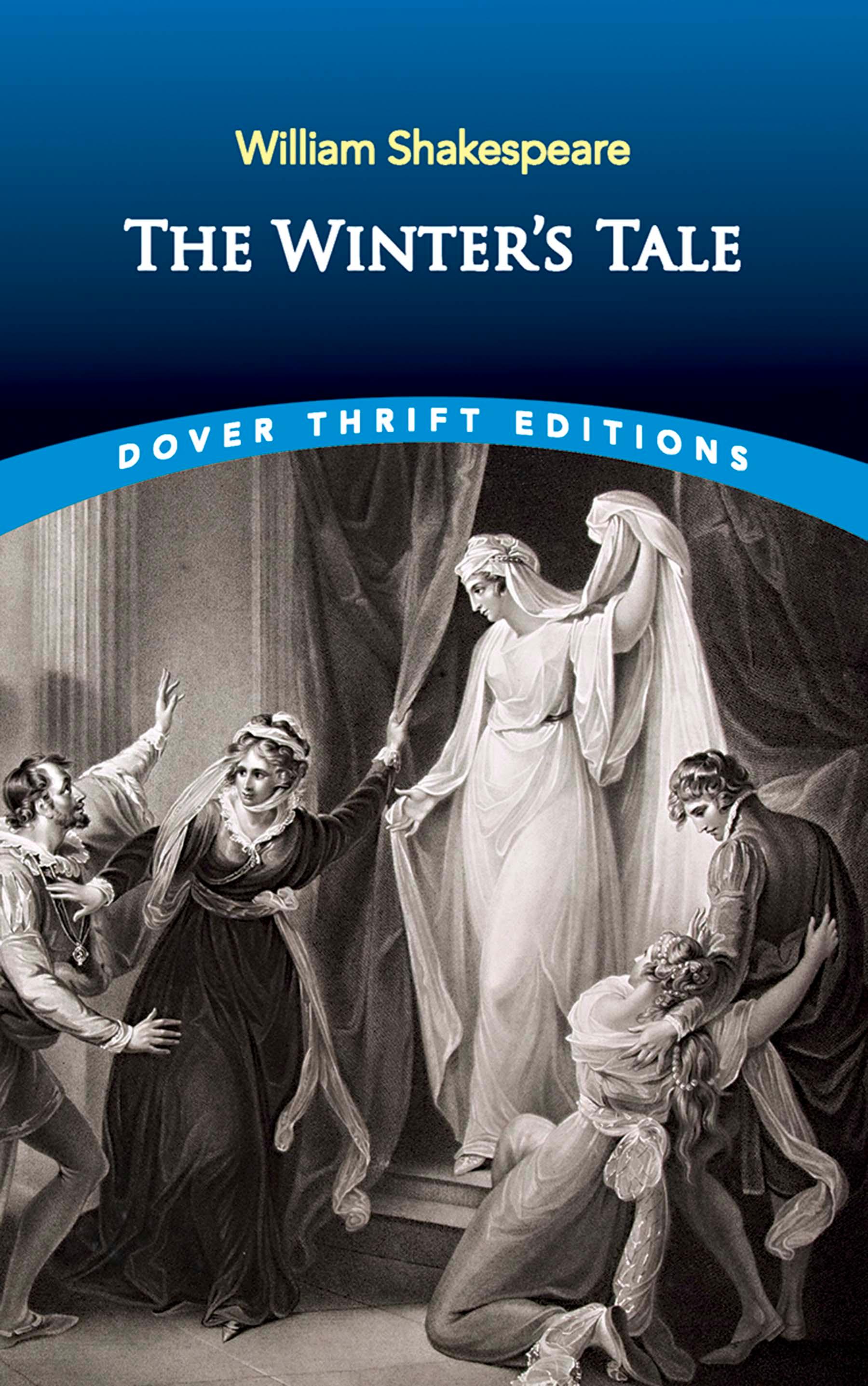
"A merry winter's tale would drive away the time trimly," suggests a character from The Old Wives' Tale, a play by one of Shakespeare's lesser-known contemporaries. And indeed, Elizabethan audiences recognized a "winter's tale" as a fanciful story, rendered all the more appealing by its very improbability. The Bard's version of this traditional entertainment is a charming romantic comedy, but with undertones of tragedy.
Running an emotional gamut from betrayal and broken hearts to a lighthearted romp, the tale begins with the tyrannical actions of a jealous king, whose baseless suspicions of his wife and best friend destroy his own family. The play's second half takes place sixteen years later, when the lovely plot turns toward romance and reconciliation. A sheep-shearing festival provides the occasion for a picturesque assembly of country folk, who contribute some of the play's finest moments with their rustic songs and dances.
Originally presented circa 1611, this tragicomedy abounds in disguises and mistaken identities, courtly intrigue, miracles, and all the theatrical elements that make Shakespeare's works a timeless source of entertainment and enlightenment.
Zahle einfach mit Karte, Klarna, Apple Pay oder Google Pay. Nicht zufrieden? Du hast immer ein 14-tägiges Widerrufsrecht. Lies mehr in unseren AGB. Hast du Fragen, schreib uns eine E-Mail an hello@memmo.org.
Memmo macht das Lernen einfacher – wo auch immer du bist. Bei uns findest du deine Kursbücher und smarte Lerntools an einem Ort: Zusammenfassungen, Quizzes, Podcasts und Lernkarten. Und Ted, dein Lernbuddy, beantwortet alles, was du wissen möchtest. Über 50.000 Studierende lernen bereits hier – gemacht, damit du schneller lernst und weniger Stress hast.