
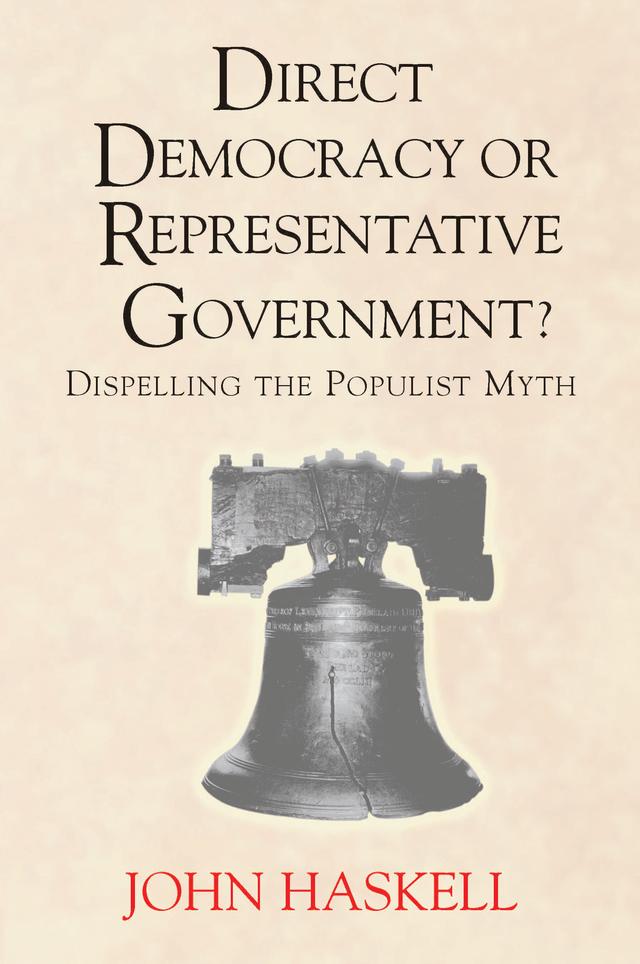
In Direct Democracy or Representative Government? John Haskell develops a devastating critique of direct democracy by exposing the central flaw in populist thinking. Contrary to the beliefs of populist advocates of direct democracy, the popular will cannot be interpreted from the results of the plebiscite. John Haskell presents a defense of representative institutions that brings to bear, in an understandable way, the findings of public choice scholars. Haskell covers the clash of ideas between populists and constitutionalists throughout American history. He follows the development of direct democracy during the twentieth century, especially the dramatically increased use of initiatives and referenda in the last decade. As Americans become increasingly frustrated with the workings of the institutions of government at the state and national levels, and as populist ideas gain greater currency, new forms of direct and participatory democracy making use of the latest computer technology appeal to more people. Haskell speculates as to the likely future direction of direct democracy in the U.S. He describes in clear language the fundamental problem with the premise of populist thinking and explains why direct democracy presents a threat to minority rights and only promises irresponsible and unaccountable governance.
Zahle einfach mit Karte, Klarna, Apple Pay oder Google Pay. Nicht zufrieden? Du hast immer ein 14-tägiges Widerrufsrecht. Lies mehr in unseren AGB. Hast du Fragen, schreib uns eine E-Mail an hello@memmo.org.
Memmo macht das Lernen einfacher – wo auch immer du bist. Bei uns findest du deine Kursbücher und smarte Lerntools an einem Ort: Zusammenfassungen, Quizzes, Podcasts und Lernkarten. Und Ted, dein Lernbuddy, beantwortet alles, was du wissen möchtest. Über 50.000 Studierende lernen bereits hier – gemacht, damit du schneller lernst und weniger Stress hast.
Das könnte dir auch gefallen
Buch kaufen0