
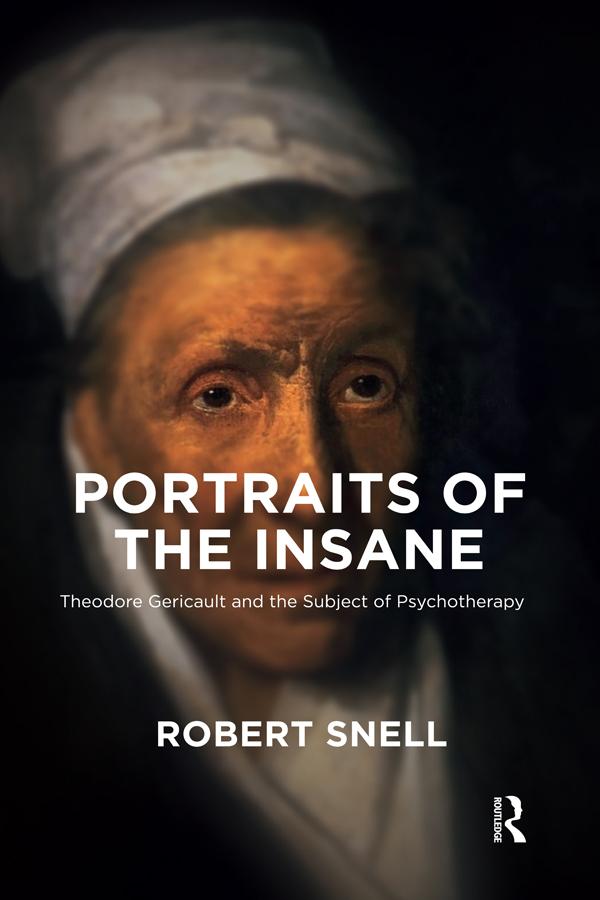
In the early 1820s, in the gloomy aftermath of the 1789 Revolution and the Napoleonic wars, the French Romantic painter Theodore Gericault (1791-1824) made five portraits of patients in an asylum or clinic. No depictions of madness before or since can compare with them for humanity, straightforwardness and immediacy. The portraits challenge us to find responses in ourselves to the face and the embodied mysteries of the other person, and to our own internal (unsconscious, disavowed) otherness: in this sense, Gericault was a "painter-analyst". The challenge could not be more urgent, in our world of suspicion of the stranger, and of the medicalisation of madness. The book sketches the history of this last process, from the Enlightenment through to the Revolution and its public health policies, to the birth of the asylum in its interface with the penal system. But there was also a new medico-philosophical conviction that the mad were never wholly mad, and their suffering and disturbance might best be addressed through relationship and speech.
Zahle einfach mit Karte, Klarna, Apple Pay oder Google Pay. Nicht zufrieden? Du hast immer ein 14-tägiges Widerrufsrecht. Lies mehr in unseren AGB. Hast du Fragen, schreib uns eine E-Mail an hello@memmo.org.
Memmo macht das Lernen einfacher – wo auch immer du bist. Bei uns findest du deine Kursbücher und smarte Lerntools an einem Ort: Zusammenfassungen, Quizzes, Podcasts und Lernkarten. Und Ted, dein Lernbuddy, beantwortet alles, was du wissen möchtest. Über 50.000 Studierende lernen bereits hier – gemacht, damit du schneller lernst und weniger Stress hast.
Das könnte dir auch gefallen
Buch kaufen0