
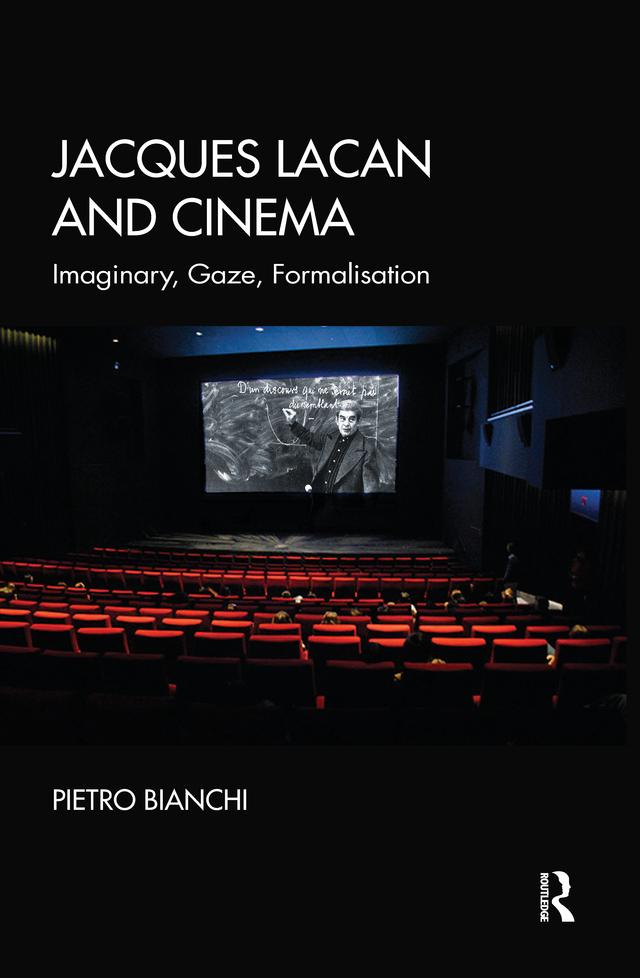
Psychoanalysis has always been based on the eclipse of the visual and on the primacy of speech. The work of Jacques Lacan though, is strangely full of references to the visual field, from the intervention on the mirror stage in the Forties to the elaboration of the object-gaze in the Sixties. As a consequence, a long tradition of film studies used Lacanian psychoanalysis in order to explain the influence of the subject of the unconscious on the cinematographic experience. What is less known is how the late Lacanian reflection on the topic of analytic formalization opened up a further dimension of the visual that goes beyond the subjective experience of vision: not in the direction of a mystical ineffable but rather toward a subtractive mathematisation of space, as in non-Euclidean geometries. In an exhaustive overview of the whole Lacanian theorization of the visual, counterpointed by a confrontation with several thinkers of cinema (Eisenstein, Straub-Huillet, Deleuze, Ranciere), the book will lead the reader toward the discovery of the most counterintuitive approaches of Lacanian psychoanalysis to the topic of vision.
Zahle einfach mit Karte, Klarna, Apple Pay oder Google Pay. Nicht zufrieden? Du hast immer ein 14-tägiges Widerrufsrecht. Lies mehr in unseren AGB. Hast du Fragen, schreib uns eine E-Mail an hello@memmo.org.
Memmo macht das Lernen einfacher – wo auch immer du bist. Bei uns findest du deine Kursbücher und smarte Lerntools an einem Ort: Zusammenfassungen, Quizzes, Podcasts und Lernkarten. Und Ted, dein Lernbuddy, beantwortet alles, was du wissen möchtest. Über 50.000 Studierende lernen bereits hier – gemacht, damit du schneller lernst und weniger Stress hast.
Das könnte dir auch gefallen
Buch kaufen0