
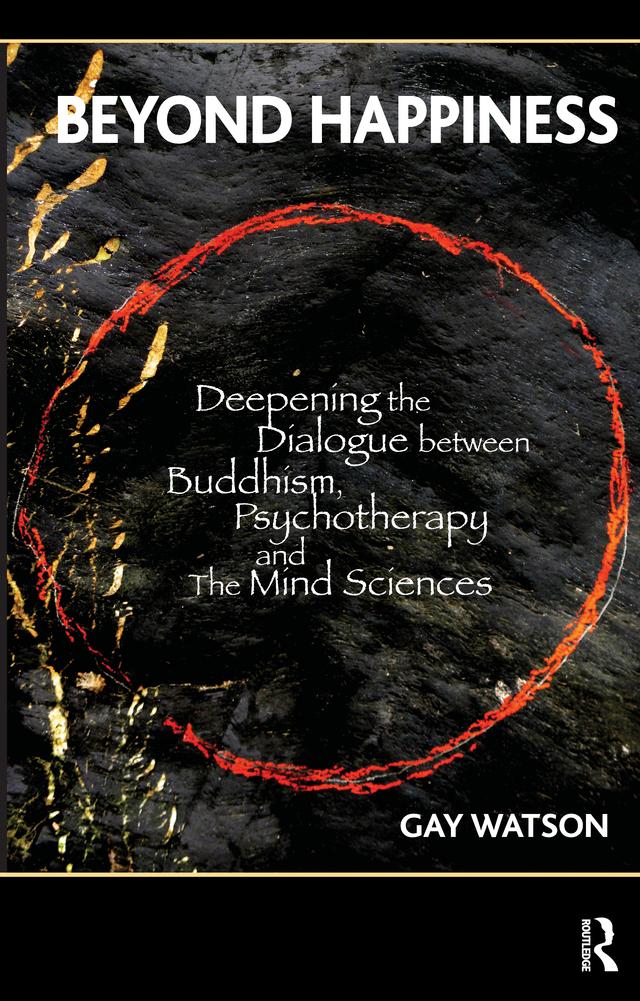
Contemporary mind sciences are revealing facts about the brain and its development that have much to teach us about health and happiness. For a greater part of the twentieth century, psychology and psychotherapy had little to say to one another. Despite Freud's early wish to consider psychoanalysis a science, academic psychology had scant time for what it considered at best an "art" form, while psychotherapy found little interest in psychology's lack of concern with subjective experience. Since the rise of the interdisciplinary fields of cognitive science, neuroscience and consciousness studies and the growth of new technologies, all this has changed. This new knowledge challenges many of our common sense and long-held beliefs. It has important implications for education and health, and illuminates both natural optimal development and the way later therapy may heal early insufficiency. What is perhaps more surprising is that these findings engage with the "first" psychology, that of Buddhism.
Zahle einfach mit Karte, Klarna, Apple Pay oder Google Pay. Nicht zufrieden? Du hast immer ein 14-tägiges Widerrufsrecht. Lies mehr in unseren AGB. Hast du Fragen, schreib uns eine E-Mail an hello@memmo.org.
Memmo macht das Lernen einfacher – wo auch immer du bist. Bei uns findest du deine Kursbücher und smarte Lerntools an einem Ort: Zusammenfassungen, Quizzes, Podcasts und Lernkarten. Und Ted, dein Lernbuddy, beantwortet alles, was du wissen möchtest. Über 50.000 Studierende lernen bereits hier – gemacht, damit du schneller lernst und weniger Stress hast.
Das könnte dir auch gefallen
Buch kaufen0