
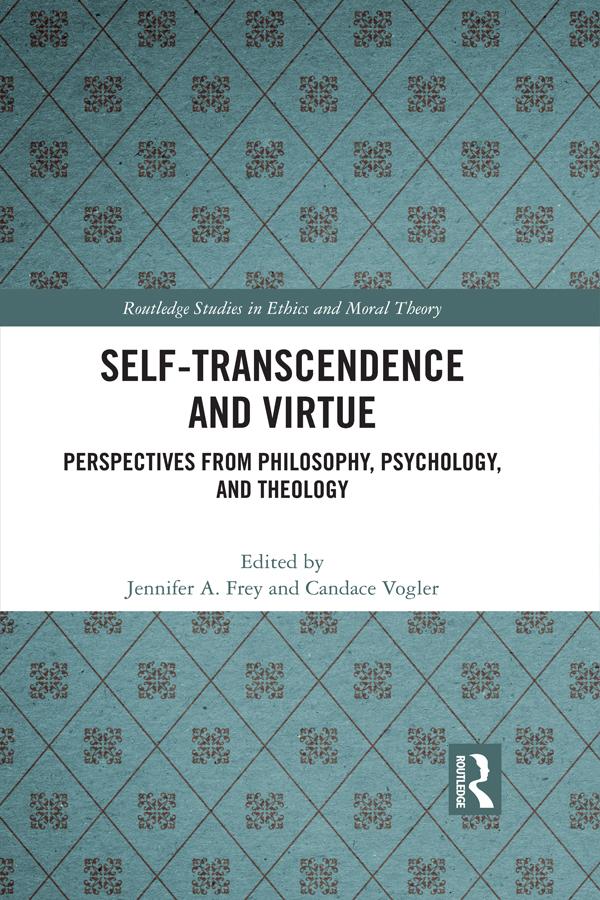
Recent research in the humanities and social sciences suggests that individuals who understand themselves as belonging to something greater than the self—a family, community, or religious or spiritual group—often feel happier, have a deeper sense of purpose or meaning in their lives, and have overall better life outcomes than those who do not. Some positive and personality psychologists have labeled this location of the self within a broader perspective "self-transcendence." This book presents and integrates new, interdisciplinary research into virtue, happiness, and the meaning of life by re-orienting these discussions around the concept of self-transcendence.
The essays are organized around three broad themes connected to self-transcendence. First, they investigate how self-transcendence helps us to understand aspects of the moral life as it is studied within psychology, including the development of wisdom, the practice of moral praise, and psychological well-being. Second, they explore how self-transcendence is linked to virtue in different religious and spiritual traditions including Judaism, Islam, Christianity, Buddhism, and Confucianism. Finally, they ask how self-transcendence can help us theorize about Aristotelean and Thomist conceptions of virtue, like hope and piety, and how this helps us to re-conceptualize happiness and meaning in life.
Zahle einfach mit Karte, Klarna, Apple Pay oder Google Pay. Nicht zufrieden? Du hast immer ein 14-tägiges Widerrufsrecht. Lies mehr in unseren AGB. Hast du Fragen, schreib uns eine E-Mail an hello@memmo.org.
Memmo macht das Lernen einfacher – wo auch immer du bist. Bei uns findest du deine Kursbücher und smarte Lerntools an einem Ort: Zusammenfassungen, Quizzes, Podcasts und Lernkarten. Und Ted, dein Lernbuddy, beantwortet alles, was du wissen möchtest. Über 50.000 Studierende lernen bereits hier – gemacht, damit du schneller lernst und weniger Stress hast.