
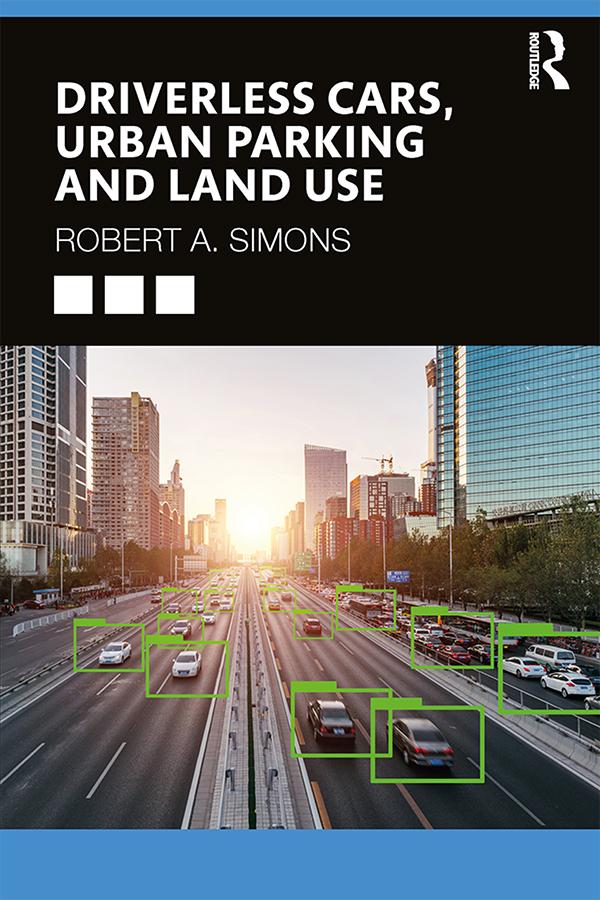
The subject of driverless and even ownerless cars has the potential to be the most disruptive technology for real estate, land use, and parking since the invention of the elevator. This book includes new research and economic analysis, plus a thorough review of the current literature to pose and attempt to answer a number of important questions about the effect that driverless vehicles may have on land use in the United States, especially on parking. Simons outlines the history of disruptive technologies in transport and real estate before examining how the predicted changes brought in by the adoption of driverless technologies and decline in car ownership will affect our urban areas. What could we do with all the parking areas in our cities and our homes and institutional buildings that may no longer be required? Can they be sustainably repurposed? Will self-driving cars become like horses, used only by hobbyists for recreation and sport?
While the focus is on parking, the book also contains the views of real estate economists, architects, and policymakers and is essential reading for real estate developers and investors, transport economists, planners, politicians, and policymakers who need to consider the implications of a future with more driverless vehicles. Fasten your seat belt: like it or not, driverless cars will begin to change the way we move about our cities within ten years.
Zahle einfach mit Karte, Klarna, Apple Pay oder Google Pay. Nicht zufrieden? Du hast immer ein 14-tägiges Widerrufsrecht. Lies mehr in unseren AGB. Hast du Fragen, schreib uns eine E-Mail an hello@memmo.org.
Memmo macht das Lernen einfacher – wo auch immer du bist. Bei uns findest du deine Kursbücher und smarte Lerntools an einem Ort: Zusammenfassungen, Quizzes, Podcasts und Lernkarten. Und Ted, dein Lernbuddy, beantwortet alles, was du wissen möchtest. Über 50.000 Studierende lernen bereits hier – gemacht, damit du schneller lernst und weniger Stress hast.