
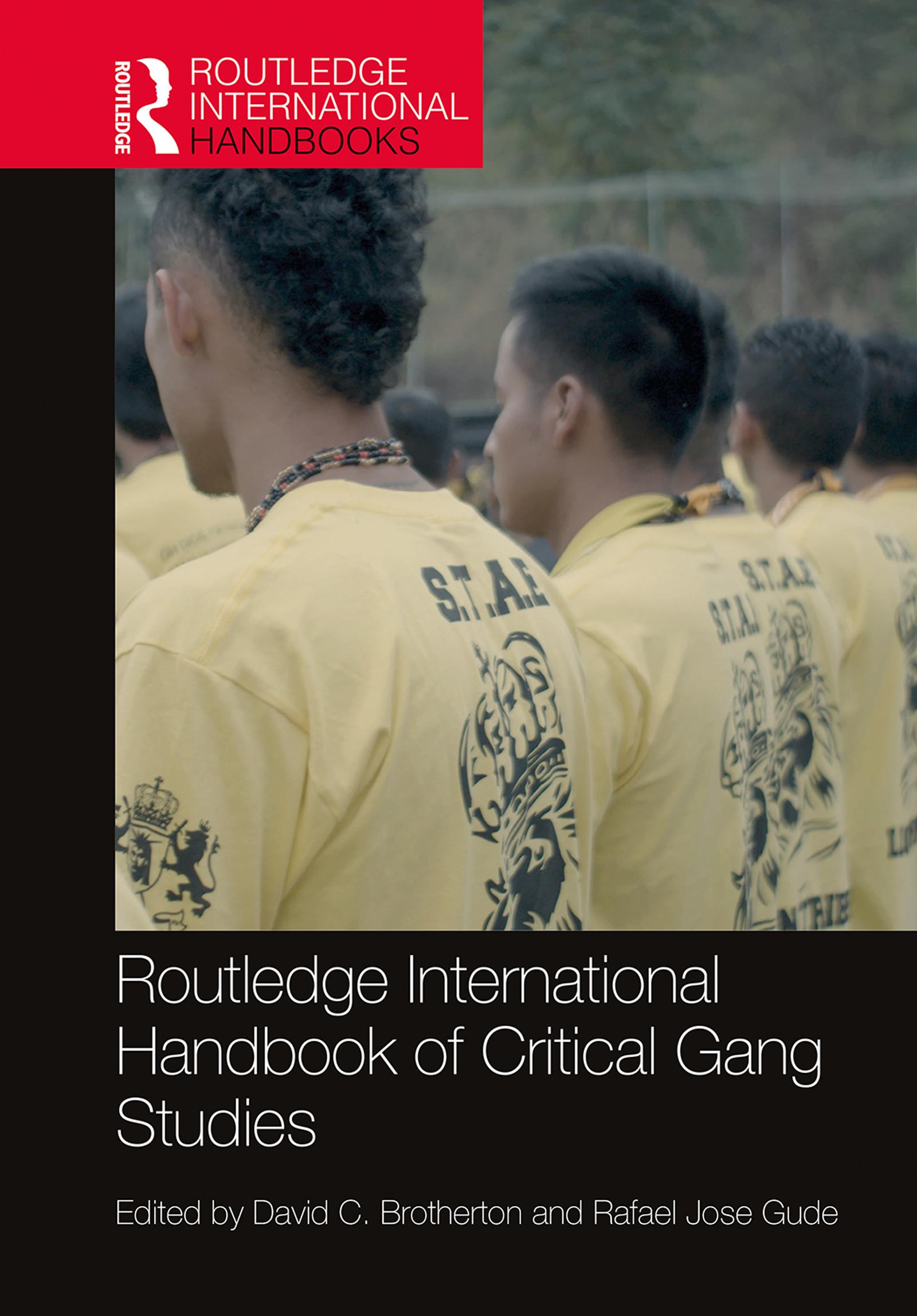
Routledge International Handbook of Critical Gang Studies is rooted in the instability, inequality and liquidity of the post-industrial era. It understands the gang as a complex and contradictory phenomenon; a socio-historical agent that reflects, responds to and creates a certain structured environment in spaces which are always in flux. International in scope and drawing on a range of sociological, criminological and anthropological traditions, it looks beyond pathological, ahistorical and non-transformative approaches, and considers other important factors that produce the phenomenon, whether the historically entrenched racialized power structure and segregation in Chicago; the unconstrained state-abandoned development of favelas in Brazil; or the colonization, displacement and dependency of people in Central America. This handbook reflects and defines the new theoretical and empirical traditions of critical gang studies. It offers a variety of perspectives, including:
- A view of gangs that takes into consideration the global context and appearance of the "gang" in its various forms and stages of development;
- An appreciation of the gang as a socio-cultural formation;
- A race-ethnic and class analysis of the gang that problematizes domain assumptions such as the "underclass";
- Gender variations of the gang phenomenon with a particular emphasis on their intersectional properties;
- Relations between gangs and the political economy that address the dominant mode of production and exchange;
- Treatments that demonstrate the historically contingent nature of gangs and their changes across time;
- The contradictory impact of gang repressive policies, institutions and practices as part of a broader discussion on the nature of the state in specific societies; and
- Critical methodologies on gangs that involve discussions of visual and textual representations and the problematics of data collection and analysis.
Authoritative, multi-disciplinary and international, this book will be of interest to criminologists, sociologists and anthropologists alike, particularly those engaged with critical criminology/sociology, youth crime, delinquency and global social inequality. The Handbook will also be of interest to policy makers and those in the peacebuilding field.
Zahle einfach mit Karte, Klarna, Apple Pay oder Google Pay. Nicht zufrieden? Du hast immer ein 14-tägiges Widerrufsrecht. Lies mehr in unseren AGB. Hast du Fragen, schreib uns eine E-Mail an hello@memmo.org.
Memmo macht das Lernen einfacher – wo auch immer du bist. Bei uns findest du deine Kursbücher und smarte Lerntools an einem Ort: Zusammenfassungen, Quizzes, Podcasts und Lernkarten. Und Ted, dein Lernbuddy, beantwortet alles, was du wissen möchtest. Über 50.000 Studierende lernen bereits hier – gemacht, damit du schneller lernst und weniger Stress hast.