
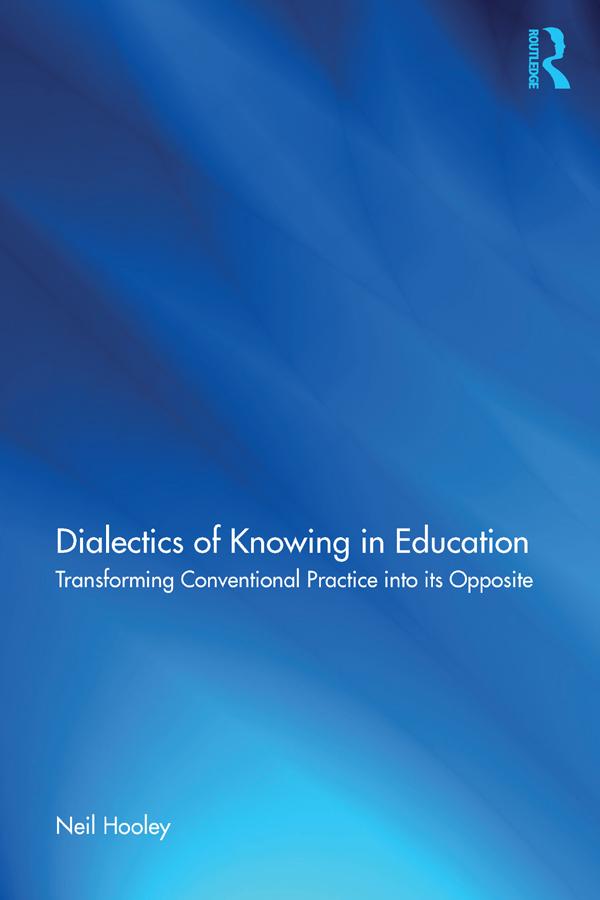
Dialectics of Knowing in Education strengthens the philosophical basis of formal education that has been weakened by neoliberalism over the past 30 years. It theorises and encourages human existence based on social action, culture, inquiry and creativity so that citizens in democratic association can formulate their own understandings of the world and be their own philosophers of practice.
Under neoliberal capitalism, formal education has become a key economic driver and factor for all countries, but has exacerbated social division and inequality. This has led to an increased pressure on education systems to emphasise individual gain and prosperity at the expense of community care and concern. Drawing on the work of Dewey, Mead, Freire and Biesta, the author argues that formal education at all levels must be transformed so that it does not seek to impose knowledge and truth, but situates knowledge as being constructed by democratic learning circles of staff, students and citizens.
Focusing particularly on the notion of praxis and specific issues involving Indigenous, feminist and practitioner knowing, this book will help scholars, practitioners and policy makers to transform their education theories and practices in ways that encourage democracy, emancipation, social action, culture, inquiry and creativity.
Zahle einfach mit Karte, Klarna, Apple Pay oder Google Pay. Nicht zufrieden? Du hast immer ein 14-tägiges Widerrufsrecht. Lies mehr in unseren AGB. Hast du Fragen, schreib uns eine E-Mail an hello@memmo.org.
Memmo macht das Lernen einfacher – wo auch immer du bist. Bei uns findest du deine Kursbücher und smarte Lerntools an einem Ort: Zusammenfassungen, Quizzes, Podcasts und Lernkarten. Und Ted, dein Lernbuddy, beantwortet alles, was du wissen möchtest. Über 50.000 Studierende lernen bereits hier – gemacht, damit du schneller lernst und weniger Stress hast.