
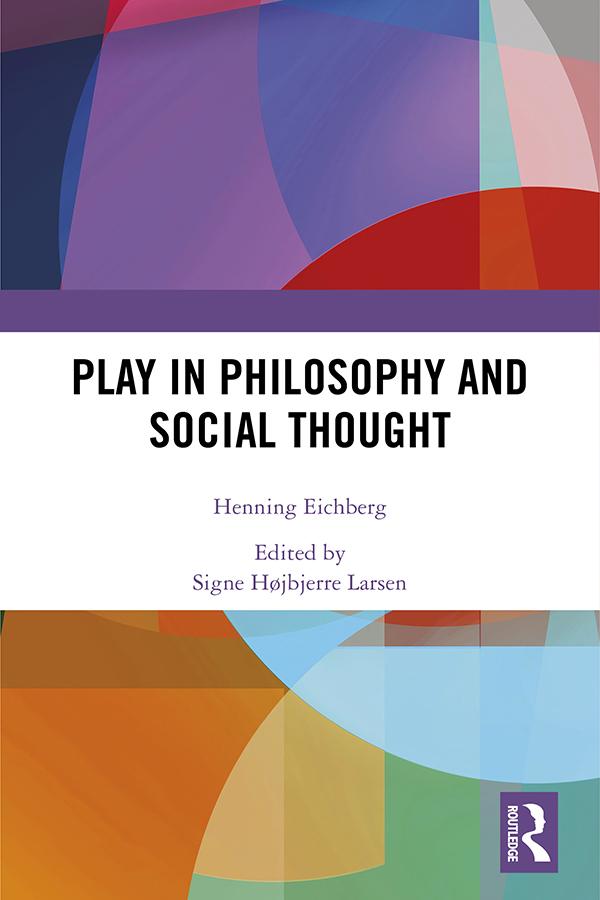
To understand play, we need a bottom-up phenomenology of play. This phenomenology highlights the paradox that it is the players who play the game, but it is also the game which makes us players. Yet what is it that plays us, when we play? Do we play the game, or does the game play us? These questions concern the relation between the playing subject and play as something larger than the individual – play as craft, play as rhythm, play between normality and otherness, even play as religion, as a sense of spiritual play between self and other.
This goes deeper than the welfare-political or educational intention to make people play or play more, or to advise individuals to play in a correct and useful way. Exploring topics such as identity, otherness, and disability, as well as activities including skiing, yoga, dance and street sport, this interdisciplinary study continues the work of the late Henning Eichberg and sheds new light on the questions that play at the borders of philosophy, anthropology, and the sociology of sport and leisure.
Play in Philosophy and Social Thought is a fascinating resource for students of philosophy of sport, cultural studies, sport sciences and anthropological studies. It is also a thought-provoking read for sport and play philosophers, sociologists, anthropologists, cultural studies scholars, and practitioners working with play.
Zahle einfach mit Karte, Klarna, Apple Pay oder Google Pay. Nicht zufrieden? Du hast immer ein 14-tägiges Widerrufsrecht. Lies mehr in unseren AGB. Hast du Fragen, schreib uns eine E-Mail an hello@memmo.org.
Memmo macht das Lernen einfacher – wo auch immer du bist. Bei uns findest du deine Kursbücher und smarte Lerntools an einem Ort: Zusammenfassungen, Quizzes, Podcasts und Lernkarten. Und Ted, dein Lernbuddy, beantwortet alles, was du wissen möchtest. Über 50.000 Studierende lernen bereits hier – gemacht, damit du schneller lernst und weniger Stress hast.