
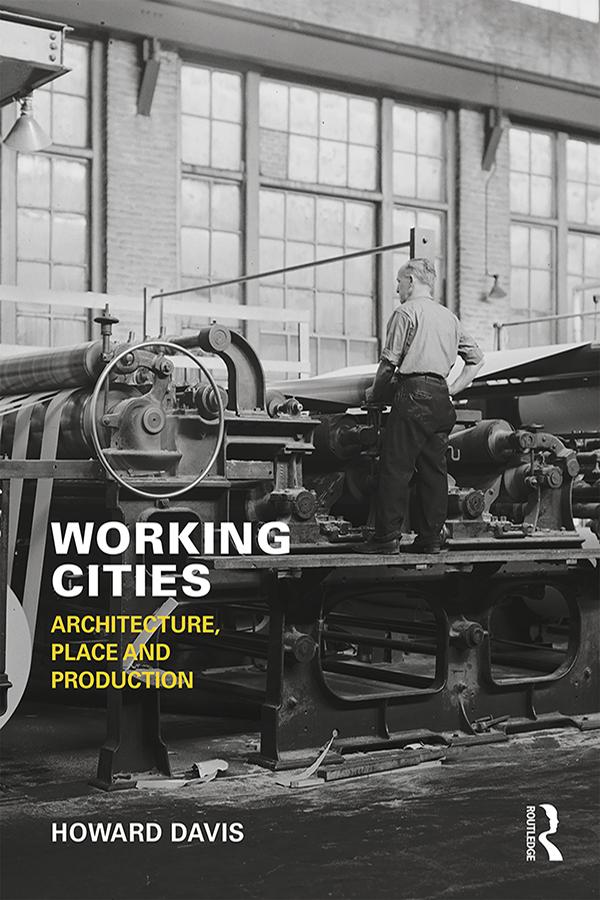
Cities have historically supported production, commerce, and consumption, all central to urban life. But in the contemporary Western city, production has been hidden or removed, and commerce and consumption have dominated. This book is about the importance of production in the life of the city, and the relationships between production, architecture, and urban form. It answers the question: What will cities be like when they become, once again, places of production and not only of consumption?
Through theoretical arguments, historical analysis, and descriptions of new initiatives, Working Cities: Architecture, Place and Production argues that contemporary cities can regain their historic role as places of material production—places where food is processed and things are made. The book looks toward a future that builds on this revival, providing architectural and urban examples and current strategies within the framework of a strong set of historically-based arguments.
The book is illustrated in full colour with archival and contemporary photographs, maps, and diagrams especially developed for the book. The diagrams help illustrate the different variables of architectural space, urban location, and production in different historical eras and in different kinds of industries, providing a compelling visual understanding for the reader.
Zahle einfach mit Karte, Klarna, Apple Pay oder Google Pay. Nicht zufrieden? Du hast immer ein 14-tägiges Widerrufsrecht. Lies mehr in unseren AGB. Hast du Fragen, schreib uns eine E-Mail an hello@memmo.org.
Memmo macht das Lernen einfacher – wo auch immer du bist. Bei uns findest du deine Kursbücher und smarte Lerntools an einem Ort: Zusammenfassungen, Quizzes, Podcasts und Lernkarten. Und Ted, dein Lernbuddy, beantwortet alles, was du wissen möchtest. Über 50.000 Studierende lernen bereits hier – gemacht, damit du schneller lernst und weniger Stress hast.