
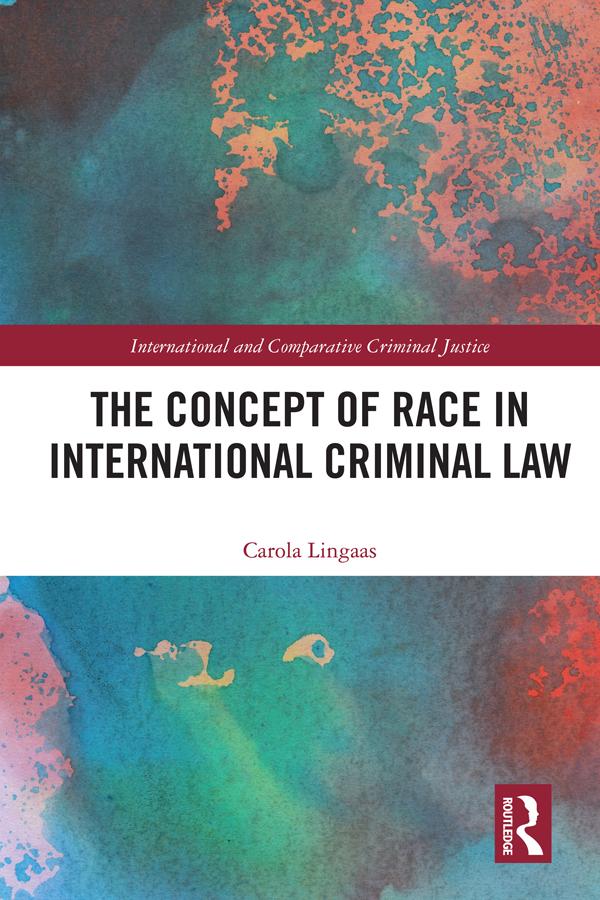
Members of racial groups are protected under international law against genocide, persecution, and apartheid. But what is race – and why was this contentious term not discussed when drafting the Statute of the International Criminal Court? Although the law uses this term, is it legitimate to talk about race today, let alone convict anyone for committing a crime against a racial group?
This book is the first comprehensive study of the concept of race in international criminal law. It explores the theoretical underpinnings for the crimes of genocide, apartheid, and persecution, and analyses all the relevant legal instruments, case law, and scholarship. It exposes how the international criminal tribunals have largely circumvented the topic of race, and how incoherent jurisprudence has resulted in inconsistent protection. The book provides important new interpretations of a problematic concept by subjecting it to a multifaceted and interdisciplinary analysis. The study argues that race in international criminal law should be constructed according to the perpetrator's perception of the victims’ ostensible racial otherness. The perpetrator’s imagination as manifested through his behaviour defines the victims’ racial group membership.
It will be of interest to students and practitioners of international criminal law, as well as those studying genocide, apartheid, and race in domestic and international law.
Zahle einfach mit Karte, Klarna, Apple Pay oder Google Pay. Nicht zufrieden? Du hast immer ein 14-tägiges Widerrufsrecht. Lies mehr in unseren AGB. Hast du Fragen, schreib uns eine E-Mail an hello@memmo.org.
Memmo macht das Lernen einfacher – wo auch immer du bist. Bei uns findest du deine Kursbücher und smarte Lerntools an einem Ort: Zusammenfassungen, Quizzes, Podcasts und Lernkarten. Und Ted, dein Lernbuddy, beantwortet alles, was du wissen möchtest. Über 50.000 Studierende lernen bereits hier – gemacht, damit du schneller lernst und weniger Stress hast.