
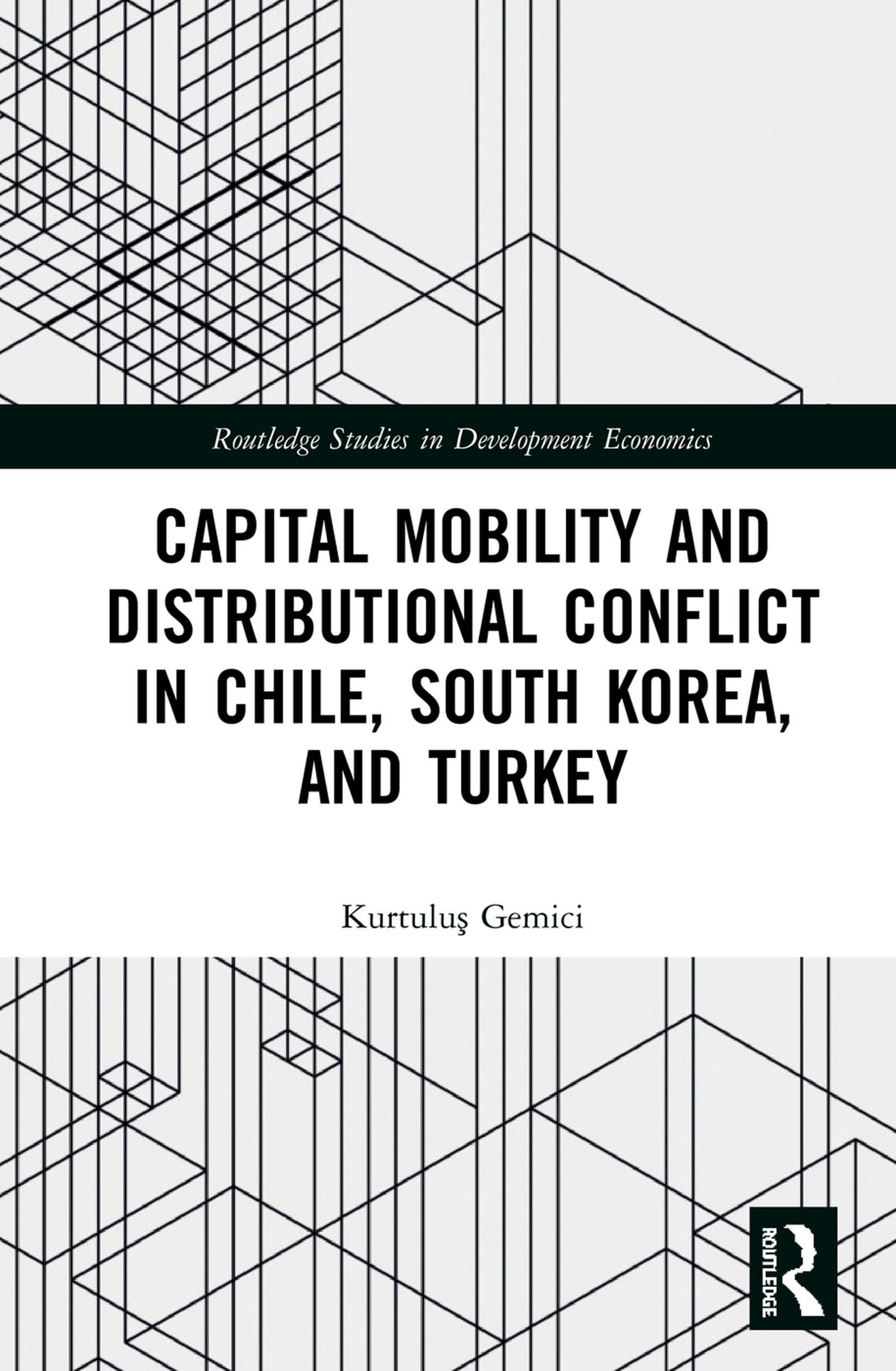
Why did many emerging countries pursue risky financial opening policies in a reckless manner, even after the painful example of the Latin American debt crisis? Unlike trade liberalization, which has mostly been beneficial in emerging countries, the removal of capital controls has led to boom-bust patterns in many countries. It is not simply driven by class or sectoral interests, nor is it just a result of ideational changes in policy-making circles, or international pressure. Gemici argues that to fully understand the motivation for these policies, we need to take into account distributional struggles prior to their enactment.
In this book, Gemici shows that conflictual distributional relations significantly increase the likelihood of capital account liberalization. Through in-depth comparative case studies, he also demonstrates that countries which liberalize in the most comprehensive manner tend to be the countries characterized by a high degree of distributional conflict. The case studies – Argentina, Chile, South Korea , and Turkey – have been chosen to maximise variation in distributional relations and to escape regional clustering, showing quite different trajectories of capital account liberalization.
This will be of great interest to readers in sociology, international political economy and heterodox economics, as well as specialists in the countries examined.
Zahle einfach mit Karte, Klarna, Apple Pay oder Google Pay. Nicht zufrieden? Du hast immer ein 14-tägiges Widerrufsrecht. Lies mehr in unseren AGB. Hast du Fragen, schreib uns eine E-Mail an hello@memmo.org.
Memmo macht das Lernen einfacher – wo auch immer du bist. Bei uns findest du deine Kursbücher und smarte Lerntools an einem Ort: Zusammenfassungen, Quizzes, Podcasts und Lernkarten. Und Ted, dein Lernbuddy, beantwortet alles, was du wissen möchtest. Über 50.000 Studierende lernen bereits hier – gemacht, damit du schneller lernst und weniger Stress hast.