
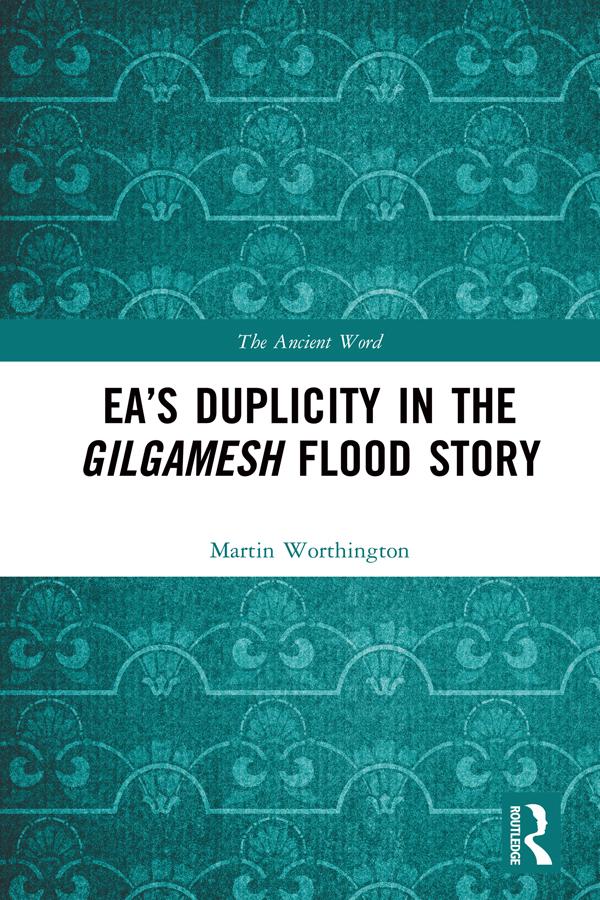
This volume opens up new perspectives on Babylonian and Assyrian literature, through the lens of a pivotal passage in the Gilgamesh Flood story. It shows how, using a nine-line message where not all was as it seemed, the god Ea inveigled humans into building the Ark.
The volume argues that Ea used a ‘bitextual’ message: one which can be understood in different ways that sound the same. His message thus emerges as an ambivalent oracle in the tradition of ‘folktale prophecy’. The argument is supported by interlocking investigations of lexicography, divination, diet, figurines, social history, and religion. There are also extended discussions of Babylonian word play and ancient literary interpretation. Besides arguing for Ea’s duplicity, the book explores its implications – for narrative sophistication in Gilgamesh, for audiences and performance of the poem, and for the relation of the Gilgamesh Flood story to the versions in Atra-hasīs, the Hellenistic historian Berossos, and the Biblical Book of Genesis.
Ea’s Duplicity in the Gilgamesh Flood Story will interest Assyriologists, Hebrew Bible scholars and Classicists, but also students and researchers in all areas concerned with Gilgamesh, word-play, oracles, and traditions about the Flood.
Zahle einfach mit Karte, Klarna, Apple Pay oder Google Pay. Nicht zufrieden? Du hast immer ein 14-tägiges Widerrufsrecht. Lies mehr in unseren AGB. Hast du Fragen, schreib uns eine E-Mail an hello@memmo.org.
Memmo macht das Lernen einfacher – wo auch immer du bist. Bei uns findest du deine Kursbücher und smarte Lerntools an einem Ort: Zusammenfassungen, Quizzes, Podcasts und Lernkarten. Und Ted, dein Lernbuddy, beantwortet alles, was du wissen möchtest. Über 50.000 Studierende lernen bereits hier – gemacht, damit du schneller lernst und weniger Stress hast.