
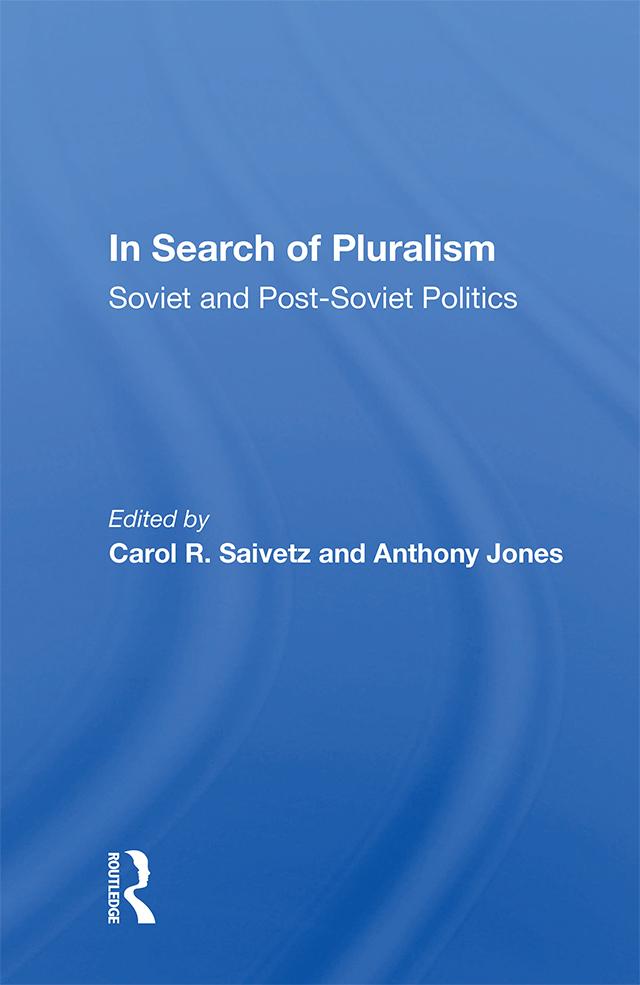
Building innovatively on Western social-science theory and on older models of Soviet politics, the authors review recent changes in the former USSR in order to assess the prospects there for democratic pluralism. Chapters focus on the first competitive elections, the new legislative bodies at state and local levels, and the newly freed press, exploring the extent to which these institutions can be described as democratic or pluralistic. Other chapters trace the complex linkages between a plurality of political-economic interests—explaining why Russian labor, government, and business may be moving toward a corporatist coalition and how political activists' sharply divergent attitudes toward the state and property keep them from forming a broad-based party. Although it is difficult in this period of dramatic flux to predict the future, these thought-provoking analyses will provide a deeper understanding of the transformations under way and will stimulate further exploration.
Zahle einfach mit Karte, Klarna, Apple Pay oder Google Pay. Nicht zufrieden? Du hast immer ein 14-tägiges Widerrufsrecht. Lies mehr in unseren AGB. Hast du Fragen, schreib uns eine E-Mail an hello@memmo.org.
Memmo macht das Lernen einfacher – wo auch immer du bist. Bei uns findest du deine Kursbücher und smarte Lerntools an einem Ort: Zusammenfassungen, Quizzes, Podcasts und Lernkarten. Und Ted, dein Lernbuddy, beantwortet alles, was du wissen möchtest. Über 50.000 Studierende lernen bereits hier – gemacht, damit du schneller lernst und weniger Stress hast.
Das könnte dir auch gefallen
Buch kaufen0