
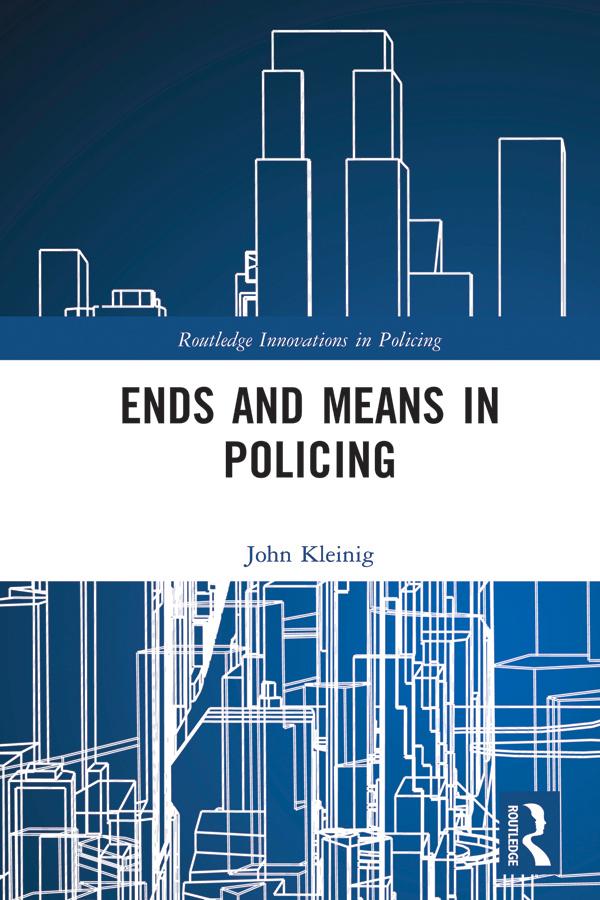
Policing is a highly pragmatic occupation. It is designed to achieve the important social ends of peacekeeping and public safety, and is empowered to do so using means that are ordinarily seen as problematic; that is, the use of force, deception, and invasions of privacy, along with considerable discretion. It is often suggested that the ends of policing justify the use of otherwise problematic means, but do they?
This book explores this question from a philosophical perspective. The relationship between ends and means has a long and contested history both in moral/practical reasoning and public policy. Looking at this history through the lens of policing, criminal justice philosopher John Kleinig explores the dialectic of ends and means (whether the ends justify the means, or whether the ends never justify the means) and offers a new, sharpened perspective on police ethics.
After tracing the various ways in which ends and means may be construed, the book surveys a series of increasingly concrete issues, focusing especially on those that arise in policing contexts. The competing moral demands made by ends and means culminate in considerations of noble cause corruption, dirty hands theory, lesser degradations (such as tear gas, tasers, chokeholds, and so on), and finally, those means deemed impermissible by the majority in Western culture, such as torture.
Zahle einfach mit Karte, Klarna, Apple Pay oder Google Pay. Nicht zufrieden? Du hast immer ein 14-tägiges Widerrufsrecht. Lies mehr in unseren AGB. Hast du Fragen, schreib uns eine E-Mail an hello@memmo.org.
Memmo macht das Lernen einfacher – wo auch immer du bist. Bei uns findest du deine Kursbücher und smarte Lerntools an einem Ort: Zusammenfassungen, Quizzes, Podcasts und Lernkarten. Und Ted, dein Lernbuddy, beantwortet alles, was du wissen möchtest. Über 50.000 Studierende lernen bereits hier – gemacht, damit du schneller lernst und weniger Stress hast.