
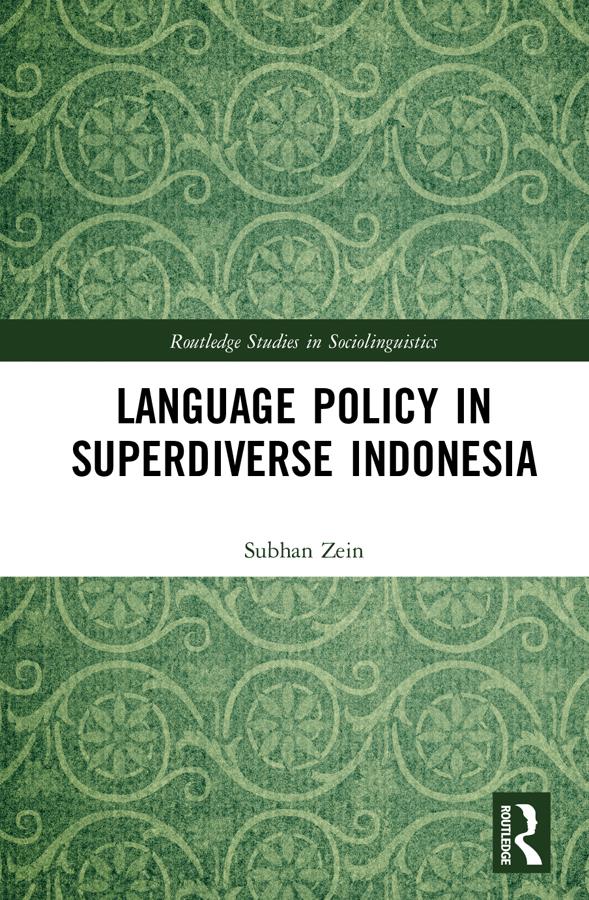
Indonesia has an extreme diversity of linguistic wealth, with 707 languages by one count, or 731 languages and more than 1,100 dialects in another estimate, spoken by more than 600 ethnicities spread across 17,504 islands in the archipelago. Smaller, locally used indigenous languages jostle for survival alongside Indonesian, which is the national language, regional lingua francas, major indigenous languages, heritage languages, sign languages and world languages such as English, Arabic and Mandarin, not to mention emerging linguistic varieties and practices of language mixing. How does the government manage these languages in different domains such as education, the media, the workplace and the public while balancing concerns over language endangerment and the need for participation in the global community?
Subhan Zein asserts that superdiversity is the key to understanding and assessing these intricate issues and their complicated, contested and innovative responses in the complex, dynamic and polycentric sociolinguistic situation in Indonesia that he conceptualises as superglossia. This offers an opportunity for us to delve more deeply into such a context through the language and superdiversity perspective that is in ascendancy.
Zein examines emerging themes that have been dominating language policy discourse including status, prestige, corpus, acquisition, cultivation, language shift and endangerment, revitalisation, linguistic genocide and imperialism, multilingual education, personnel policy, translanguaging, family language policy and global English. These topical areas are critically discussed in an integrated manner against Indonesia’s elaborate socio-cultural, political and religious backdrop as well as the implementation of regional autonomy. In doing so, Zein identifies strategies for language policy to help inform scholarship and policymaking while providing a frame of reference for the adoption of the superdiversity perspective on polity-specific language policy in other parts of the world.
Zahle einfach mit Karte, Klarna, Apple Pay oder Google Pay. Nicht zufrieden? Du hast immer ein 14-tägiges Widerrufsrecht. Lies mehr in unseren AGB. Hast du Fragen, schreib uns eine E-Mail an hello@memmo.org.
Memmo macht das Lernen einfacher – wo auch immer du bist. Bei uns findest du deine Kursbücher und smarte Lerntools an einem Ort: Zusammenfassungen, Quizzes, Podcasts und Lernkarten. Und Ted, dein Lernbuddy, beantwortet alles, was du wissen möchtest. Über 50.000 Studierende lernen bereits hier – gemacht, damit du schneller lernst und weniger Stress hast.