
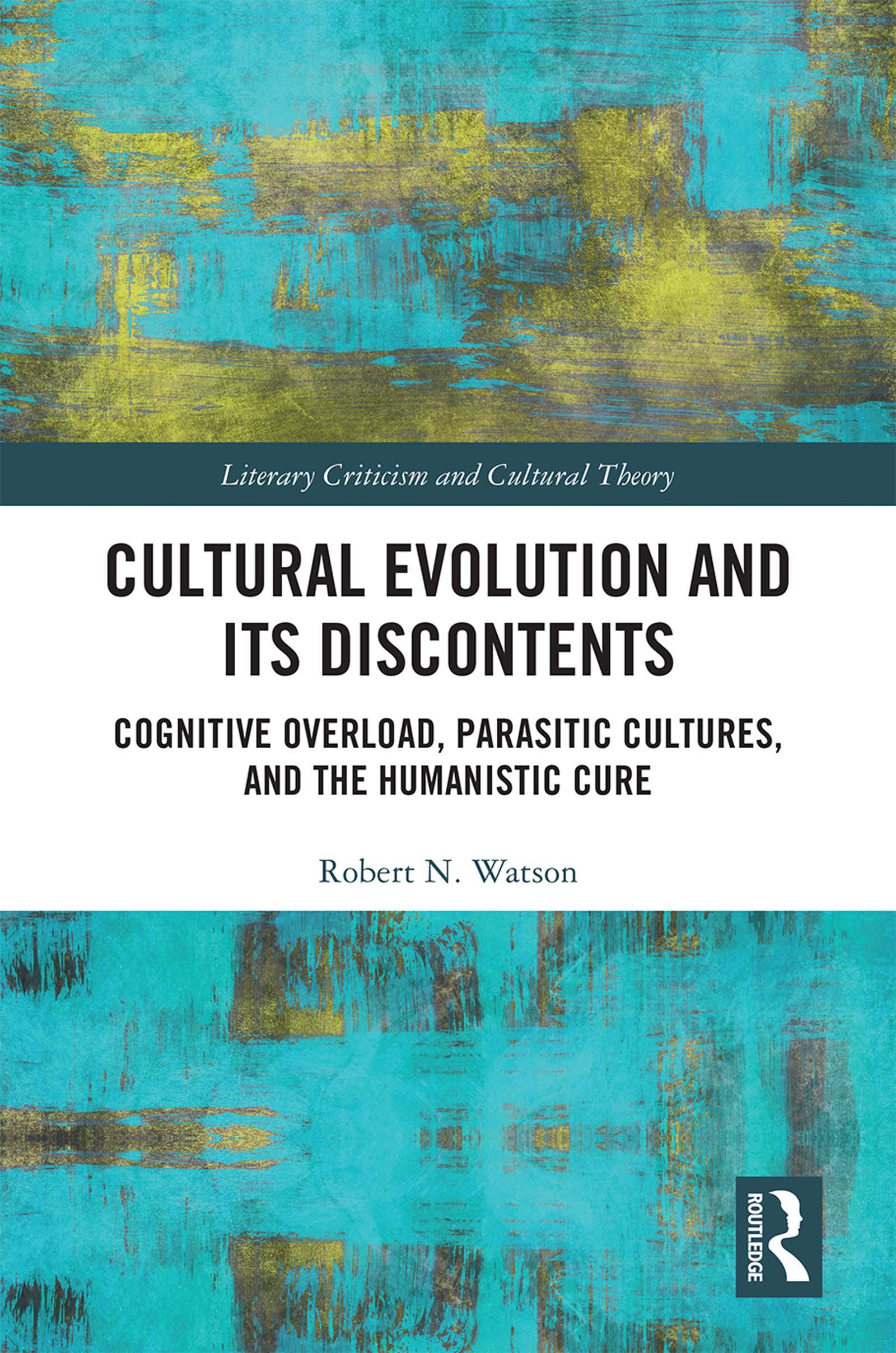
People worry that computers, robots, interstellar aliens, or Satan himself – brilliant, stealthy, ruthless creatures – may seize control of our world and destroy what’s uniquely valuable about the human race. Cultural Evolution and its Discontents shows that our cultural systems – especially those whose last names are "ism" – are already doing that, and doing it so adeptly that we seldom even notice. Like other parasites, they’ve blindly evolved to exploit us for their own survival. Creative arts and humanistic scholarship are our best tools for diagnosis and cure.
The assemblages of ideas that have survived, like the assemblages of biological cells that have survived, are the ones good at protecting and reproducing themselves. They aren’t necessarily the ones that guide us toward our most admirable selves or our healthiest future. Relying so heavily on culture to protect our uniquely open minds from cognitive overload makes us vulnerable to hijacking by the systems that co-evolve with us.
Recognizing the selfish Darwinian functions of these systems makes sense of many aspects of history, politics, economics, and popular culture. What drove the Protestant Reformation? Why have the Beatles, The Hunger Games, and paranoid science-fiction thrived, and how was hip-hop co-opted? What alliances helped neoliberalism out-compete Communism, and what alliances might enable environmentalism to overcome consumerism? Why are multiculturalism and university-trained elites provoking working-class nationalist backlash? In a digital age, how can we use numbers without having them use us instead?
Anyone who has wondered how our species can be so brilliant and so stupid at the same time may find an answer here: human mentalities are so complex that we crave the simplifications provided by our cultures, but the cultures that thrive are the ones that blind us to any interests that don’t correspond to their own.
Zahle einfach mit Karte, Klarna, Apple Pay oder Google Pay. Nicht zufrieden? Du hast immer ein 14-tägiges Widerrufsrecht. Lies mehr in unseren AGB. Hast du Fragen, schreib uns eine E-Mail an hello@memmo.org.
Memmo macht das Lernen einfacher – wo auch immer du bist. Bei uns findest du deine Kursbücher und smarte Lerntools an einem Ort: Zusammenfassungen, Quizzes, Podcasts und Lernkarten. Und Ted, dein Lernbuddy, beantwortet alles, was du wissen möchtest. Über 50.000 Studierende lernen bereits hier – gemacht, damit du schneller lernst und weniger Stress hast.