
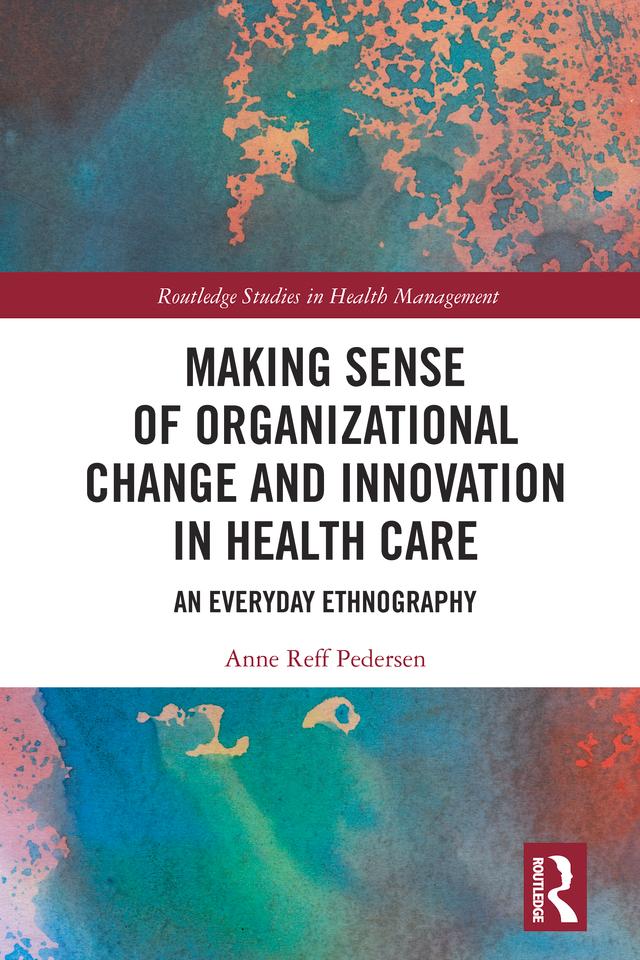
This book explores the hospital via organisational ethnography (OE), an approach that involves a mix of fieldwork methods designed to analyse the hospital which also includes participatory observation, qualitative interviews and shadowing.
One way to define a hospital is by its high level of formal organisation, resulting in written or digital communication as the main source of communication in patient journals, minutes and medical and quality guidelines. In contrast, in this book, the aspects of the informal organisation will be the focus. In spite of the many formal regulations of healthcare, hospitals are also chaotic organising places where many different groups of people interact in order to negotiate, to practice and to make sense of daily work tasks. The underlying argument is that, in the mundane everyday life of hospitals, frontline workers and their interactions with patients and local managers remain at the core of organising hospitals. The overall purpose of this book is to report stories back from the field of healthcare, demonstrating how people, spaces and work (as examples of events) become important elements of organising hospitals.
The book will be of interest to students and scholars in and across healthcare management, organisation studies, ethnography, sociology, qualitative methods, anthropology, service management and cultural studies.
Zahle einfach mit Karte, Klarna, Apple Pay oder Google Pay. Nicht zufrieden? Du hast immer ein 14-tägiges Widerrufsrecht. Lies mehr in unseren AGB. Hast du Fragen, schreib uns eine E-Mail an hello@memmo.org.
Memmo macht das Lernen einfacher – wo auch immer du bist. Bei uns findest du deine Kursbücher und smarte Lerntools an einem Ort: Zusammenfassungen, Quizzes, Podcasts und Lernkarten. Und Ted, dein Lernbuddy, beantwortet alles, was du wissen möchtest. Über 50.000 Studierende lernen bereits hier – gemacht, damit du schneller lernst und weniger Stress hast.