
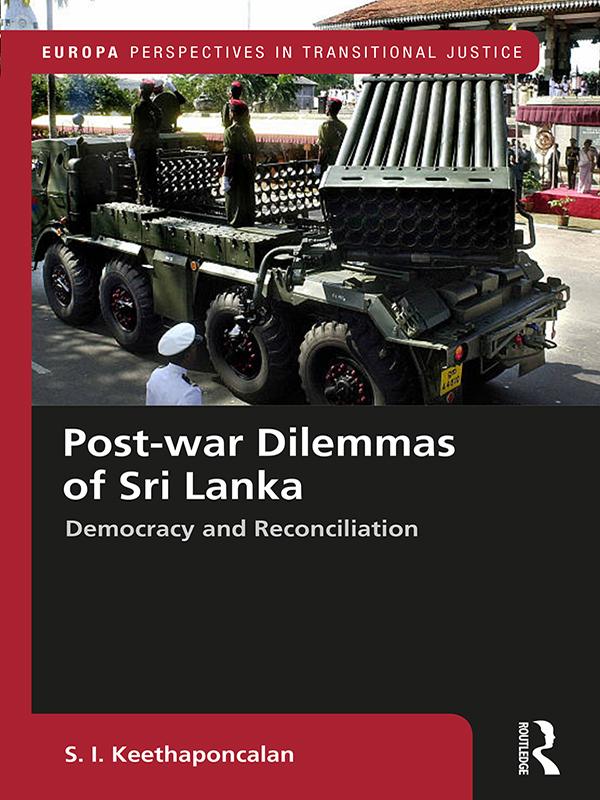
By investigating Sri Lanka as a case study, this book examines whether democracy, compared to authoritarianism, is conducive to post-war reconciliation. The research, founded on primary as well as secondary data, concludes that political systems have little to do with the success or failure of post-war ethnic reconciliation. The Sri Lankan case indicated that post-war reconciliation is more contingent on the readiness of the former enemies to come together. Readiness stems from, for example, satisfaction in the way issues have been resolved, confidence in the other party's intentions, and the compulsion to coexist. If the level of satisfaction, confidence, and the compulsion to coexist are low, the readiness to reconcile will also be low.
The end of the war had a profound impact on post-war governance and ethnic relations in Sri Lanka. Hence, the volume provides an in-depth analysis of the factors that led to the military victory of the Sri Lankan government over the Liberation Tigers of Tamil Eelam (LTTE) in 2009. The chapters delve into the nexus between governance and reconciliation under the first two post-war governments. Reconciliation did not materialize in this period. Instead, new fault-lines emerged as attacks on the Muslim community escalated drastically. This book provides a comprehensive analysis of the nature of relations between the Sinhalese and Muslims and the Tamils and Muslims, as well as the nature and causes of post-war anti-Muslim riots.
Zahle einfach mit Karte, Klarna, Apple Pay oder Google Pay. Nicht zufrieden? Du hast immer ein 14-tägiges Widerrufsrecht. Lies mehr in unseren AGB. Hast du Fragen, schreib uns eine E-Mail an hello@memmo.org.
Memmo macht das Lernen einfacher – wo auch immer du bist. Bei uns findest du deine Kursbücher und smarte Lerntools an einem Ort: Zusammenfassungen, Quizzes, Podcasts und Lernkarten. Und Ted, dein Lernbuddy, beantwortet alles, was du wissen möchtest. Über 50.000 Studierende lernen bereits hier – gemacht, damit du schneller lernst und weniger Stress hast.