
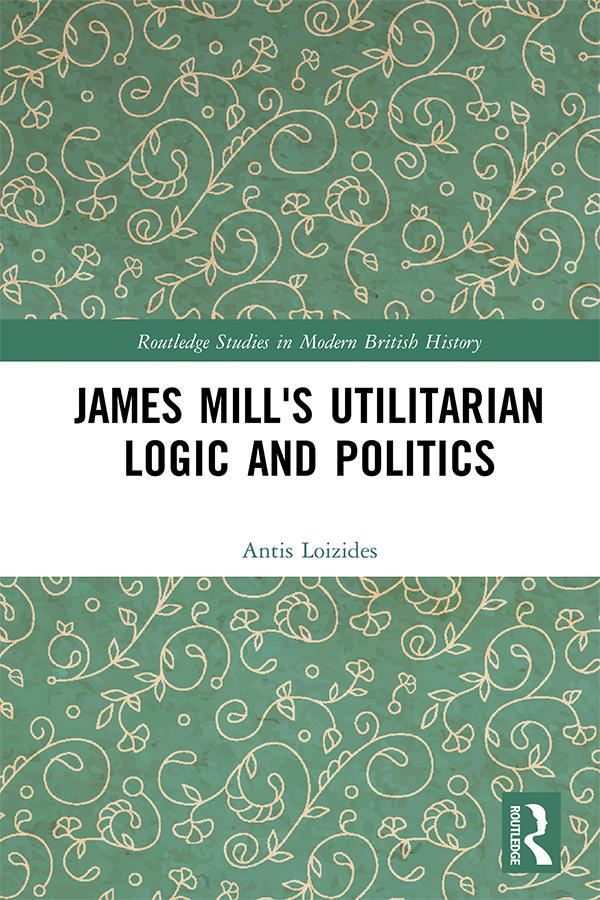
James Mill’s (1773–1836) role in the development of utilitarian thought in the nineteenth century has been overshadowed both by John Stuart Mill (1806–1873) and by Jeremy Bentham (1748–1832). Of the three, the elder Mill is considered to be the least original and with the least important, if any, contributions to utilitarian theory. True as this statement may be, even those who have tried to challenge some of its aspects take the common portrayal of Mill – "the rationalist, the maker of syllogisms, the geometrician" – as given. This book does not. Studying James Mill’s background has surprising results with reference to influences outside the Benthamite tradition as well as unexpected implications for his contributions to debates of his time. The book focuses on his political ideas, the ways in which he communicated them and the ways in which he formed them in an attempt to reveal a portrait of Mill unencumbered from the legacy of Thomas Babington Macaulay’s (1800–1859) brilliant essay "Utilitarian Logic and Politics".
Zahle einfach mit Karte, Klarna, Apple Pay oder Google Pay. Nicht zufrieden? Du hast immer ein 14-tägiges Widerrufsrecht. Lies mehr in unseren AGB. Hast du Fragen, schreib uns eine E-Mail an hello@memmo.org.
Memmo macht das Lernen einfacher – wo auch immer du bist. Bei uns findest du deine Kursbücher und smarte Lerntools an einem Ort: Zusammenfassungen, Quizzes, Podcasts und Lernkarten. Und Ted, dein Lernbuddy, beantwortet alles, was du wissen möchtest. Über 50.000 Studierende lernen bereits hier – gemacht, damit du schneller lernst und weniger Stress hast.