
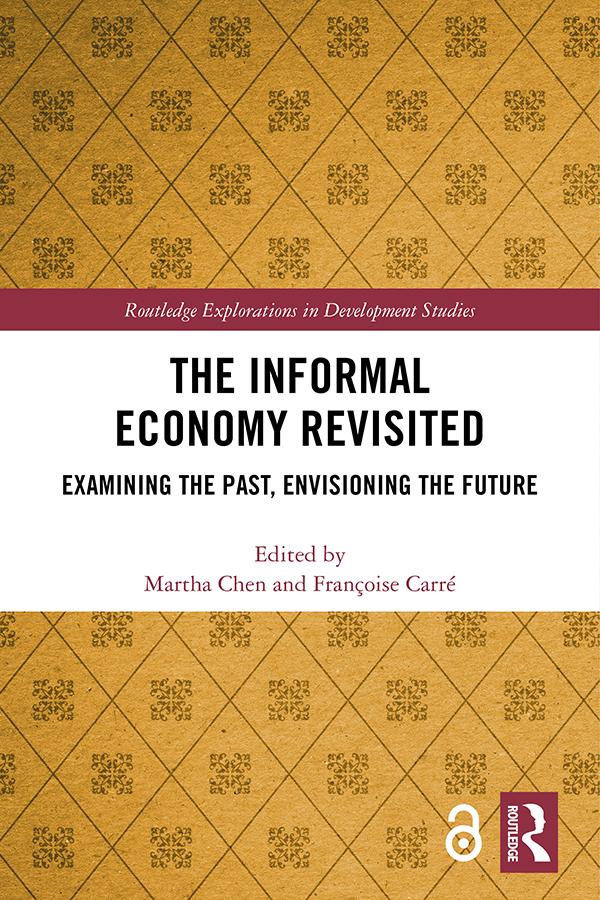
This landmark volume brings together leading scholars in the field to investigate recent conceptual shifts, research findings and policy debates on the informal economy as well as future challenges and directions for research and policy. Well over half of the global workforce and the vast majority of the workforce in developing countries work in the informal economy, and in countries around the world new forms of informal employment are emerging. Yet the informal workforce is not well understood, remains undervalued and is widely stigmatised.
Contributors to the volume bridge a range of disciplinary perspectives including anthropology, development economics, law, political science, social policy, sociology, statistics, urban planning and design. The Informal Economy Revisited also focuses on specific groups of informal workers, including home-based workers, street vendors and waste pickers, to provide a grounded insight into disciplinary debates. Ultimately, the book calls for a paradigm shift in how the informal economy is perceived to reflect the realities of informal work in the Global South, as well as the informal practices of the state and capital, not just labour.
The Informal Economy Revisited is the culmination of 20 years of pioneering work by WIEGO (Women in Informal Employment: Globalizing and Organizing), a global network of researchers, development practitioners and organisations of informal workers in 90 countries. Researchers, practitioners, policy-makers and advocates will all find this book an invaluable guide to the significance and complexities of the informal economy, and its role in today’s globalised economy.
The Open Access version of this book, available at
https://www.taylorfrancis.com/books/e/9780429200724, has been made available under a Creative Commons Attribution-Non Commercial-No Derivatives 4.0 license
Zahle einfach mit Karte, Klarna, Apple Pay oder Google Pay. Nicht zufrieden? Du hast immer ein 14-tägiges Widerrufsrecht. Lies mehr in unseren AGB. Hast du Fragen, schreib uns eine E-Mail an hello@memmo.org.
Memmo macht das Lernen einfacher – wo auch immer du bist. Bei uns findest du deine Kursbücher und smarte Lerntools an einem Ort: Zusammenfassungen, Quizzes, Podcasts und Lernkarten. Und Ted, dein Lernbuddy, beantwortet alles, was du wissen möchtest. Über 50.000 Studierende lernen bereits hier – gemacht, damit du schneller lernst und weniger Stress hast.