
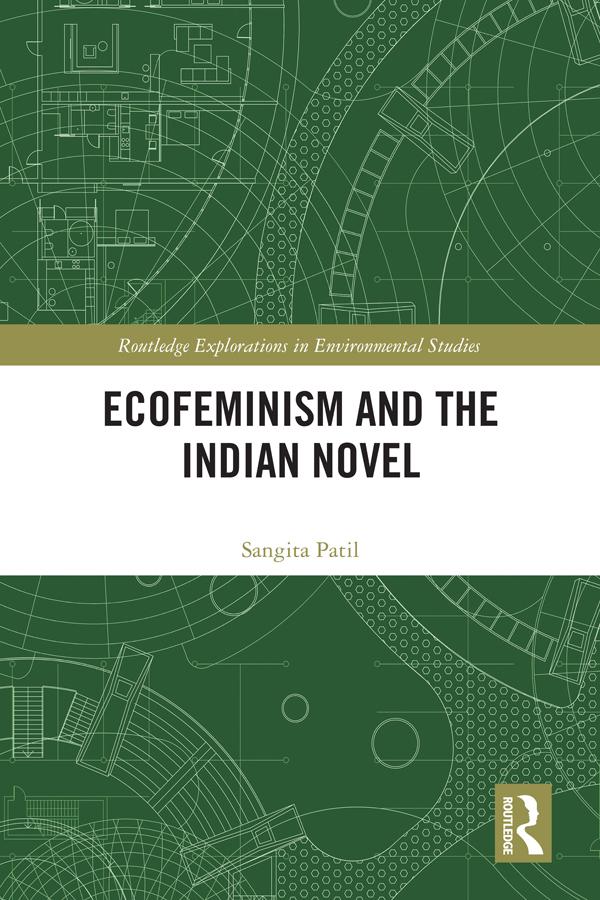
Ecofeminism and the Indian Novel tests the theories of ecofeminism against the background of India’s often different perceptions of environmental problems, challenging the hegemony of Western culture in thinking about human problems. This book moves beyond a simple application of the concepts of ecofeminism, instead explaining the uniqueness of Indian novels as narratives of ecofeminism and how they can contribute to the development of the theory of ecofeminism.
In examining a selection of novels, the author argues that Indian texts conceptualize the ecological crisis more as a human problem than as a gender problem. The book proposes that we should think of ecofeminism as ecohumanism instead, seeing human beings and nature as a part of a complex web. Novels analysed within the text include Kamala Markandaya’s Nectar in a Sieve (1954), Shivram Karanth’s Return to Earth (2002) and Na D’Souza’s Dweepa (2013).
Ecofeminism and the Indian Novel will be of great interest to students and scholars of ecofeminism, ecocriticism, ecological feminism, environmental humanities, gender studies, ecological humanities, feminist studies and Indian literature.
Zahle einfach mit Karte, Klarna, Apple Pay oder Google Pay. Nicht zufrieden? Du hast immer ein 14-tägiges Widerrufsrecht. Lies mehr in unseren AGB. Hast du Fragen, schreib uns eine E-Mail an hello@memmo.org.
Memmo macht das Lernen einfacher – wo auch immer du bist. Bei uns findest du deine Kursbücher und smarte Lerntools an einem Ort: Zusammenfassungen, Quizzes, Podcasts und Lernkarten. Und Ted, dein Lernbuddy, beantwortet alles, was du wissen möchtest. Über 50.000 Studierende lernen bereits hier – gemacht, damit du schneller lernst und weniger Stress hast.