
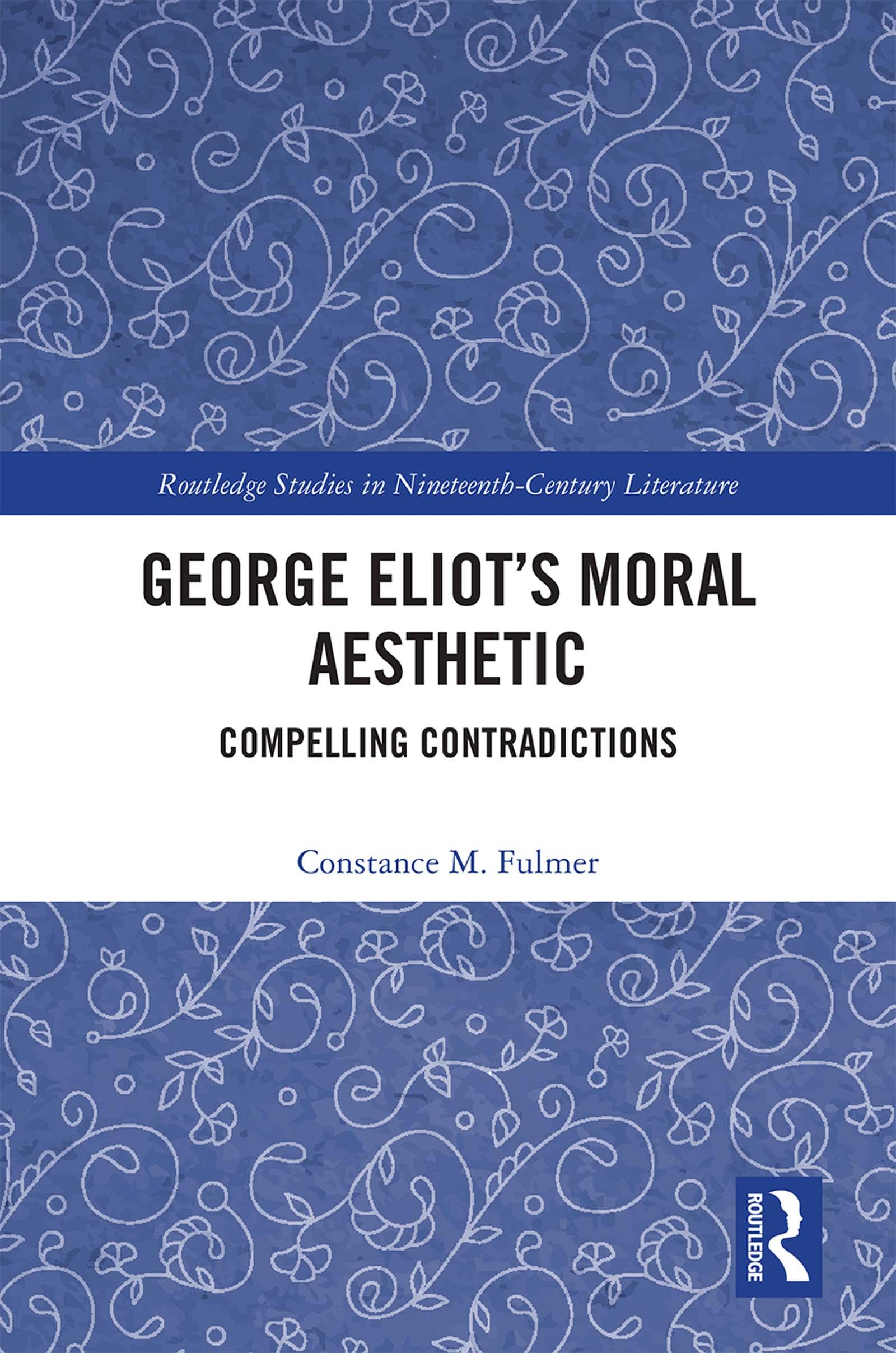
George Eliot’s serious readers have been intrigued by the fact that she declared that she had lost her faith in God and had renounced her hope for a traditional Christian heaven and yet she continued to preach her own version of morality in everything she wrote, to hope for an immortality which allowed her to join an invisible choir which would influence generations to come, and to be concerned about the moral growth of her characters. This is only one of the many compelling contradictions in her life and in her artistry.
This volume aims to investigate Eliot’s ethical and artistic principles by defining her moral aesthetic as it relates to her self-concept and exploring Eliot’s narrative decisions and the decisions made by her characters and the circumstances which prompt those choices. Dr. Fulmer includes chapters on her clerical figures and other types of individuals such as musicians, and politicians. Dr. Fulmer also illuminates the paradoxes and contradictions in George Eliot’s life and in her philosophy by focusing on Eliot's use of animals, mirrors, windows, jewelry, wills and other tangible images in her poetry as well as her novels.
George Eliot’s Moral Aesthetic contends that everything about her moral philosophy is related to her writing and that everything about her writing is related to her moral philosophy.
Zahle einfach mit Karte, Klarna, Apple Pay oder Google Pay. Nicht zufrieden? Du hast immer ein 14-tägiges Widerrufsrecht. Lies mehr in unseren AGB. Hast du Fragen, schreib uns eine E-Mail an hello@memmo.org.
Memmo macht das Lernen einfacher – wo auch immer du bist. Bei uns findest du deine Kursbücher und smarte Lerntools an einem Ort: Zusammenfassungen, Quizzes, Podcasts und Lernkarten. Und Ted, dein Lernbuddy, beantwortet alles, was du wissen möchtest. Über 50.000 Studierende lernen bereits hier – gemacht, damit du schneller lernst und weniger Stress hast.