
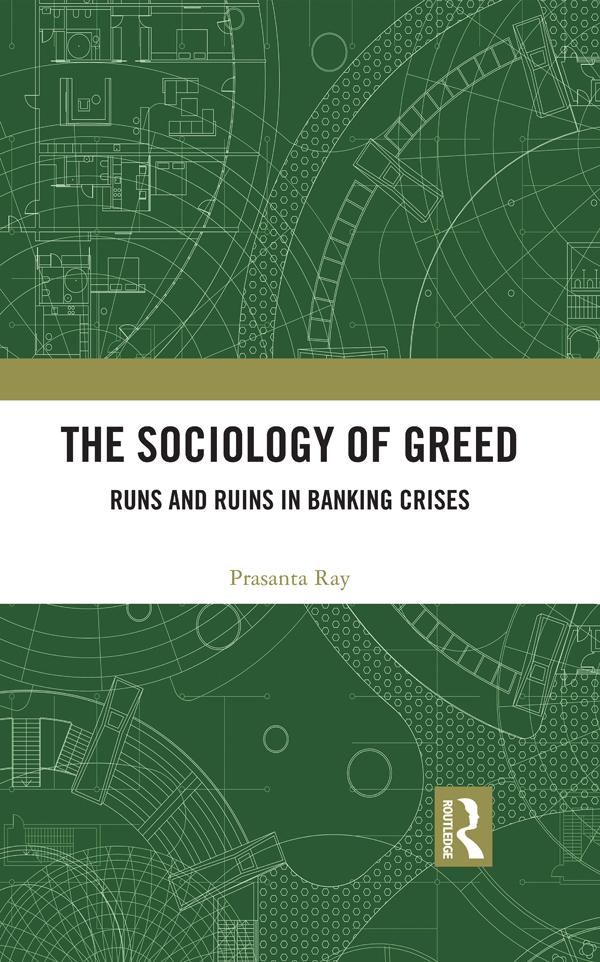
The Sociology of Greed examines crises in financial institutions such as banks from the vantage point of the greed of the people at their helm. It offers an intensive analysis of the banking crises under the conditions of colonial capitalism in early twentieth-century Bengal that led to institutional and social collapse.
Breaking new ground, the book looks at the moral economy of capitalism and money culture by focusing on the victims of banking crises, hitherto unexplored in Western empirical research. Through sociological analyses of political economy, it seamlessly combines archival records, survey and statistical data with literary narratives, realist fiction and performing arts to recount how the greed of bank owners and managers ruined their institutions as well as common people. It argues that greed turns perilous when the state and the market facilitate its agency, and it examines the contexts and histories, the indifference of the fledgling colonial state, feeble political response, and the consequences for those who were impacted and the losses, especially the refugees, the lower-middle class and women. The volume also re-composes relevant elements of Western sociological scholarship from classical theories to early twenty-first-century financial sociology.
An insightful account of the social history of banking in India, this book will greatly interest researchers and scholars in sociology, economics, history and cultural studies.
Zahle einfach mit Karte, Klarna, Apple Pay oder Google Pay. Nicht zufrieden? Du hast immer ein 14-tägiges Widerrufsrecht. Lies mehr in unseren AGB. Hast du Fragen, schreib uns eine E-Mail an hello@memmo.org.
Memmo macht das Lernen einfacher – wo auch immer du bist. Bei uns findest du deine Kursbücher und smarte Lerntools an einem Ort: Zusammenfassungen, Quizzes, Podcasts und Lernkarten. Und Ted, dein Lernbuddy, beantwortet alles, was du wissen möchtest. Über 50.000 Studierende lernen bereits hier – gemacht, damit du schneller lernst und weniger Stress hast.