
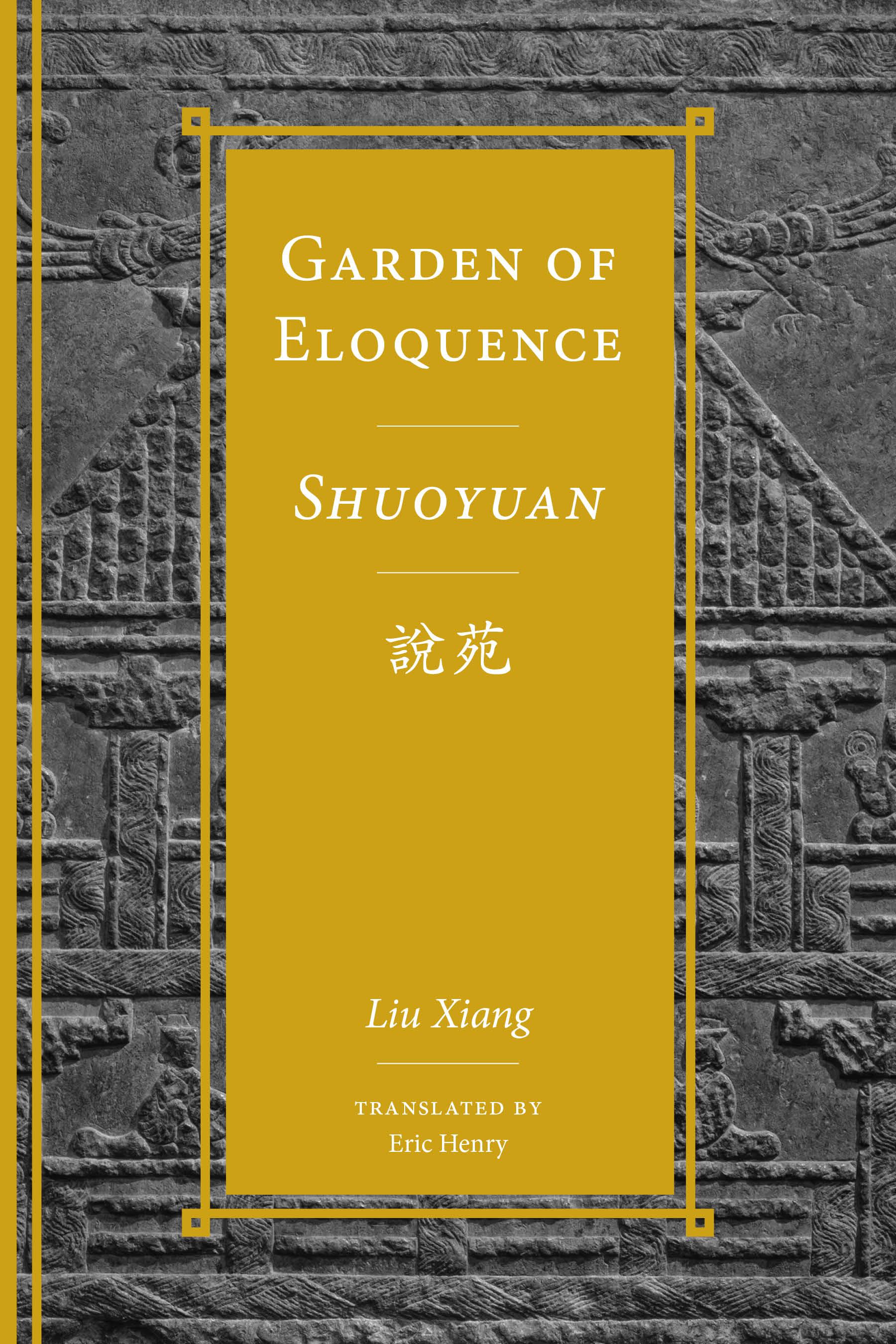
In 17 BCE the Han dynasty archivist Liu Xiang presented to the throne a collection of some seven hundred items of varying length, mostly quasi-historical anecdotes and narratives, that he deemed essential reading for wise leadership. Garden of Eloquence (Shuoyuan), divided into twenty books grouped by theme, follows a tradition of narrative writing on historical and philosophical themes that began seven centuries earlier. Long popular in China as a source of allusions and quotations, it preserves late Western Han views concerning history, politics, and ethics. Many of its anecdotes are attributed to Confucius’s speeches and teachings that do not appear in earlier texts, demonstrating that long after Confucius’s death in 479 BCE it was still possible for new “historical” narratives to be created.
Garden of Eloquence is valuable as a repository of items that originally appeared in other early collections that are no longer extant, and it provides detail on topics as various as astronomy and astrology, yin-yang theory, and quasi-geographical and mystical categories. Eric Henry’s unabridged translation with facing Chinese text and extensive annotation will make this important primary source available for the first time to Anglophone world historians.
Zahle einfach mit Karte, Klarna, Apple Pay oder Google Pay. Nicht zufrieden? Du hast immer ein 14-tägiges Widerrufsrecht. Lies mehr in unseren AGB. Hast du Fragen, schreib uns eine E-Mail an hello@memmo.org.
Memmo macht das Lernen einfacher – wo auch immer du bist. Bei uns findest du deine Kursbücher und smarte Lerntools an einem Ort: Zusammenfassungen, Quizzes, Podcasts und Lernkarten. Und Ted, dein Lernbuddy, beantwortet alles, was du wissen möchtest. Über 50.000 Studierende lernen bereits hier – gemacht, damit du schneller lernst und weniger Stress hast.