
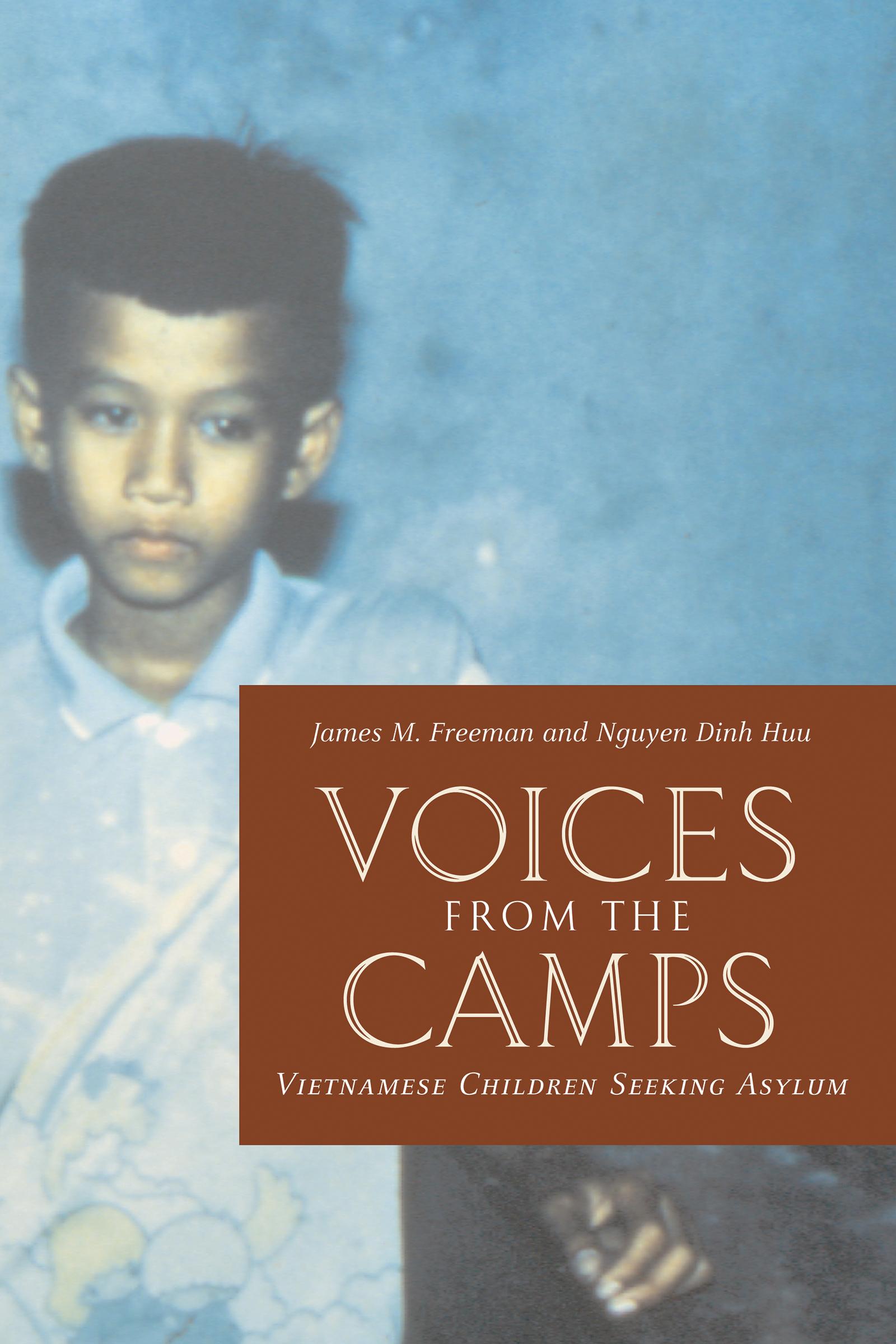
Wave after wave of political and economic refugees poured out of Vietnam beginning in the late 1970s, overwhelming the resources available to receive them. Squalid conditions prevailed in detention centers and camps in Hong Kong and throughout Southeast Asia, where many refugees spent years languishing in poverty, neglect, and abuse while supposedly being protected by an international consortium of caregivers. Voices from the Camps tells the story of the most vulnerable of these refugees: children alone, either orphaned or separated from their families.
Combining anthropology and social work with advocacy for unaccompanied children everywhere, James M. Freeman and Nguyen Dinh Huu present the voices and experiences of Vietnamese refugee children neglected and abused by the system intended to help them. Authorities in countries of first asylum, faced with thousands upon thousands of increasingly frightened, despairing, and angry people, needed to determine on a case-by-case basis whether they should be sent back to Vietnam or be certified as legitimate refugees and allowed to proceed to countries of resettlement. The international community, led by UNHCR, devised a well-intentioned screening system. Unfortunately, as Freeman and Nguyen demonstrate, it failed unaccompanied children.
The hardships these children endured are disturbing, but more disturbing is the story of how the governments and agencies that set out to care for them eventually became the children’s tormenters. When Vietnam, after years of refusing to readmit illegal emigrants, reversed its policy, the international community began doing everything it could to force them back to Vietnam. Cutting rations, closing schools, separating children from older relations and other caregivers, relocating them in order to destroy any sense of stability--the authorities employed coercion and effective abuse with distressing ease, all in the name of the “best interests” of the children.
While some children eventually managed to construct a decent life in Vietnam or elsewhere, including the United States, all have been scarred by their refugee experience and most are still struggling with the legacy. Freeman and Nguyen’s presentation and analysis of this sobering chapter in recent history is a cautionary tale and a call to action.
Zahle einfach mit Karte, Klarna, Apple Pay oder Google Pay. Nicht zufrieden? Du hast immer ein 14-tägiges Widerrufsrecht. Lies mehr in unseren AGB. Hast du Fragen, schreib uns eine E-Mail an hello@memmo.org.
Memmo macht das Lernen einfacher – wo auch immer du bist. Bei uns findest du deine Kursbücher und smarte Lerntools an einem Ort: Zusammenfassungen, Quizzes, Podcasts und Lernkarten. Und Ted, dein Lernbuddy, beantwortet alles, was du wissen möchtest. Über 50.000 Studierende lernen bereits hier – gemacht, damit du schneller lernst und weniger Stress hast.