
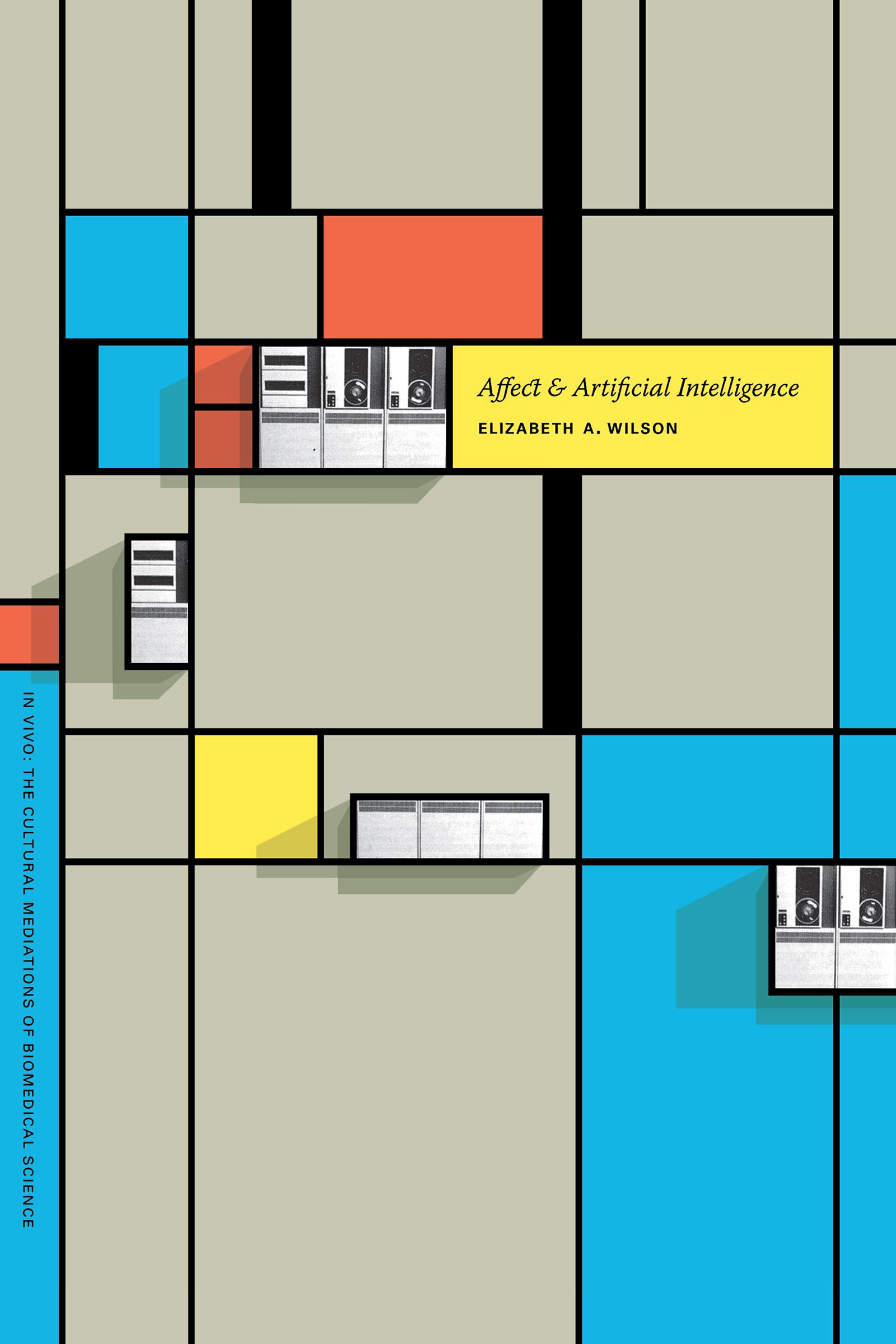
In 1950, Alan Turing, the British mathematician, cryptographer, and computer pioneer, looked to the future: now that the conceptual and technical parameters for electronic brains had been established, what kind of intelligence could be built? Should machine intelligence mimic the abstract thinking of a chess player or should it be more like the developing mind of a child? Should an intelligent agent only think, or should it also learn, feel, and grow?
Affect and Artificial Intelligence is the first in-depth analysis of affect and intersubjectivity in the computational sciences. Elizabeth Wilson makes use of archival and unpublished material from the early years of AI (1945–70) until the present to show that early researchers were more engaged with questions of emotion than many commentators have assumed. She documents how affectivity was managed in the canonical works of Walter Pitts in the 1940s and Turing in the 1950s, in projects from the 1960s that injected artificial agents into psychotherapeutic encounters, in chess-playing machines from the 1940s to the present, and in the Kismet (sociable robotics) project at MIT in the 1990s.
Zahle einfach mit Karte, Klarna, Apple Pay oder Google Pay. Nicht zufrieden? Du hast immer ein 14-tägiges Widerrufsrecht. Lies mehr in unseren AGB. Hast du Fragen, schreib uns eine E-Mail an hello@memmo.org.
Memmo macht das Lernen einfacher – wo auch immer du bist. Bei uns findest du deine Kursbücher und smarte Lerntools an einem Ort: Zusammenfassungen, Quizzes, Podcasts und Lernkarten. Und Ted, dein Lernbuddy, beantwortet alles, was du wissen möchtest. Über 50.000 Studierende lernen bereits hier – gemacht, damit du schneller lernst und weniger Stress hast.