
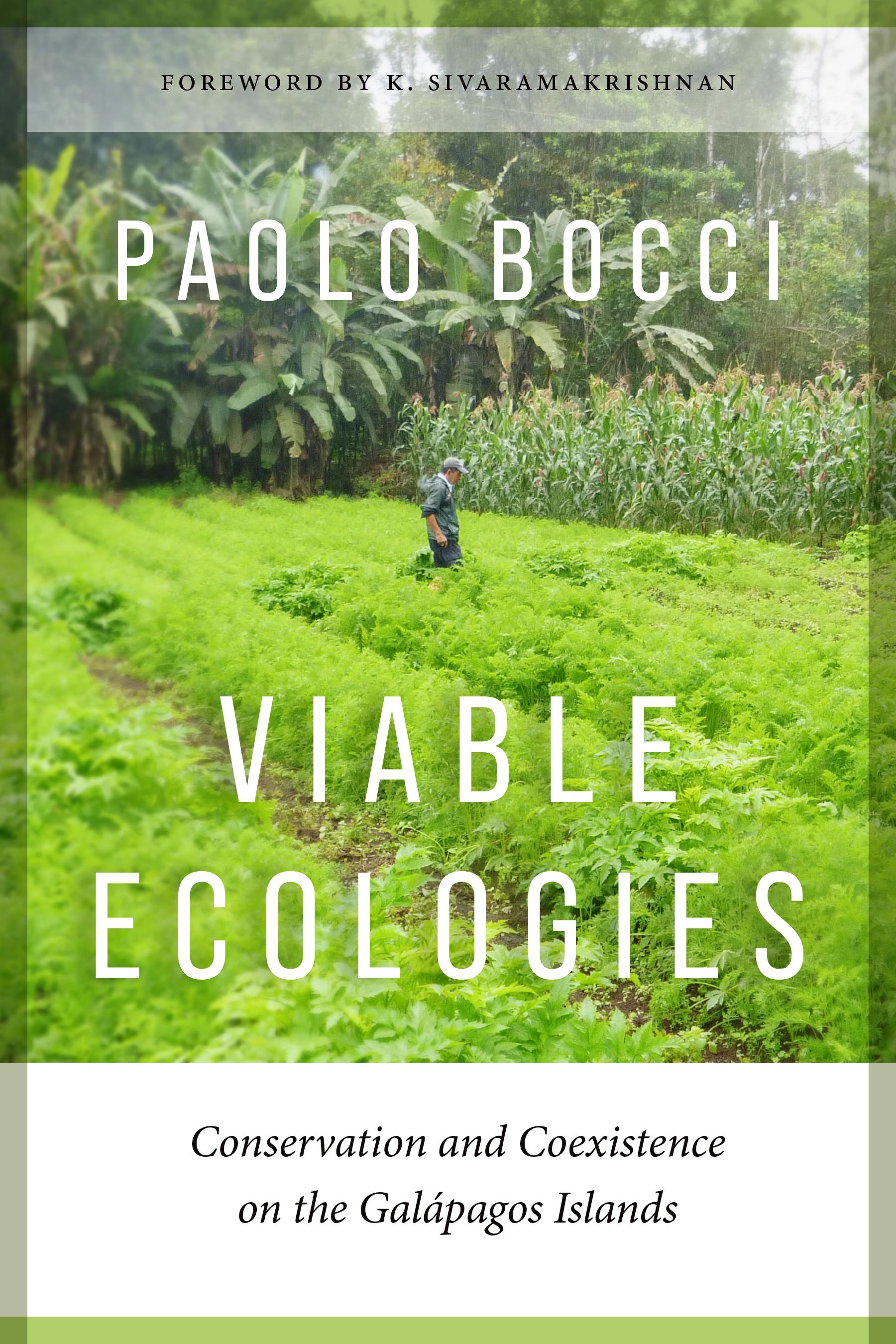
How humans living amid an abundance of diverse flora and fauna help us rethink conservation
Famous for their geographic isolation and high proportion of endemic species, the Galápagos Islands have long been promoted as the premier destination for tourists and scientists seeking to escape humanity's impact on the world. This idyllic vision dominates the islands' conservation policy, which, despite calls for a more integrated human-environment approach, continues to emphasize restoration. It ignores the people who call the Galápagos home, who must instead partner with their plant and animal neighbors to secure a thriving future for all.
Drawing on years of fieldwork, Paolo Bocci's Viable Ecologies brings attention to the farmers and other marginalized locals who enact their own ways of caring for, and living on, the islands. Through extended observation and experimentation, they craft conservation strategies based on mutual dependence and long-term accountability. They fuse their livelihoods to the ecosystems around them and, in doing so, challenge the image of the Galápagos as a place to be studied and visited but never inhabited. As Bocci argues, the farmers' methods of remediation and recuperation broaden the scope of what conservation can—and should—be.
Connecting environmental policy and science to matters of immigration and belonging, Viable Ecologies offers strategies for crafting a future in which humans and nonhumans may thrive.
Zahle einfach mit Karte, Klarna, Apple Pay oder Google Pay. Nicht zufrieden? Du hast immer ein 14-tägiges Widerrufsrecht. Lies mehr in unseren AGB. Hast du Fragen, schreib uns eine E-Mail an hello@memmo.org.
Memmo macht das Lernen einfacher – wo auch immer du bist. Bei uns findest du deine Kursbücher und smarte Lerntools an einem Ort: Zusammenfassungen, Quizzes, Podcasts und Lernkarten. Und Ted, dein Lernbuddy, beantwortet alles, was du wissen möchtest. Über 50.000 Studierende lernen bereits hier – gemacht, damit du schneller lernst und weniger Stress hast.