
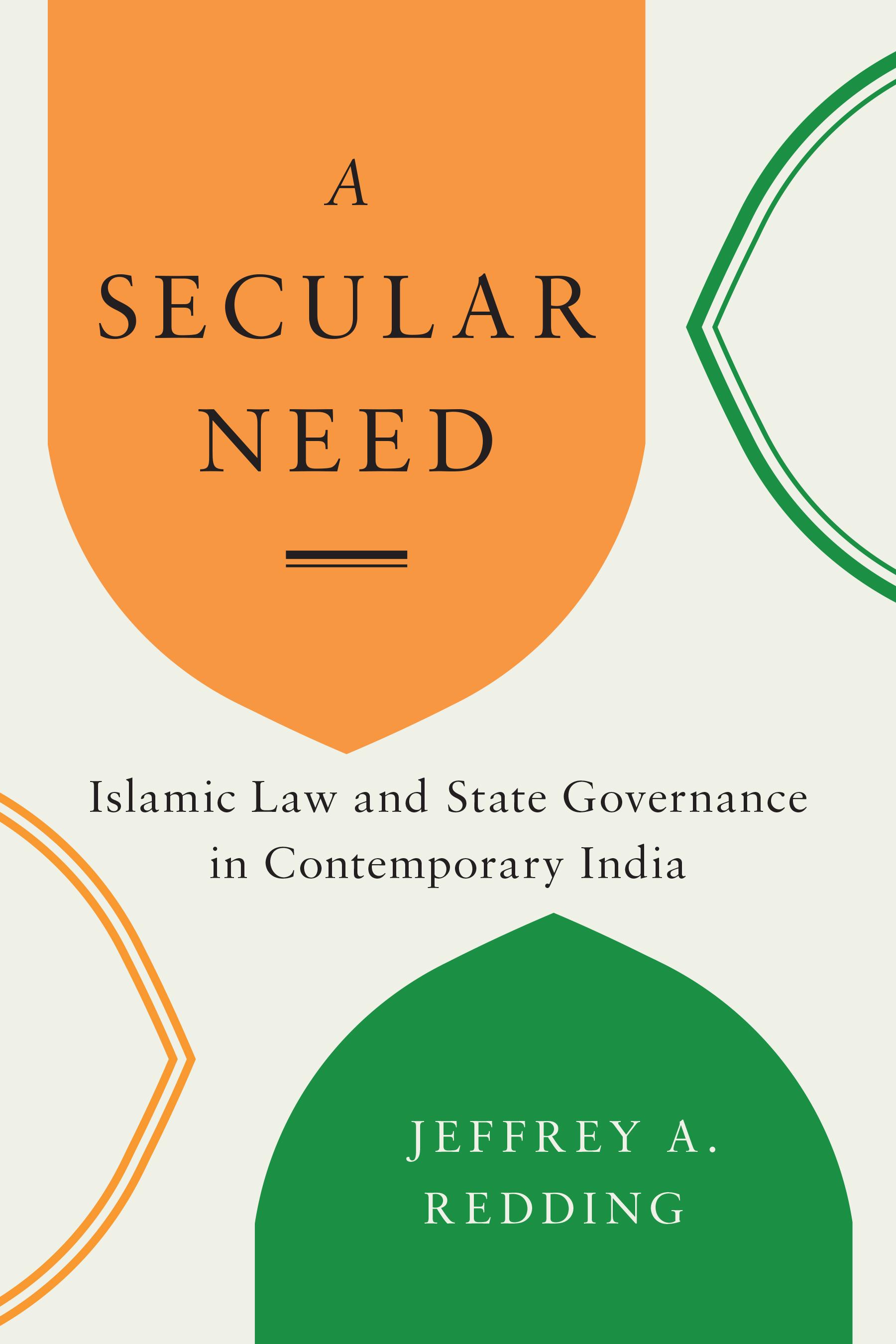
Whether from the perspective of Islamic law’s advocates, secularism’s partisans, or communities caught in their crossfire, many people see the relationship between Islamic law and secularism as antagonistic and increasingly discordant. In the United States there are calls for “sharia bans” in the courts, in western Europe legal limitations have been imposed on mosques and the wearing of headscarves, and in the Arab Middle East conflicts between secularist old guards and Islamist revolutionaries persist—suggesting that previously unsteady coexistences are transforming into outright hostilities.
Jeffrey Redding’s exploration of India’s non-state system of Muslim dispute resolution—known as the dar-ul-qaza system and commonly referred to as “Muslim courts” or “shariat courts”—challenges conventional narratives about the inevitable opposition between Islamic law and secular forms of governance, demonstrating that Indian secular law and governance cannot work without the significant assistance of non-state Islamic legal actors.
Zahle einfach mit Karte, Klarna, Apple Pay oder Google Pay. Nicht zufrieden? Du hast immer ein 14-tägiges Widerrufsrecht. Lies mehr in unseren AGB. Hast du Fragen, schreib uns eine E-Mail an hello@memmo.org.
Memmo macht das Lernen einfacher – wo auch immer du bist. Bei uns findest du deine Kursbücher und smarte Lerntools an einem Ort: Zusammenfassungen, Quizzes, Podcasts und Lernkarten. Und Ted, dein Lernbuddy, beantwortet alles, was du wissen möchtest. Über 50.000 Studierende lernen bereits hier – gemacht, damit du schneller lernst und weniger Stress hast.