
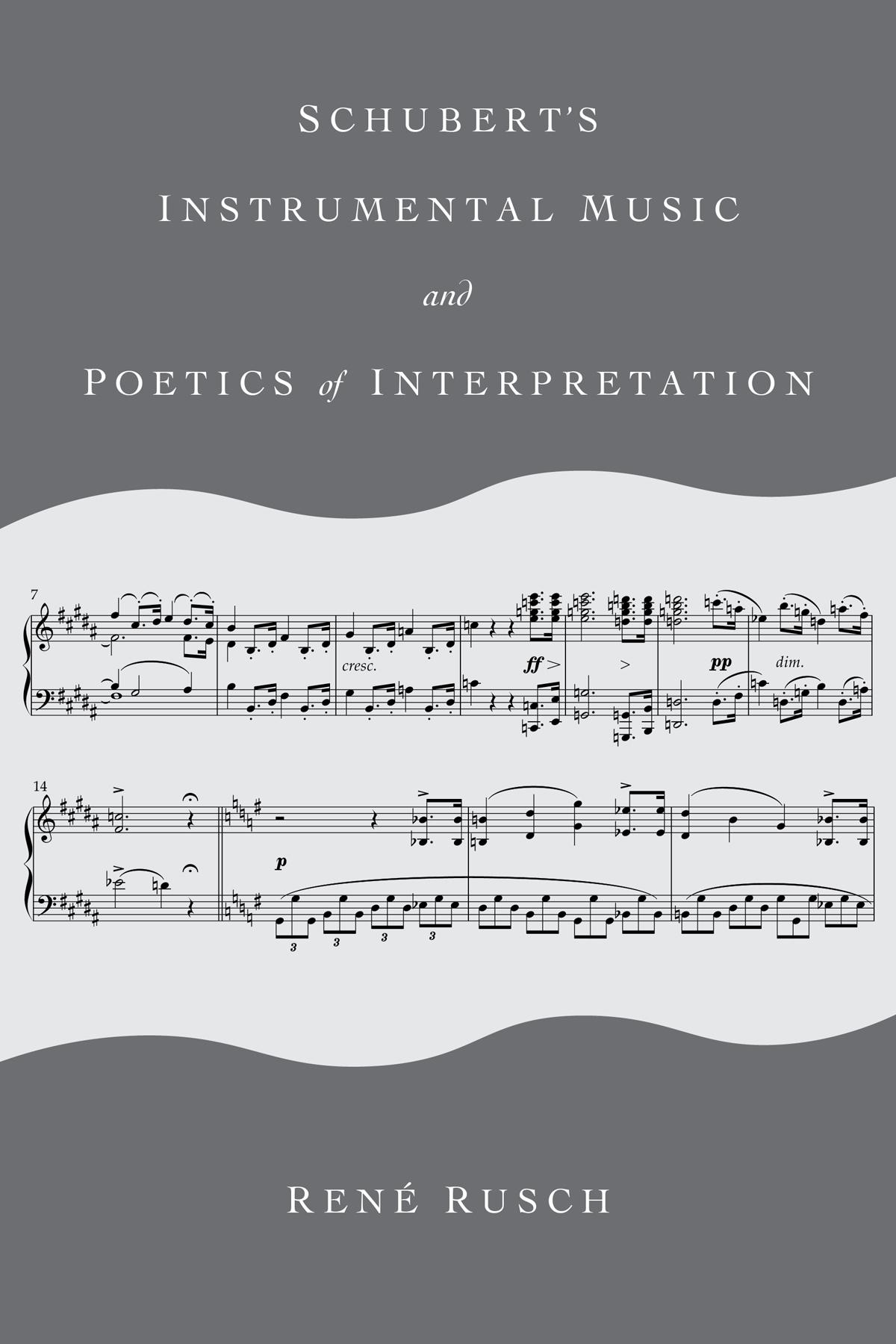
Music scholarship's views of Franz Schubert's instrumental works continue to evolve. How might aesthetic values, historiographies, revisions to the composer's biography, and disciplinary commitments affect how we interpret his music?
Schubert's Instrumental Music and Poetics of Interpretation explores the aesthetic positions and operations that underlie critical assessments of Schubert's instrumental works. In six chapters, each devoted to one or two of Schubert's pieces, René Rusch examines the conditions that have prompted scholarship to reevaluate the composer's music and legacy, considers how different conclusions about his music may be reflective of certain aesthetic values, investigates the role of narrative in both music analysis and constructions of history, and explores alternative forms of coherence through updated analyses of the composer's instrumental works. Rusch's observations and comparative analyses address four significant areas of scholarly focus in Schubert studies, including his approach to chromaticism, his unique musical forms, the relationship between his music and biography, and the influence of Beethoven.
Drawing from a range of philosophical, hermeneutic, historical, biographical, theoretical, and analytical sources, Schubert's Instrumental Music and Poetics of Interpretation offers readers a unique and innovative foray into the poetics of contemporary analyses of Schubert's instrumental music and develops new ways to engage with his repertoire.
Zahle einfach mit Karte, Klarna, Apple Pay oder Google Pay. Nicht zufrieden? Du hast immer ein 14-tägiges Widerrufsrecht. Lies mehr in unseren AGB. Hast du Fragen, schreib uns eine E-Mail an hello@memmo.org.
Memmo macht das Lernen einfacher – wo auch immer du bist. Bei uns findest du deine Kursbücher und smarte Lerntools an einem Ort: Zusammenfassungen, Quizzes, Podcasts und Lernkarten. Und Ted, dein Lernbuddy, beantwortet alles, was du wissen möchtest. Über 50.000 Studierende lernen bereits hier – gemacht, damit du schneller lernst und weniger Stress hast.