
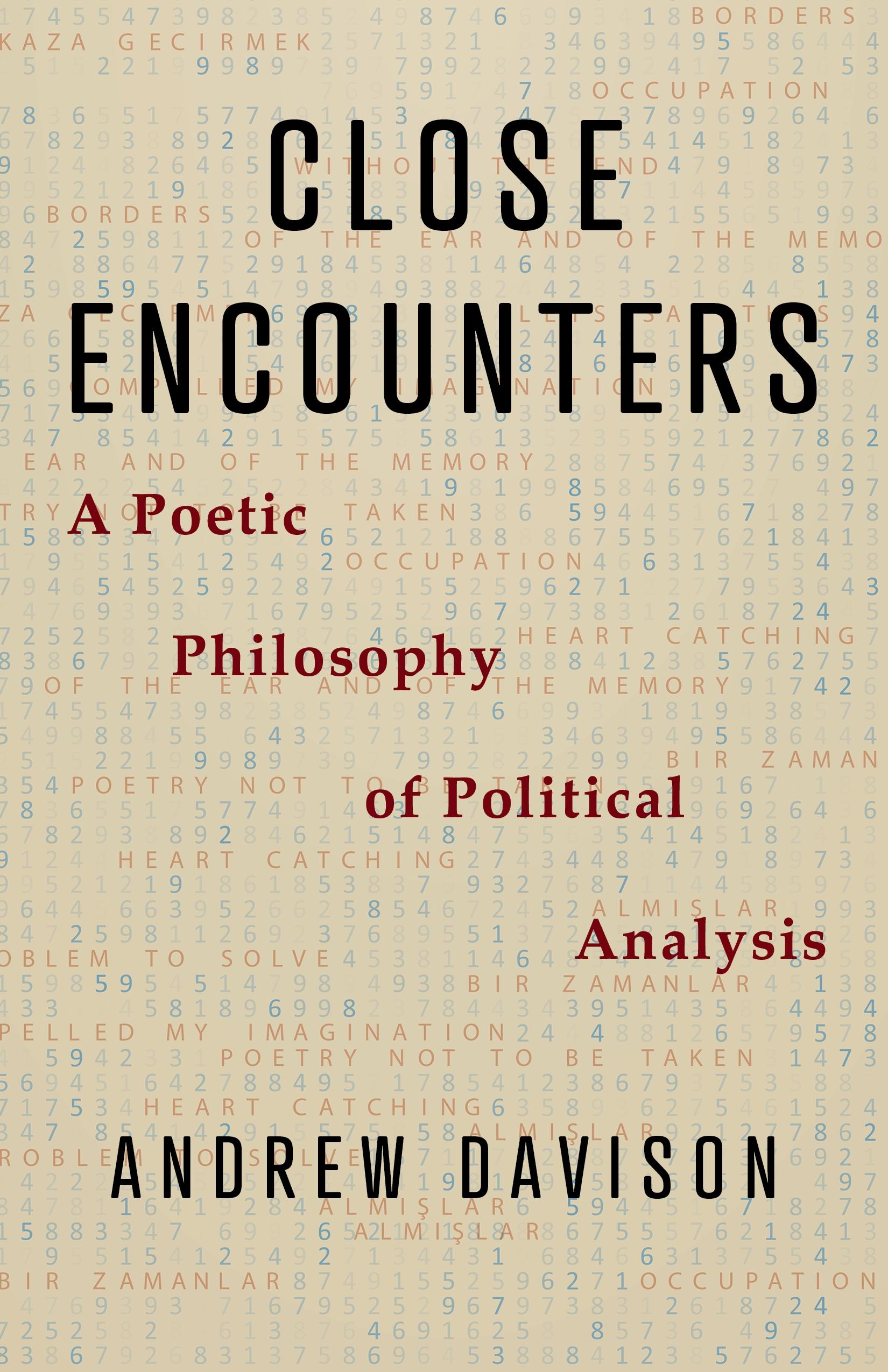
What would it look like to approach data with the care and attentiveness that we bring to a poem? Andrew Davison proposes a new philosophy of data modeled on the affective and ethical qualities of the encounter between a reader and a literary text and demonstrates its significance for understanding urgent social and political issues.
In a cross-disciplinary engagement with philosophical, literary, and political-theoretical accounts of poetic experience, Close Encounters challenges the philosophical underpinnings of dominant approaches to data analysis. Instead, Davison argues, social scientists should treat their data with the same close attention and ethical responsibility that are accorded to literary texts. In this view, quantitative and qualitative data are not only collected, coded, or constructed—they are entrusted to the care of their recipient. Such attunement yields original insight into silenced, erased, and neglected subaltern dimensions of the data. Davison demonstrates how this methodology provides fresh perspective on pressing topics such as immigration, border politics, torture, war, Trumpism, violent political speech, medical care, criminal justice, algorithmic governance, and the COVID-19 pandemic. Bringing together a strikingly original theorization of data with a rich array of examples, Close Encounters shows why the skills and methods of literary inquiry are essential to ethically sensitive data analysis.
Zahle einfach mit Karte, Klarna, Apple Pay oder Google Pay. Nicht zufrieden? Du hast immer ein 14-tägiges Widerrufsrecht. Lies mehr in unseren AGB. Hast du Fragen, schreib uns eine E-Mail an hello@memmo.org.
Memmo macht das Lernen einfacher – wo auch immer du bist. Bei uns findest du deine Kursbücher und smarte Lerntools an einem Ort: Zusammenfassungen, Quizzes, Podcasts und Lernkarten. Und Ted, dein Lernbuddy, beantwortet alles, was du wissen möchtest. Über 50.000 Studierende lernen bereits hier – gemacht, damit du schneller lernst und weniger Stress hast.