
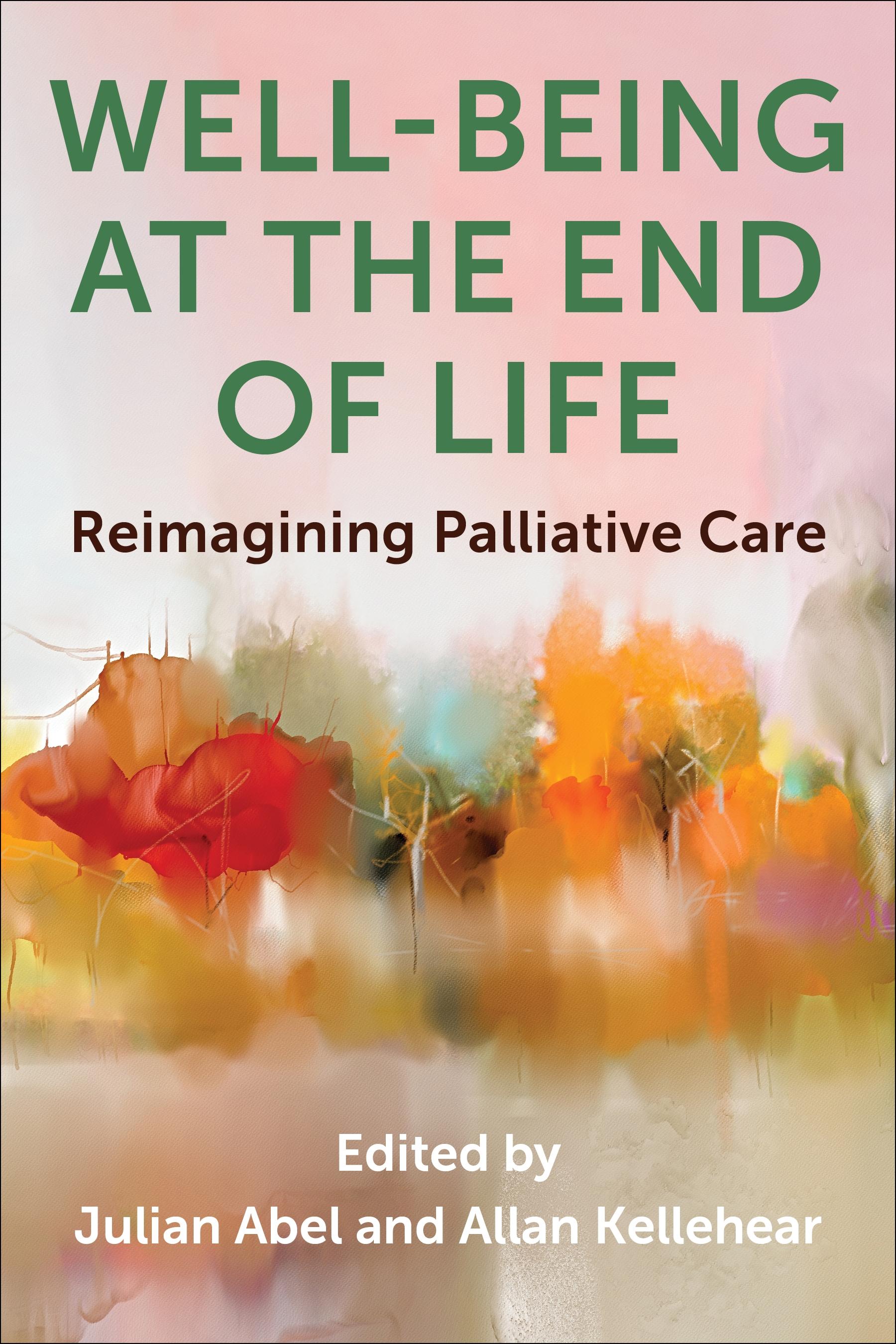
The field of palliative care promises support for a dying person’s physical, psychological, social, and spiritual needs, as well as the needs of family and community. Has this powerful vision been achieved? This state-of-the-field book argues that palliative care has drifted away from its transformative goals—and shows what to do about it.
Bringing together leading international scholars and practitioners, Well-Being at the End of Life demonstrates how contemporary palliative care has slowly but surely strayed from its original values and practices. The provision of palliative care now reflects institutional, medicalized, and health-service priorities. Increasingly, it has become solely clinical, confined and constrained by clinical service considerations and limitations. Those at the end of life are all too often viewed as patients to be treated instead of people with whom care providers must create collaboration, participation, and partnerships.
Contributors call for a paradigm shift in the values and priorities of palliative care to emphasize the importance of community to personal well-being. Drawing on the concept of health promotion, they advance a shared vision that merges the principles of public health with those of palliative care. Reimagining the field to foreground compassion and interdependence, Well-Being at the End of Life offers a new approach that puts community and professional partnerships at the heart of its practice.
Zahle einfach mit Karte, Klarna, Apple Pay oder Google Pay. Nicht zufrieden? Du hast immer ein 14-tägiges Widerrufsrecht. Lies mehr in unseren AGB. Hast du Fragen, schreib uns eine E-Mail an hello@memmo.org.
Memmo macht das Lernen einfacher – wo auch immer du bist. Bei uns findest du deine Kursbücher und smarte Lerntools an einem Ort: Zusammenfassungen, Quizzes, Podcasts und Lernkarten. Und Ted, dein Lernbuddy, beantwortet alles, was du wissen möchtest. Über 50.000 Studierende lernen bereits hier – gemacht, damit du schneller lernst und weniger Stress hast.