
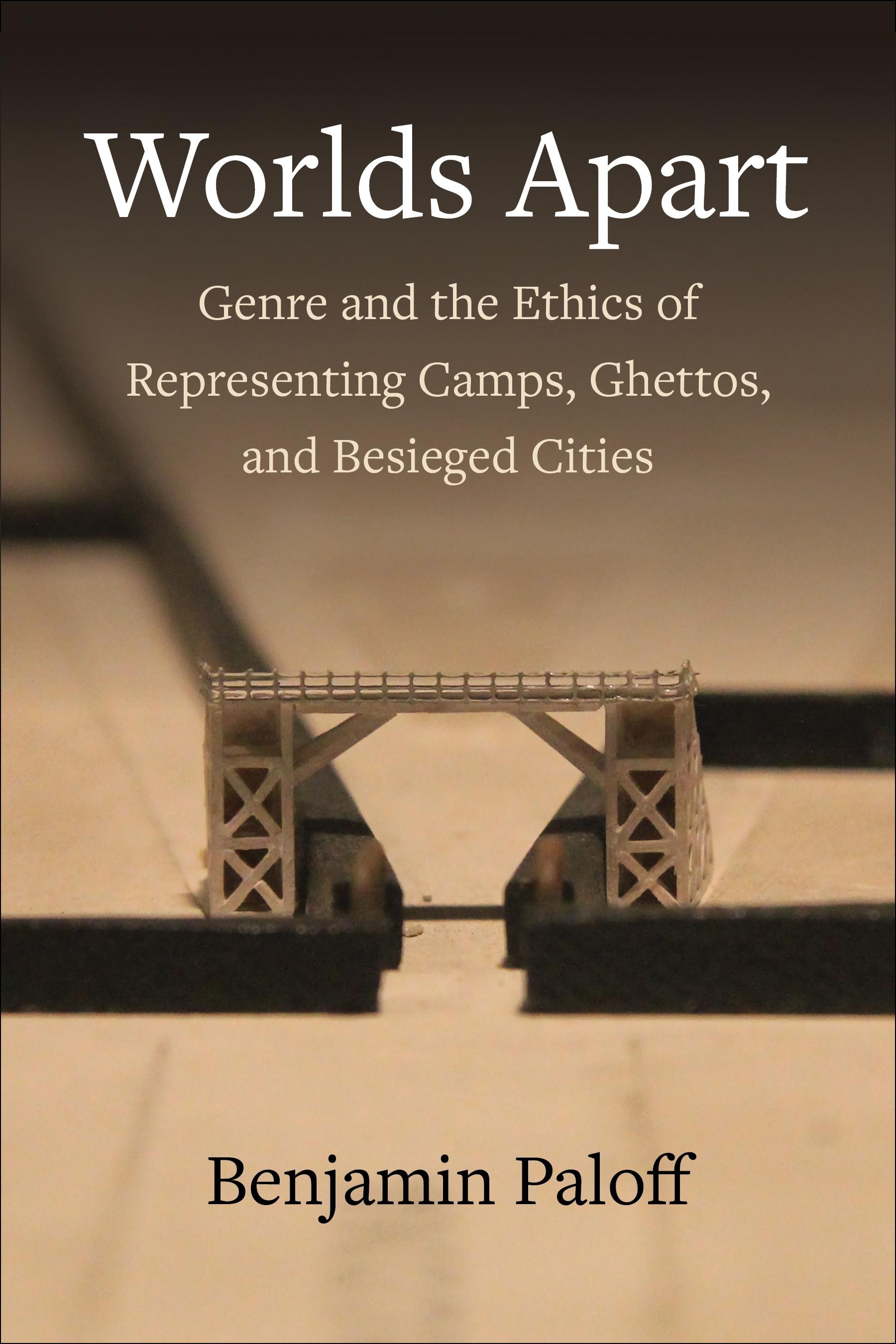
A number of European authors who survived concentration camps, ghettos, and besieged cities in the middle of the twentieth century chose not to write straightforward memoirs or testimonials but instead to fictionalize their experiences. By manipulating narrative time and point of view and altering biographical facts, these writers produced literary texts that challenge common notions of what constitutes an appropriate representation of collective trauma. How might such works provide a deeper understanding of historical truth than the facts alone? What does the literature of the camps reveal about present-day spaces of confinement?
Worlds Apart explores the ethics of representation by reading the works of writers who use the techniques of literary fiction to depict survival in these precarious spaces. Benjamin Paloff traces the complex relationship between fact and truth in these texts, disentangling writers’ individual experiences from fictional elements that universalize that experience and, in so doing, show the camp to be an institution of the present. Touring the unusual genre conventions of these works, he weighs crucial questions about what constitutes “truth” in historical representation, literature, and the popular imagination. Reading across Czech, French, German, Polish, Russian, and Yiddish, including lesser-known and untranslated works, Paloff considers portrayals of the Shoah, the Gulag, the Warsaw Ghetto Uprising, and the blockade of Leningrad. Bold, nuanced, and rich in comparative insight, Worlds Apart argues forcefully for the moral urgency of recognizing that the camp is not simply a historical artifact but a basic institution of contemporary society.
Zahle einfach mit Karte, Klarna, Apple Pay oder Google Pay. Nicht zufrieden? Du hast immer ein 14-tägiges Widerrufsrecht. Lies mehr in unseren AGB. Hast du Fragen, schreib uns eine E-Mail an hello@memmo.org.
Memmo macht das Lernen einfacher – wo auch immer du bist. Bei uns findest du deine Kursbücher und smarte Lerntools an einem Ort: Zusammenfassungen, Quizzes, Podcasts und Lernkarten. Und Ted, dein Lernbuddy, beantwortet alles, was du wissen möchtest. Über 50.000 Studierende lernen bereits hier – gemacht, damit du schneller lernst und weniger Stress hast.