
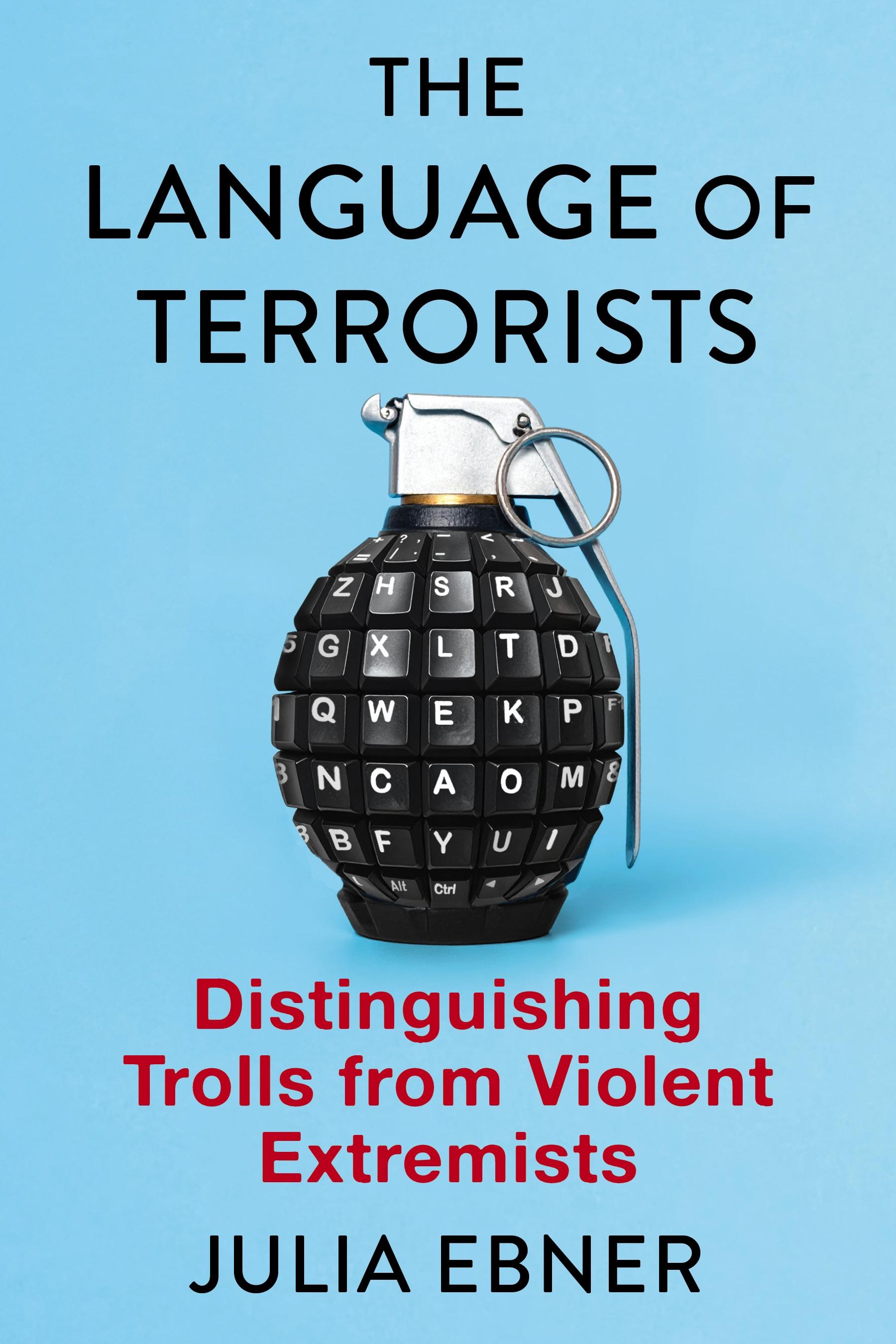
If someone posts a death threat or a violent manifesto online, will they cross over from words to deeds? Explicit threats, intimidation campaigns, and incitements to violence are no rarity among white nationalists, incels, and other racist and misogynist extremists. Yet it is often difficult to determine whether they pose genuine risks, since the boundaries between trolling and true violent intent can be blurry. How can we tell the difference between online bluster and terrorist threats?
Julia Ebner—an internationally acclaimed expert on online radicalization—offers a fresh approach, showing how language patterns reveal the potential for political violence. She investigates the psychological underpinnings of texts by terrorists such as Anders Breivik, Dylann Roof, Elliot Rodger, and Brenton Tarrant, offering statistical and qualitative contrasts with nonviolent political writing. Ebner finds striking similarities among their manifestos, including the fusion of personal identity with the group, visceral othering of outgroups, narratives of existential conflict, and the glorification of violence. Following these trails, she demonstrates that perpetrators of extremist violence inadvertently give away their intentions in what they say. Featuring vivid writing and actionable conclusions, The Language of Terrorists presents a new model of violent threat detection that can address pressing challenges faced by the international security and intelligence communities.
Zahle einfach mit Karte, Klarna, Apple Pay oder Google Pay. Nicht zufrieden? Du hast immer ein 14-tägiges Widerrufsrecht. Lies mehr in unseren AGB. Hast du Fragen, schreib uns eine E-Mail an hello@memmo.org.
Memmo macht das Lernen einfacher – wo auch immer du bist. Bei uns findest du deine Kursbücher und smarte Lerntools an einem Ort: Zusammenfassungen, Quizzes, Podcasts und Lernkarten. Und Ted, dein Lernbuddy, beantwortet alles, was du wissen möchtest. Über 50.000 Studierende lernen bereits hier – gemacht, damit du schneller lernst und weniger Stress hast.