
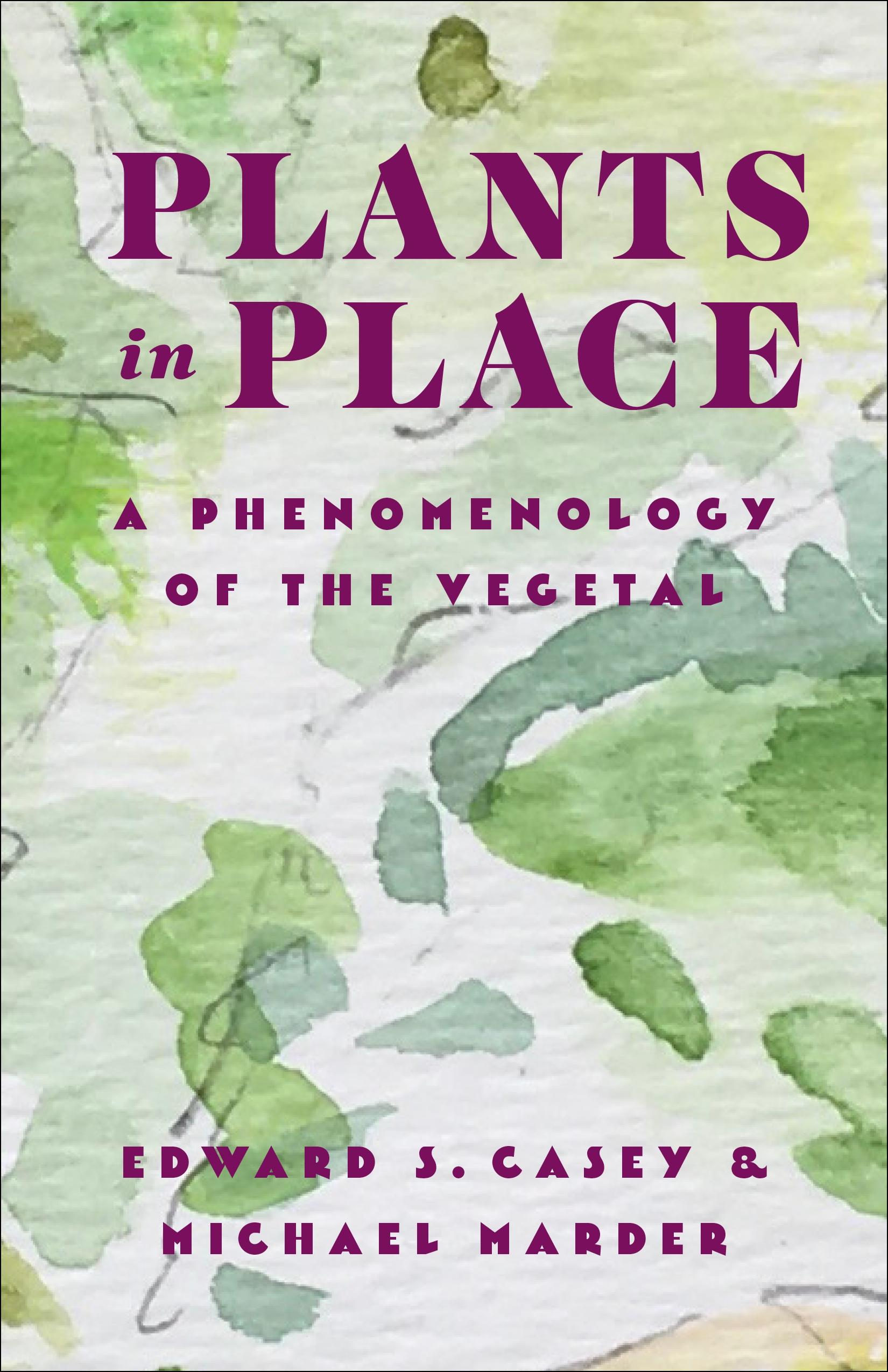
Plants are commonly considered immobile, in contrast to humans and other animals. But vegetal existence involves many place-based forms of change: stems growing upward, roots spreading outward, fronds unfurling in response to sunlight, seeds traveling across wide distances, and other intricate relationships with the surrounding world. How do plants as sessile, growing, decaying, and metamorphosing beings shape the places they inhabit, and how are they shaped by them? How do human places interact with those of plants—in lived experience; in landscape painting; in cultivation and contemplation; in forests, fields, gardens, and cities?
Examining these questions and many more, Plants in Place is a collaborative study of vegetal phenomenology at the intersection of Edward S. Casey’s phenomenology of place and Michael Marder’s plant-thinking. It focuses on both the microlevel of the dynamic constitution of plant edges or a child’s engagement with moss and the macrolevel of habitats that include the sociality of trees. This compelling portrait of plants and their places provides readers with new ways to appreciate the complexity and vitality of vegetal life. Eloquent, descriptively rich, and insightful, the book also shows how the worlds of plants can enhance our understanding and experience of place more broadly.
Zahle einfach mit Karte, Klarna, Apple Pay oder Google Pay. Nicht zufrieden? Du hast immer ein 14-tägiges Widerrufsrecht. Lies mehr in unseren AGB. Hast du Fragen, schreib uns eine E-Mail an hello@memmo.org.
Memmo macht das Lernen einfacher – wo auch immer du bist. Bei uns findest du deine Kursbücher und smarte Lerntools an einem Ort: Zusammenfassungen, Quizzes, Podcasts und Lernkarten. Und Ted, dein Lernbuddy, beantwortet alles, was du wissen möchtest. Über 50.000 Studierende lernen bereits hier – gemacht, damit du schneller lernst und weniger Stress hast.