
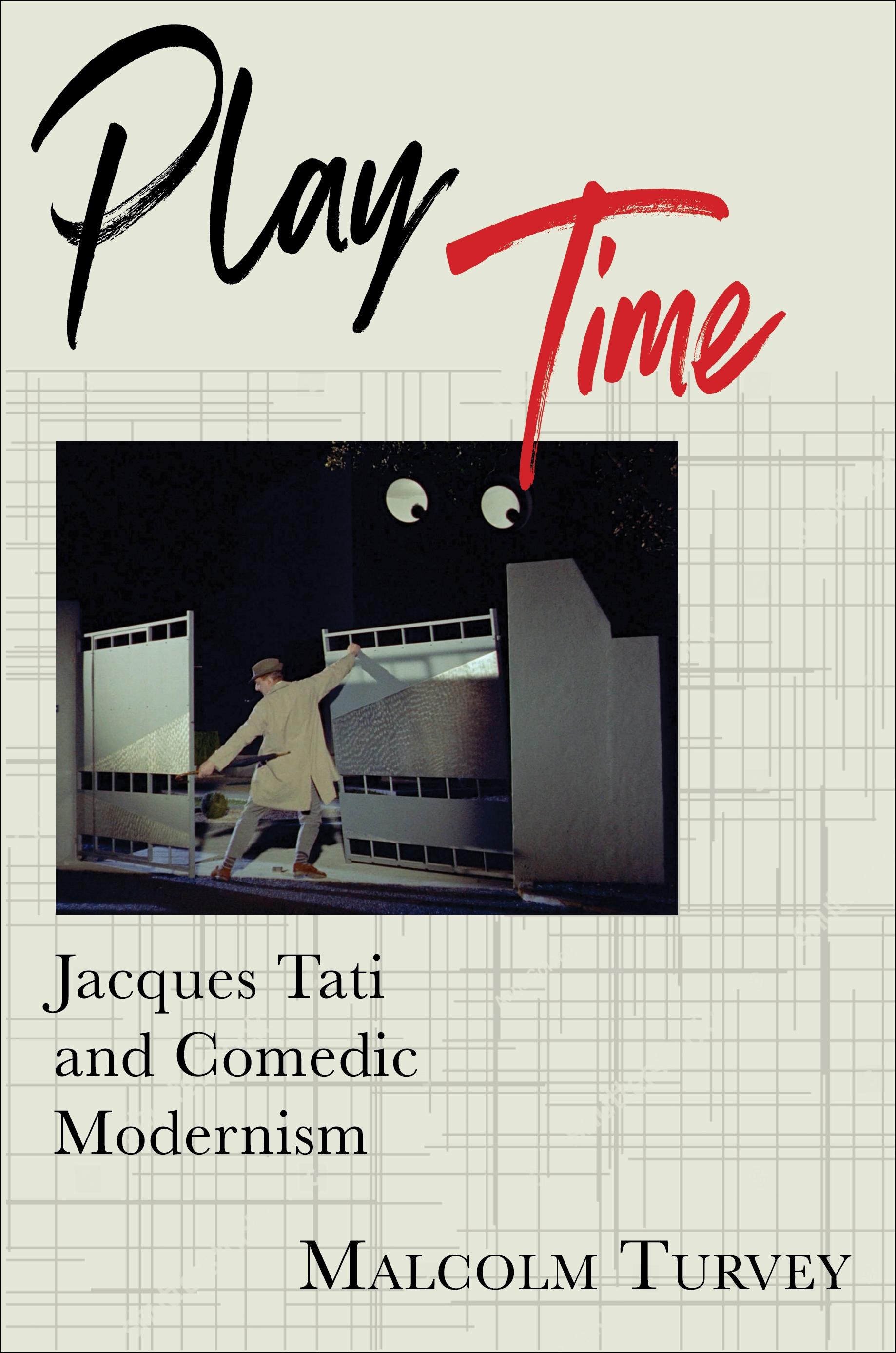
Jacques Tati is widely regarded as one of the greatest postwar European filmmakers. He made innovative and challenging comedies while achieving international box office success and attaining a devoted following. In Play Time, Malcolm Turvey examines Tati’s unique comedic style and evaluates its significance for the history of film and modernism.
Turvey argues that Tati captured elite and general audiences alike by combining a modernist aesthetic with slapstick routines, gag structures, and other established traditions of mainstream film comedy. Considering films such as Monsieur Hulot’s Holiday (1953), Mon Oncle (1958), Play Time (1967), and Trafic (1971), Turvey shows how Tati drew on the rich legacy of comic silent film while modernizing its conventions in order to encourage his viewers to adopt a playful attitude toward the modern world. Turvey also analyzes Tati’s sardonic view of the bourgeoisie and his complex and multifaceted satire of modern life. Tati's singular and enduring achievement, Turvey concludes, was to translate the democratic ideals of the postwar avant-garde into mainstream film comedy, crafting a genuinely popular modernism. Richly illustrated with images from the director’s films, Play Time offers an illuminating and original understanding of Tati’s work.
Zahle einfach mit Karte, Klarna, Apple Pay oder Google Pay. Nicht zufrieden? Du hast immer ein 14-tägiges Widerrufsrecht. Lies mehr in unseren AGB. Hast du Fragen, schreib uns eine E-Mail an hello@memmo.org.
Memmo macht das Lernen einfacher – wo auch immer du bist. Bei uns findest du deine Kursbücher und smarte Lerntools an einem Ort: Zusammenfassungen, Quizzes, Podcasts und Lernkarten. Und Ted, dein Lernbuddy, beantwortet alles, was du wissen möchtest. Über 50.000 Studierende lernen bereits hier – gemacht, damit du schneller lernst und weniger Stress hast.