
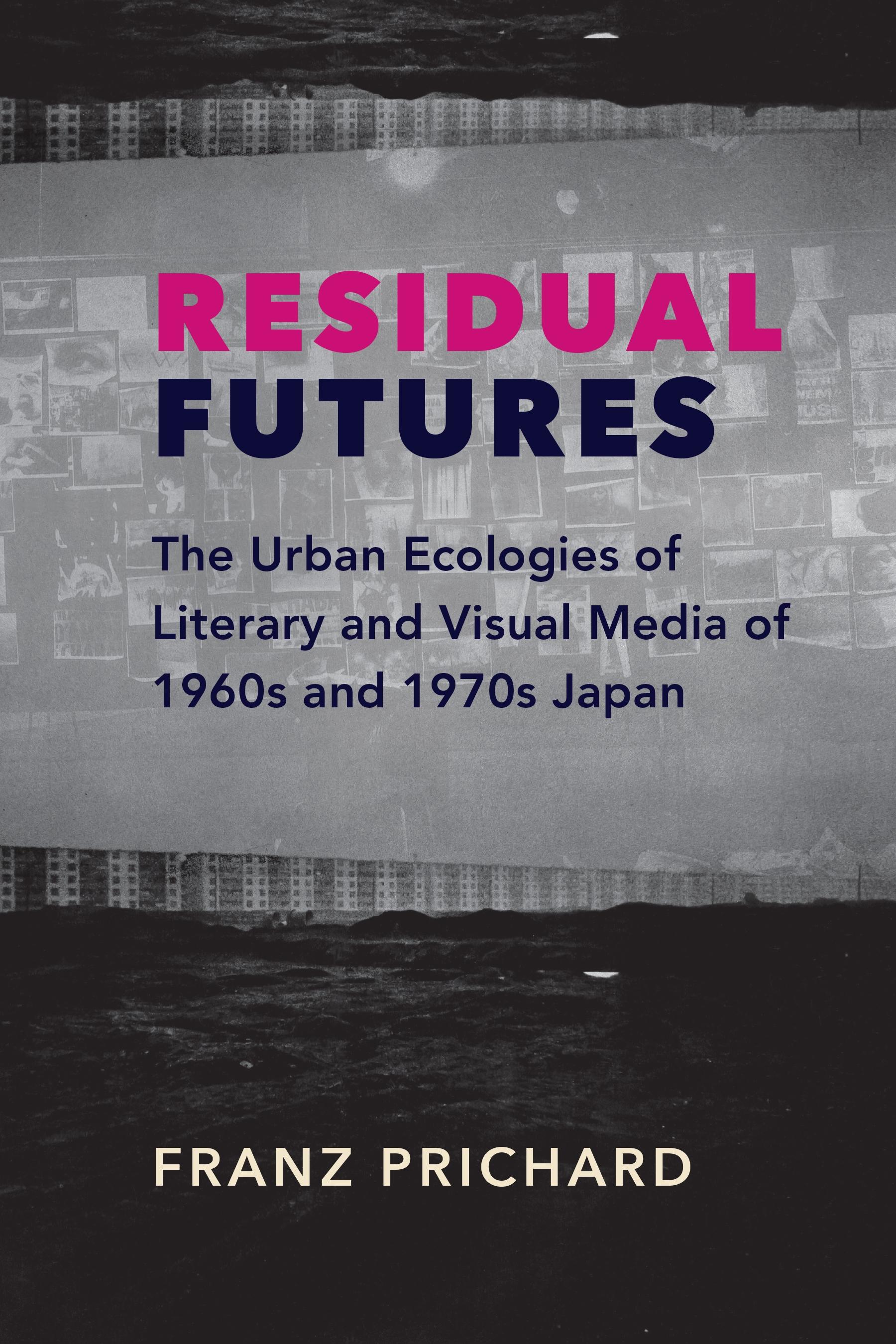
In the postwar years, an eruption of urbanization took place across Japan, from its historical central cities to the outer reaches of the archipelago. During the 1960s and 1970s, Japanese literary and visual media took a deep interest in cities and their problems, and what this rapid change meant for the country. In Residual Futures, Franz Prichard offers a pathbreaking analysis of the works wrought from this intensive urbanization, mapping the ways in which Japanese filmmakers, writers, photographers, and other artists came to grips with the entwined ecologies of a drastic transformation.
Residual Futures examines crucial works of documentary film, fiction, and photography that interrogated Japan’s urbanization and integration into the U.S.-dominated geopolitical system. Prichard discusses documentary filmmaker Tsuchimoto Noriaki’s portrait of the urban “traffic war” and the remaking of Tokyo for the 1964 Olympics, novelist Abe Kōbō’s depictions of infrastructure and urban sociality, and the radical notions of landscape that emerge from the critical and photographic work of Nakahira Takuma. His careful readings reveal the shifting relationships among urban materialities and subjectivities and the ecological, political, and aesthetic vocabularies of urban change. A novel cultural history of critical urban discourse in Japan, Residual Futures brings an interdisciplinary approach to Japanese literary and visual media studies. It provides a vital new perspective on the infrastructural aesthetics and entangled urban and media conditions of the global Cold War.
Zahle einfach mit Karte, Klarna, Apple Pay oder Google Pay. Nicht zufrieden? Du hast immer ein 14-tägiges Widerrufsrecht. Lies mehr in unseren AGB. Hast du Fragen, schreib uns eine E-Mail an hello@memmo.org.
Memmo macht das Lernen einfacher – wo auch immer du bist. Bei uns findest du deine Kursbücher und smarte Lerntools an einem Ort: Zusammenfassungen, Quizzes, Podcasts und Lernkarten. Und Ted, dein Lernbuddy, beantwortet alles, was du wissen möchtest. Über 50.000 Studierende lernen bereits hier – gemacht, damit du schneller lernst und weniger Stress hast.