
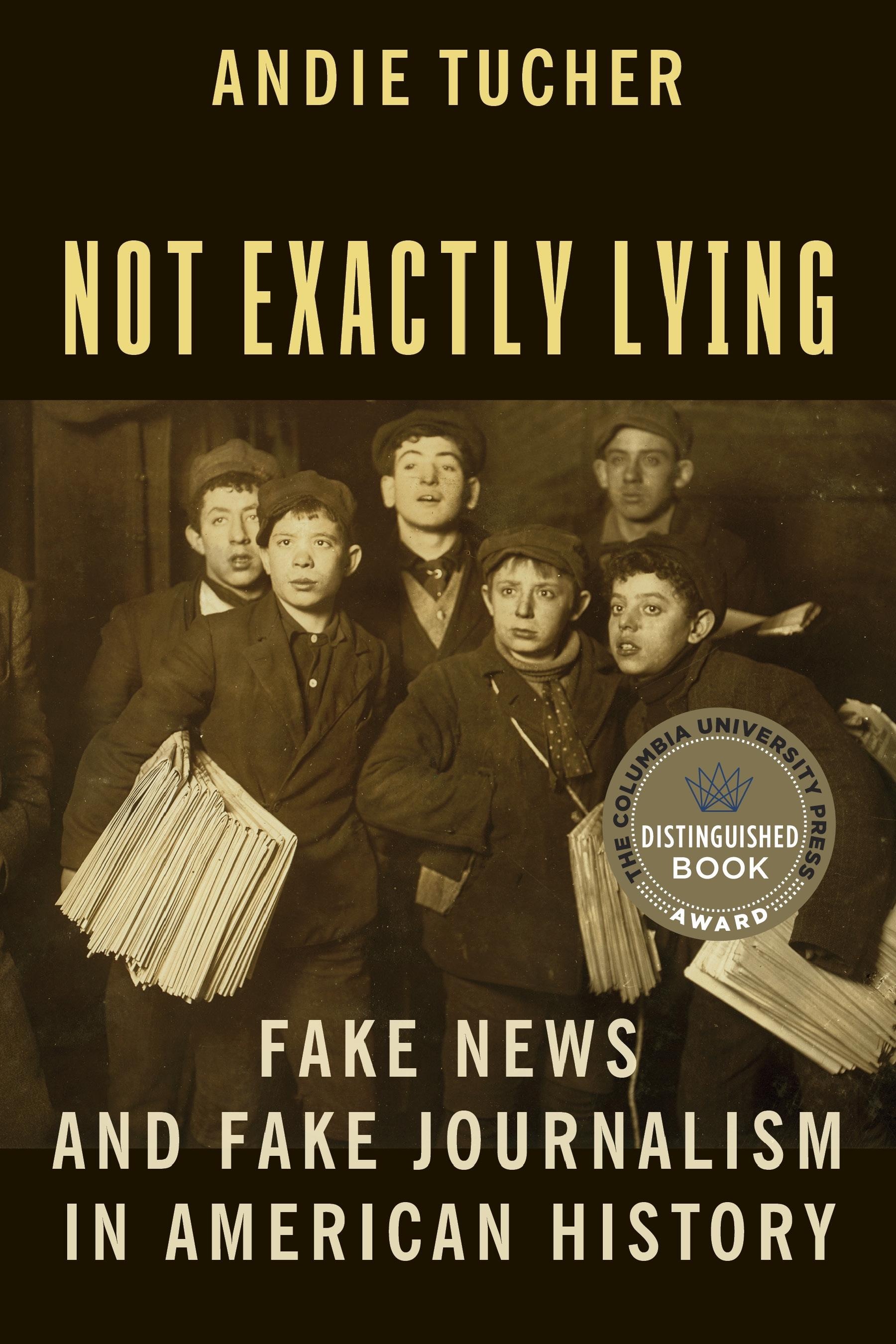
Winner, 2023 Columbia University Press Distinguished Book Award
Winner, 2023 Frank Luther Mott / Kappa Tau Alpha Research Award
Winner, 2023 Journalism Studies Division Book Award, International Communication Association
Winner, 2023 History Book Award, Association for Education in Journalism and Mass Communication
Long before the current preoccupation with “fake news,” American newspapers routinely ran stories that were not quite, strictly speaking, true. Today, a firm boundary between fact and fakery is a hallmark of journalistic practice, yet for many readers and publishers across more than three centuries, this distinction has seemed slippery or even irrelevant. From fibs about royal incest in America’s first newspaper to social-media-driven conspiracy theories surrounding Barack Obama’s birthplace, Andie Tucher explores how American audiences have argued over what’s real and what’s not—and why that matters for democracy.
Early American journalism was characterized by a hodgepodge of straightforward reporting, partisan broadsides, humbug, tall tales, and embellishment. Around the start of the twentieth century, journalists who were determined to improve the reputation of their craft established professional norms and the goal of objectivity. However, Tucher argues, the creation of outward forms of factuality unleashed new opportunities for falsehood: News doesn’t have to be true as long as it looks true. Propaganda, disinformation, and advocacy—whether in print, on the radio, on television, or online—could be crafted to resemble the real thing. Dressed up in legitimate journalistic conventions, this “fake journalism” became inextricably bound up with right-wing politics, to the point where it has become an essential driver of political polarization. Shedding light on the long history of today’s disputes over disinformation, Not Exactly Lying is a timely consideration of what happens to public life when news is not exactly true.
Zahle einfach mit Karte, Klarna, Apple Pay oder Google Pay. Nicht zufrieden? Du hast immer ein 14-tägiges Widerrufsrecht. Lies mehr in unseren AGB. Hast du Fragen, schreib uns eine E-Mail an hello@memmo.org.
Memmo macht das Lernen einfacher – wo auch immer du bist. Bei uns findest du deine Kursbücher und smarte Lerntools an einem Ort: Zusammenfassungen, Quizzes, Podcasts und Lernkarten. Und Ted, dein Lernbuddy, beantwortet alles, was du wissen möchtest. Über 50.000 Studierende lernen bereits hier – gemacht, damit du schneller lernst und weniger Stress hast.