
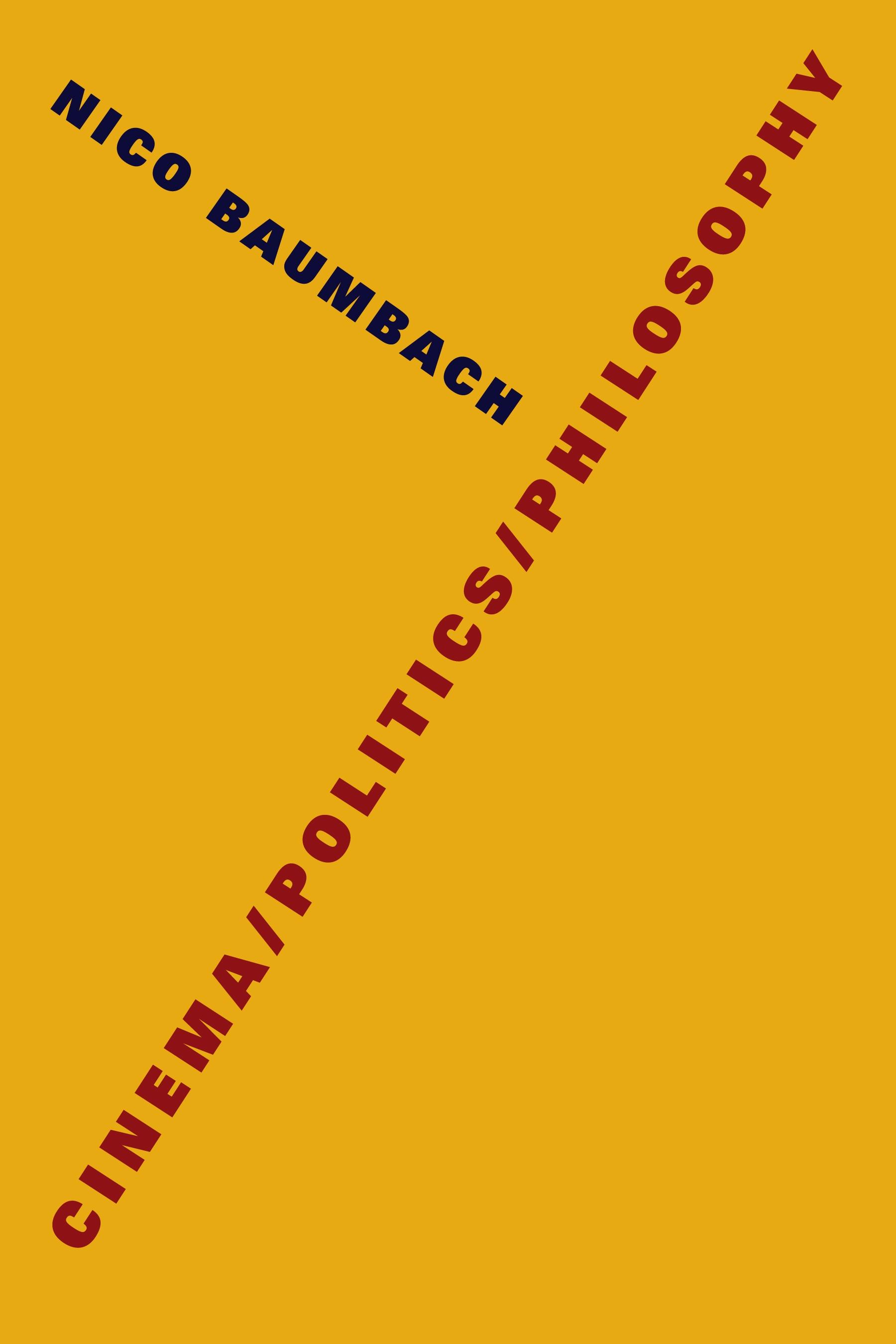
Almost fifty years ago, Jean-Louis Comolli and Jean Narboni published the manifesto “Cinema/Ideology/Criticism,” helping to set the agenda for a generation of film theory that used cinema as a means of critiquing capitalist ideology. In recent decades, film studies has moved away from politicized theory, abandoning the productive ways in which theory understands the relationship between cinema, politics, and art. In Cinema/Politics/Philosophy, Nico Baumbach revisits the much-maligned tradition of seventies film theory to reconsider: What does it mean to call cinema political?
In this concise and provocative book, Baumbach argues that we need a new philosophical approach that sees cinema as both a mode of thought and a form of politics. Through close readings of the writings on cinema by the contemporary continental philosophers Jacques Rancière, Alain Badiou, and Giorgio Agamben, he asks us to rethink both the legacy of ideology critique and Deleuzian film-philosophy. He explores how cinema can condition philosophy through its own means, challenging received ideas about what is seeable, sayable, and doable. Cinema/Politics/Philosophy offers fundamental new ways to think about cinema as thought, art, and politics.
Zahle einfach mit Karte, Klarna, Apple Pay oder Google Pay. Nicht zufrieden? Du hast immer ein 14-tägiges Widerrufsrecht. Lies mehr in unseren AGB. Hast du Fragen, schreib uns eine E-Mail an hello@memmo.org.
Memmo macht das Lernen einfacher – wo auch immer du bist. Bei uns findest du deine Kursbücher und smarte Lerntools an einem Ort: Zusammenfassungen, Quizzes, Podcasts und Lernkarten. Und Ted, dein Lernbuddy, beantwortet alles, was du wissen möchtest. Über 50.000 Studierende lernen bereits hier – gemacht, damit du schneller lernst und weniger Stress hast.