
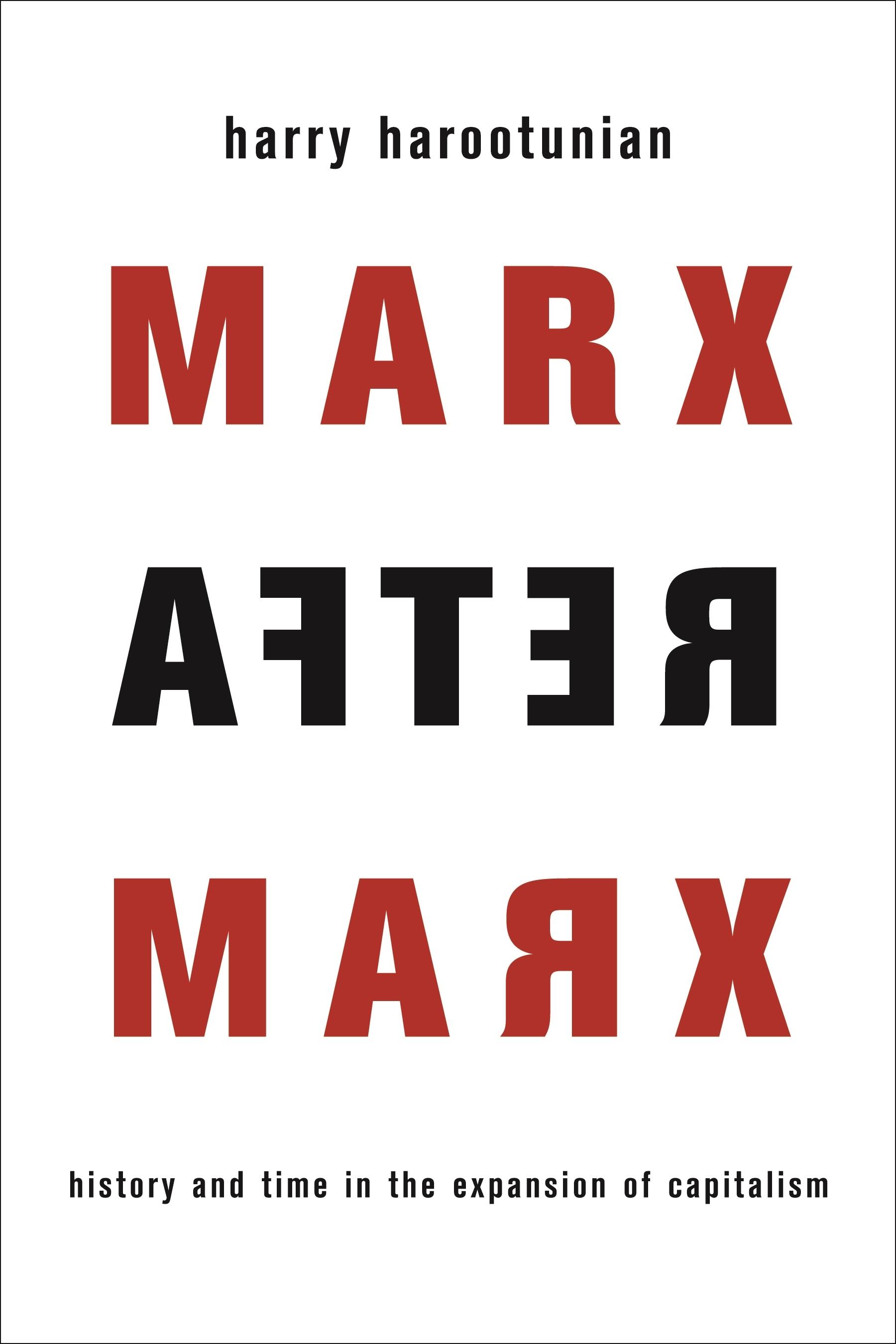
In Marx After Marx, Harry Harootunian questions the claims of Western Marxism and its presumption of the final completion of capitalism. If this shift in Marxism reflected the recognition that the expected revolutions were not forthcoming in the years before World War II, its Cold War afterlife helped to both unify the West in its struggle with the Soviet Union and bolster the belief that capitalism remained dominant in the contest over progress.
This book deprovincializes Marx and the West's cultural turn by returning to the theorist's earlier explanations of capital's origins and development, which followed a trajectory beyond Euro-America to Asia, Africa, and Latin America. Marx's expansive view shows how local circumstances, time, and culture intervened to reshape capital's system of production in these regions. His outline of a diversified global capitalism was much more robust than was his sketch of the English experience in Capital and helps explain the disparate routes that evolved during the twentieth century. Engaging with the texts of Lenin, Luxemburg, Gramsci, and other pivotal theorists, Harootunian strips contemporary Marxism of its cultural preoccupation by reasserting the deep relevance of history.
Zahle einfach mit Karte, Klarna, Apple Pay oder Google Pay. Nicht zufrieden? Du hast immer ein 14-tägiges Widerrufsrecht. Lies mehr in unseren AGB. Hast du Fragen, schreib uns eine E-Mail an hello@memmo.org.
Memmo macht das Lernen einfacher – wo auch immer du bist. Bei uns findest du deine Kursbücher und smarte Lerntools an einem Ort: Zusammenfassungen, Quizzes, Podcasts und Lernkarten. Und Ted, dein Lernbuddy, beantwortet alles, was du wissen möchtest. Über 50.000 Studierende lernen bereits hier – gemacht, damit du schneller lernst und weniger Stress hast.