
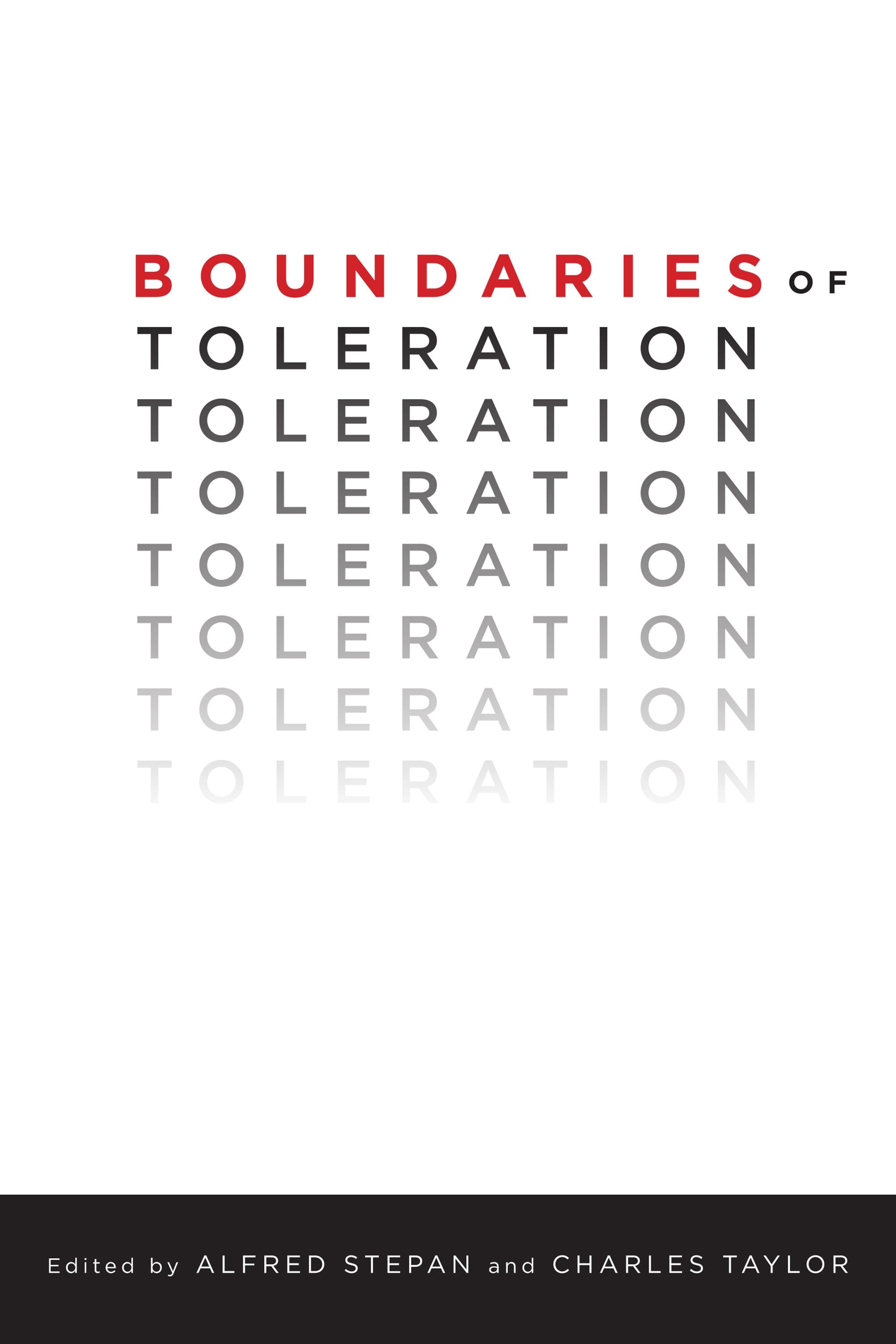
How can people of diverse religious, ethnic, and linguistic allegiances and identities live together without committing violence, inflicting suffering, or oppressing each other? In this volume, contributors explore the limits of toleration and suggest we think beyond them to mutual respect. Salman Rushdie reflects on the once tolerant Sufi-Hindu culture of Kashmir. Ira Katznelson follows with an intellectual history of toleration as a layered institution in the West. Charles Taylor advances a new approach to secularism in our multicultural world, and Akeel Bilgrami responds by offering context and caution to that approach. Nadia Urbinati explores why Cicero's humanist ideal of Concord was not used in response to religious discord. The volume concludes with a refutation of the claim that toleration was invented in the West. Rajeev Bhargava writes on Asoka's India, and Karen Barkey explores toleration within the Ottoman and Habsburg Empires. Sudipta Kaviraj examines accommodations and conflicts in India, and Alfred Stepan highlights contributions to toleration and multiple democratic secularisms in such Muslim-majority countries as Indonesia and Senegal.
Zahle einfach mit Karte, Klarna, Apple Pay oder Google Pay. Nicht zufrieden? Du hast immer ein 14-tägiges Widerrufsrecht. Lies mehr in unseren AGB. Hast du Fragen, schreib uns eine E-Mail an hello@memmo.org.
Memmo macht das Lernen einfacher – wo auch immer du bist. Bei uns findest du deine Kursbücher und smarte Lerntools an einem Ort: Zusammenfassungen, Quizzes, Podcasts und Lernkarten. Und Ted, dein Lernbuddy, beantwortet alles, was du wissen möchtest. Über 50.000 Studierende lernen bereits hier – gemacht, damit du schneller lernst und weniger Stress hast.
Das könnte dir auch gefallen
Buch kaufen0