
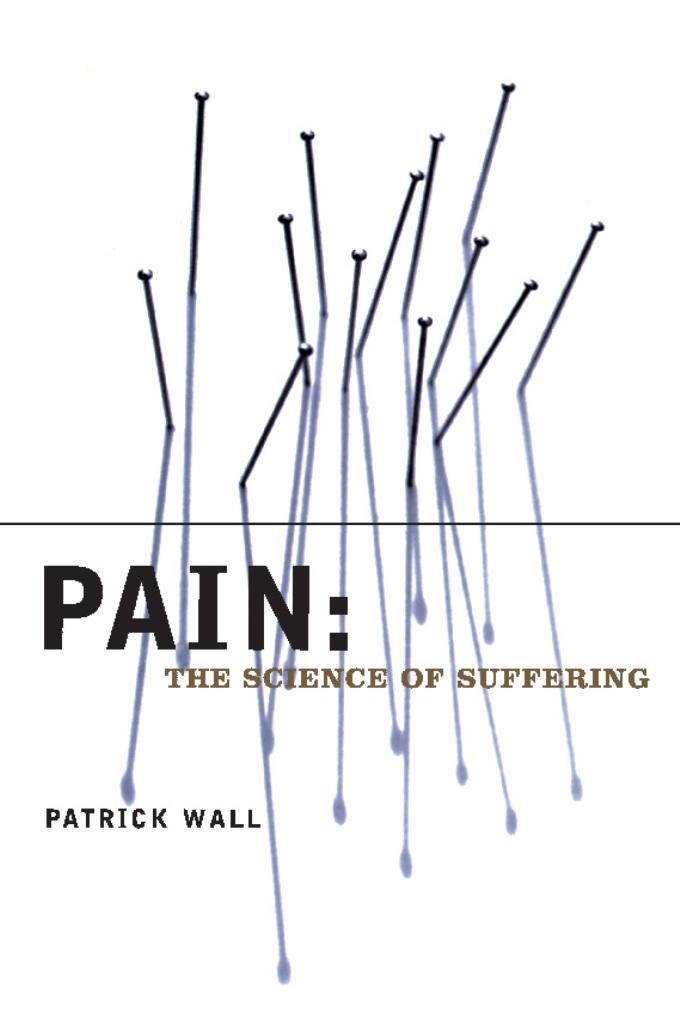
Pain is one of medicine's greatest mysteries. When farmer John Mitson caught his hand in a baler, he cut off his trapped hand and carried it to a neighbor. "Sheer survival and logic" was how he described it. "And strangely, I didn't feel any pain." How can this be? We're taught that pain is a warning message to be heeded at all costs, yet it can switch off in the most agonizing circumstances or switch on for no apparent reason. Many scientists, philosophers, and laypeople imagine pain to operate like a rigid, simple signaling system, as if a particular injury generates a fixed amount of pain that simply gets transmitted to the brain; yet this mechanistic model is woefully lacking in the face of the surprising facts about what people and animals do and experience when their bodies are damaged.
Patrick Wall looks at these questions and sets his scientific account in a broad context, interweaving it with a wealth of fascinating and sometimes disturbing historical detail, such as famous characters who derived pleasure from pain, the unexpected reactions of injured people, the role of endorphins, and the power of placebo. He covers cures of pain, ranging from drugs and surgery, through relaxation techniques and exercise, to acupuncture, electrical nerve stimulation, and herbalism.
Pain involves our state of mind, our social mores and beliefs, and our personal experiences and expectations. Stepping beyond the famous neurologic gate-control theory for which he is known, Wall shows that pain is a matter of behavior and its manifestation differs among individuals, situations, and cultures. "The way we deal with pain is an expression of individuality."
Zahle einfach mit Karte, Klarna, Apple Pay oder Google Pay. Nicht zufrieden? Du hast immer ein 14-tägiges Widerrufsrecht. Lies mehr in unseren AGB. Hast du Fragen, schreib uns eine E-Mail an hello@memmo.org.
Memmo macht das Lernen einfacher – wo auch immer du bist. Bei uns findest du deine Kursbücher und smarte Lerntools an einem Ort: Zusammenfassungen, Quizzes, Podcasts und Lernkarten. Und Ted, dein Lernbuddy, beantwortet alles, was du wissen möchtest. Über 50.000 Studierende lernen bereits hier – gemacht, damit du schneller lernst und weniger Stress hast.