
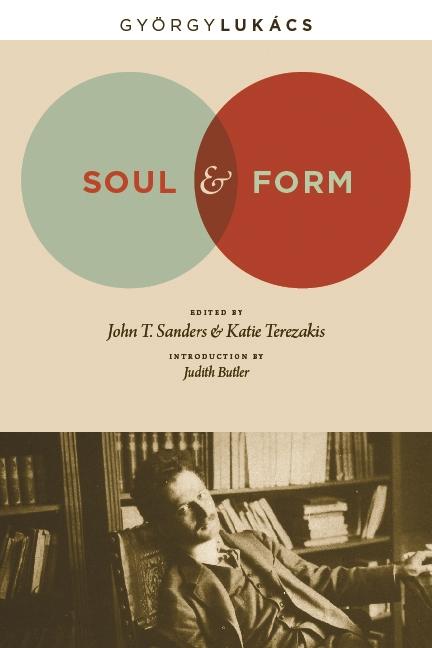
György Lukacs was a Hungarian Marxist philosopher, writer, and literary critic who shaped mainstream European Communist thought. Soul and Form was his first book, published in 1910, and it established his reputation, treating questions of linguistic expressivity and literary style in the works of Plato, Kierkegaard, Novalis, Sterne, and others. By isolating the formal techniques these thinkers developed, Lukács laid the groundwork for his later work in Marxist aesthetics, a field that introduced the historical and political implications of text.
For this centennial edition, John T. Sanders and Katie Terezakis add a dialogue entitled "On Poverty of Spirit," which Lukács wrote at the time of Soul and Form, and an introduction by Judith Butler, which compares Lukács's key claims to his later work and subsequent movements in literary theory and criticism. In an afterword, Terezakis continues to trace the Lukácsian system within his writing and other fields. These essays explore problems of alienation and isolation and the curative quality of aesthetic form, which communicates both individuality and a shared human condition. They investigate the elements that give rise to form, the history that form implies, and the historicity that form embodies. Taken together, they showcase the breakdown, in modern times, of an objective aesthetics, and the rise of a new art born from lived experience.
Zahle einfach mit Karte, Klarna, Apple Pay oder Google Pay. Nicht zufrieden? Du hast immer ein 14-tägiges Widerrufsrecht. Lies mehr in unseren AGB. Hast du Fragen, schreib uns eine E-Mail an hello@memmo.org.
Memmo macht das Lernen einfacher – wo auch immer du bist. Bei uns findest du deine Kursbücher und smarte Lerntools an einem Ort: Zusammenfassungen, Quizzes, Podcasts und Lernkarten. Und Ted, dein Lernbuddy, beantwortet alles, was du wissen möchtest. Über 50.000 Studierende lernen bereits hier – gemacht, damit du schneller lernst und weniger Stress hast.