
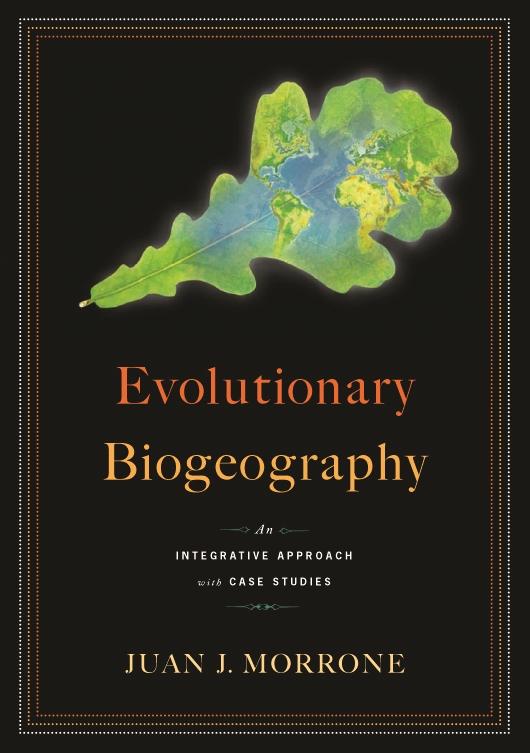
Rather than favoring only one approach, Juan J. Morrone proposes a comprehensive treatment of the developments and theories of evolutionary biogeography. Evolutionary biogeography uses distributional, phylogenetic, molecular, and fossil data to assess the historical changes that have produced current biotic patterns. Panbiogeography, parsimony analysis of endemicity, cladistic biogeography, and phylogeography are the four recent and most common approaches. Many conceive of these methods as representing different "schools," but Morrone shows how each addresses different questions in the various steps of an evolutionary biogeographical analysis.
Panbiogeography and parsimony analysis of endemicity are useful for identifying biotic components or areas of endemism. Cladistic biogeography uses phylogenetic data to determine the relationships between these biotic components. Further information on fossils, phylogeographic patterns, and molecular clocks can be incorporated to identify different cenocrons. Finally, available geological knowledge can help construct a geobiotic scenario that may explain how analyzed areas were put into contact and how the biotic components and cenocrons inhabiting them evolved. Morrone compares these methods and employs case studies to make it clear which is best for the question at hand. Set problems, discussion sections, and glossaries further enhance classroom use.
Zahle einfach mit Karte, Klarna, Apple Pay oder Google Pay. Nicht zufrieden? Du hast immer ein 14-tägiges Widerrufsrecht. Lies mehr in unseren AGB. Hast du Fragen, schreib uns eine E-Mail an hello@memmo.org.
Memmo macht das Lernen einfacher – wo auch immer du bist. Bei uns findest du deine Kursbücher und smarte Lerntools an einem Ort: Zusammenfassungen, Quizzes, Podcasts und Lernkarten. Und Ted, dein Lernbuddy, beantwortet alles, was du wissen möchtest. Über 50.000 Studierende lernen bereits hier – gemacht, damit du schneller lernst und weniger Stress hast.