
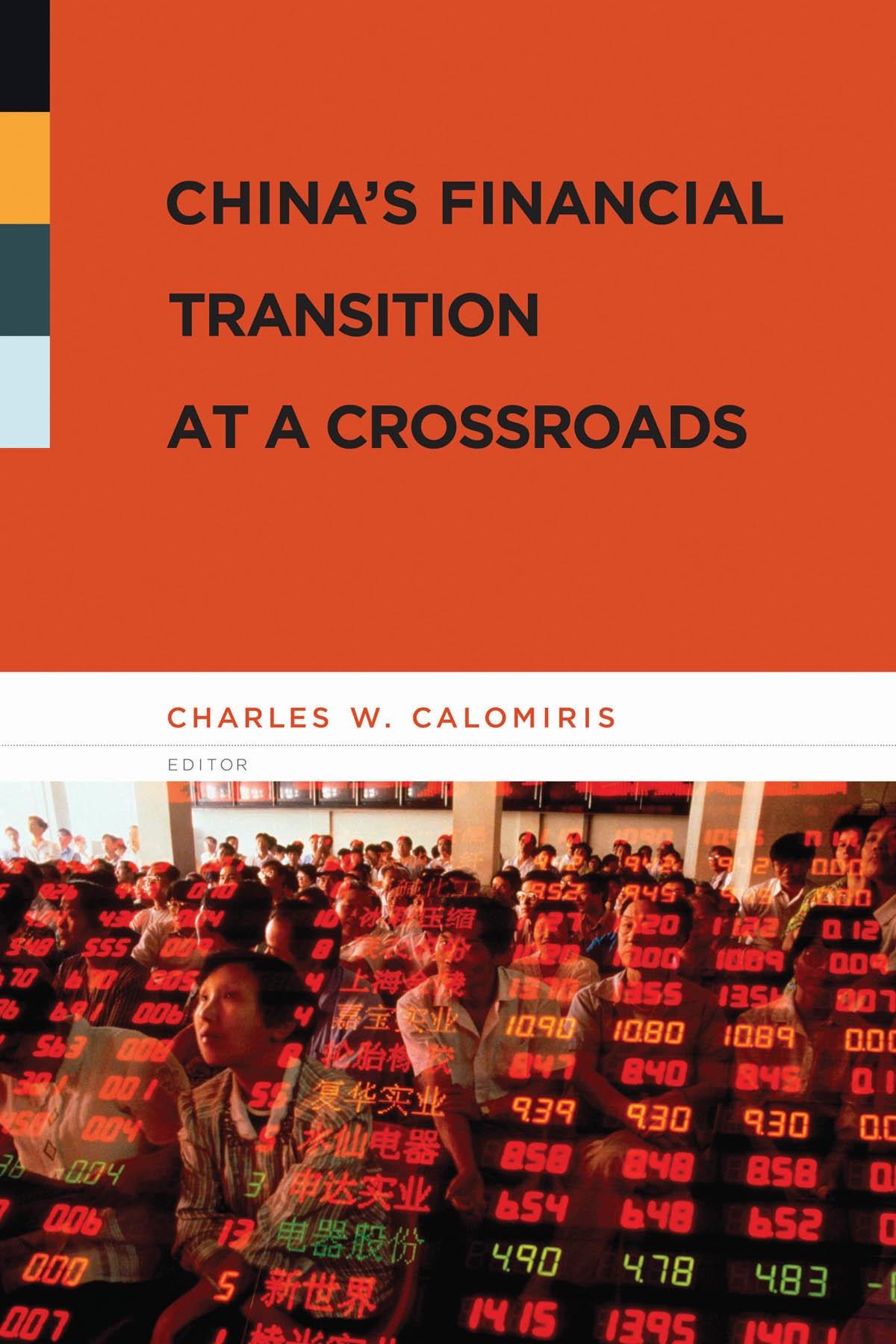
China's increasing role in global economic affairs has placed the country at a crossroads: how many and what types of international capital-market transactions will China permit? How will China's financial system change internally? What kind of relationships will the Chinese government develop with foreign financial institutions, especially with those based in the United States? Can China broker a sustainable partnership with America that will avoid sending economic shock waves throughout the world?
Drawing on the contemporary research of prominent international scholars, the experts in this volume outline the trajectory of China's financial markets since the advent of reform and anticipate their uncertain future. Chapter authors and commentators include Geert Bekaert, Loren Brandt, Lee Branstetter, Mary Wadsworth Darby, Michael DeStefano, Barry Eichengreen, Campbell Harvey, Fred Hu, Xiaobo Lu, Christian Lundblad, Ailsa Roell, Daniel Rosen, Shang-Jin Wei, Jialin Yu, and Xiaodong Zhu.
The book begins with an overview of the history of financial-sector development, regulation, and performance and then focuses on the banking sector, discussing the progress, challenges, and prospects of current sector reform. Subsequent chapters describe the role of foreign capital in China's development and analyze the changes in capital flows and controls over time; explore various explanations for China's composition of foreign-capital and foreign-exchange policies, particularly the factors shaping China's reliance on foreign direct investment; and provide an international, comparative perspective on the remarkable growth experience of China and the contribution of its institutional environment to that experience.
Contributors dispute the belief that stock market listing has done little to reform state-owned enterprises and take a hard look at the exchange rate regime choice for China, considering the potential long-run desirability of flexibility and the appropriate sequencing of reforms in foreign-exchange policy, domestic banking reform, and capital-market openness. The book concludes with a roundtable discussion in which prominent economists, including Peter Garber, Robert Hodrick, John Makin, David Malpass, Frederic Mishkin, and Eswar Prasad, debate the pace of the appreciation of China's currency and the likely consequences of that policy within and outside of China.
Zahle einfach mit Karte, Klarna, Apple Pay oder Google Pay. Nicht zufrieden? Du hast immer ein 14-tägiges Widerrufsrecht. Lies mehr in unseren AGB. Hast du Fragen, schreib uns eine E-Mail an hello@memmo.org.
Memmo macht das Lernen einfacher – wo auch immer du bist. Bei uns findest du deine Kursbücher und smarte Lerntools an einem Ort: Zusammenfassungen, Quizzes, Podcasts und Lernkarten. Und Ted, dein Lernbuddy, beantwortet alles, was du wissen möchtest. Über 50.000 Studierende lernen bereits hier – gemacht, damit du schneller lernst und weniger Stress hast.