
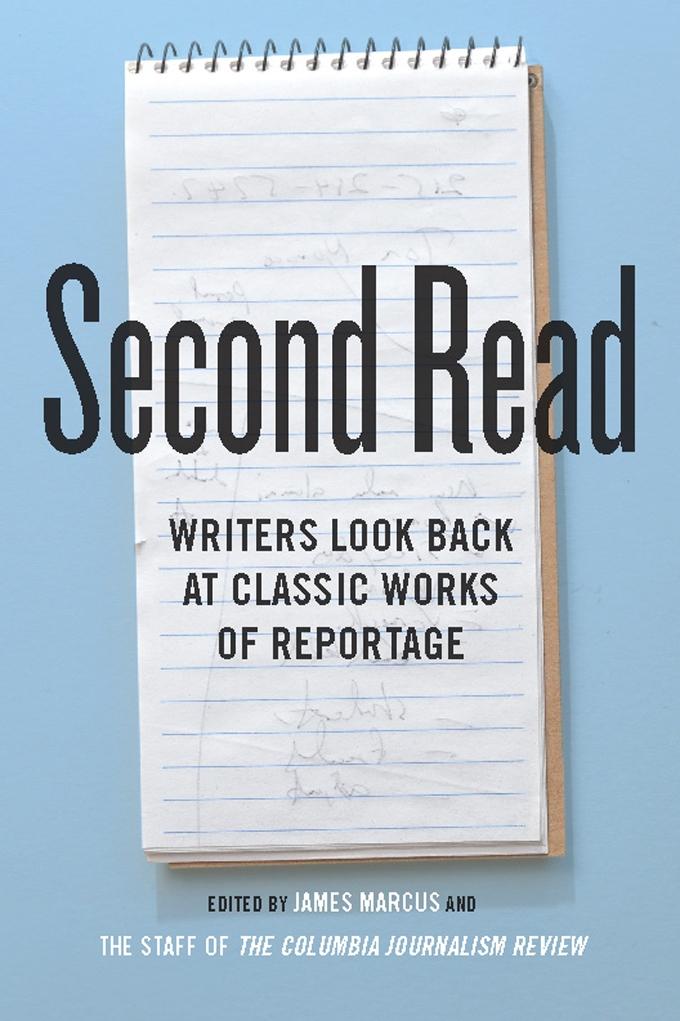
The Columbia Journalism Review's Second Read series features distinguished journalists revisiting key works of reportage. Launched in 2004 by John Palattella, who was then editor of the magazine's book section, the series also allows authors address such ongoing concerns as the conflict between narrative flair and accurate reporting, the legacy of New Journalism, the need for reporters to question their political assumptions, the limitations of participatory journalism, and the temptation to substitute "truthiness" for hard, challenging fact. Representing a wide range of views, Second Read embodies the diversity and dynamism of contemporary nonfiction while offering fresh perspectives on works by Norman Mailer, Tom Wolfe, Rachel Carson, and Gabriel García Márquez, among others. It also highlights pivotal moments and movements in journalism as well as the innovations of award-winning writers.
Essays include Rick Perlstein on Paul Cowan's The Tribes of America; Nicholson Baker on Daniel Defoe's A Journal of the Plague Year; Dale Maharidge on James Agee's Let Us Now Praise Famous Men; Marla Cone on Rachel Carson's Silent Spring; Ben Yagoda on Walter Bernstein's Keep Your Head Down; Ted Conover on Stanley Booth's The True Adventures of the Rolling Stones; Jack Shafer on Tom Wolfe's The Electric Kool-Aid Acid Test; Connie Schultz on Michael Herr's Dispatches; Michael Shapiro on Cornelius Ryan's The Longest Day; Douglas McCollam on John McPhee's Annals of the Former World; Tom Piazza on Norman Mailer's Armies of the Night; Thomas Mallon on William Manchester's The Death of a President; Miles Corwin on Gabriel García Márquez's The Story of a Shipwrecked Sailor; David Ulin on Joan Didion's Slouching Toward Bethlehem; and Claire Dederer on Betty MacDonald's Anybody Can Do Anything.
Zahle einfach mit Karte, Klarna, Apple Pay oder Google Pay. Nicht zufrieden? Du hast immer ein 14-tägiges Widerrufsrecht. Lies mehr in unseren AGB. Hast du Fragen, schreib uns eine E-Mail an hello@memmo.org.
Memmo macht das Lernen einfacher – wo auch immer du bist. Bei uns findest du deine Kursbücher und smarte Lerntools an einem Ort: Zusammenfassungen, Quizzes, Podcasts und Lernkarten. Und Ted, dein Lernbuddy, beantwortet alles, was du wissen möchtest. Über 50.000 Studierende lernen bereits hier – gemacht, damit du schneller lernst und weniger Stress hast.