
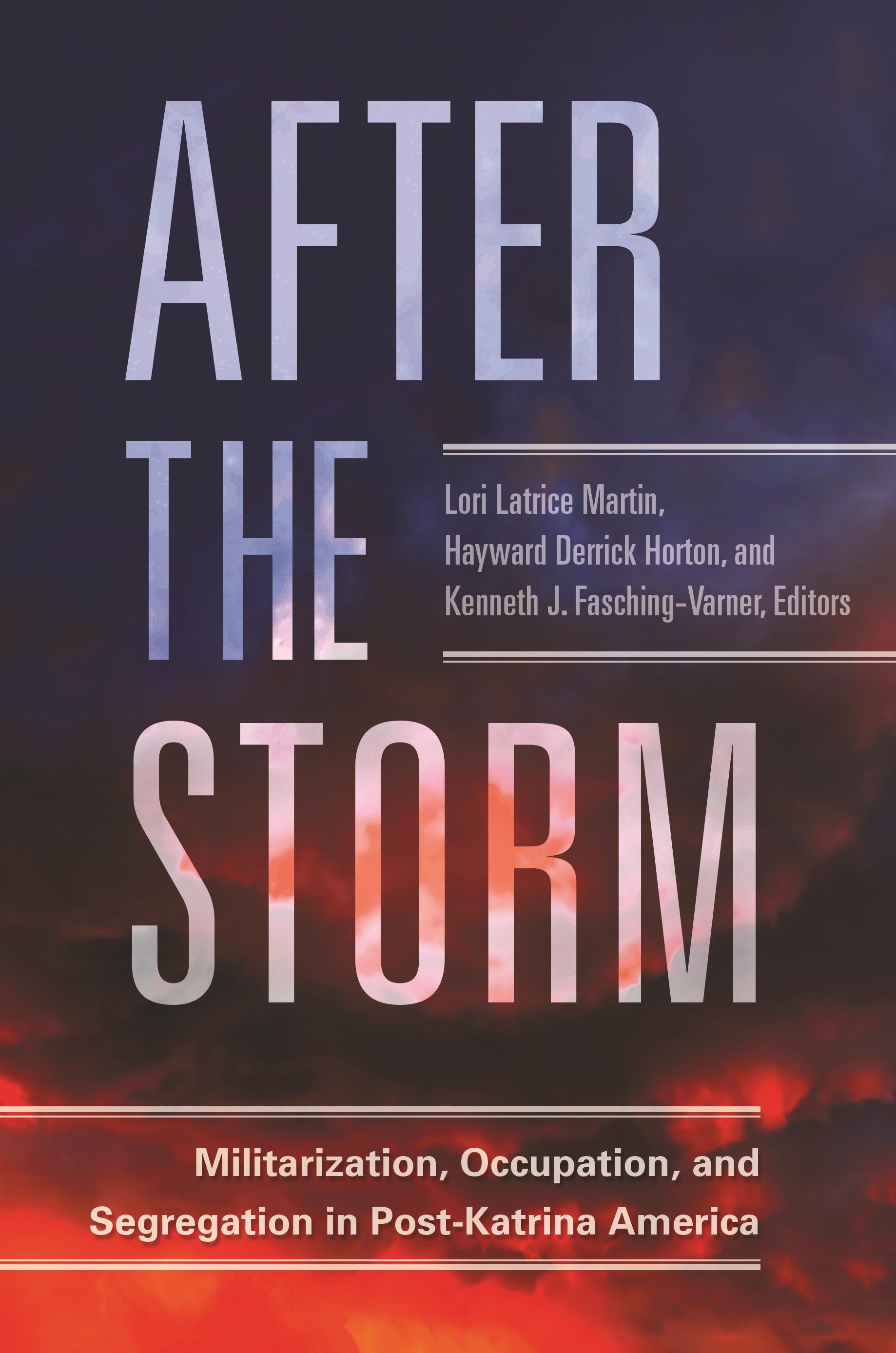
This book examines the state of race relations in America 10 years after one of the worst natural disasters in American history, Hurricane Katrina, and looks at the socioeconomic consequences of decades of public and private practices brought to light by the storm in cities throughout the Gulf Coast as well as in America more broadly.
More than a decade ago, Hurricane Katrina served to expose a well-engineered system of oppression, one which continues to privilege some groups and disadvantage others. In the wake of the natural disaster that hit New Orleans, it became clear that institutions such as residential segregation, mass incarceration and unemployment, police brutality, political disenfranchisement, racial profiling, gentrification, community occupation, discrimination, and a prison-to-school pipeline are expressly intended to work against people of color and individuals from economically disadvantaged backgrounds. Unfortunately, very little has improved in the lives of people living in majority-minority communities since Katrina.
After the Storm uses Hurricane Katrina and the aftermath of the natural disaster as a point of departure for understanding enduring racial divides in asset ownership, academic achievement, educational attainment, and mass incarceration in New Orleans and beyond. The book explores the many specific aspects of the widespread problem and considers how to move toward achieving a state where all can thrive. Readers will better appreciate the key roles of race, inequality, education, occupation, and militarization in understanding the failures in the responses to this disaster and grasp how institutionalized inequity continues to plague our nation.
More than a decade ago, Hurricane Katrina served to expose a well-engineered system of oppression, one which continues to privilege some groups and disadvantage others. In the wake of the natural disaster that hit New Orleans, it became clear that institutions such as residential segregation, mass incarceration and unemployment, police brutality, political disenfranchisement, racial profiling, gentrification, community occupation, discrimination, and a prison-to-school pipeline are expressly intended to work against people of color and individuals from economically disadvantaged backgrounds. Unfortunately, very little has improved in the lives of people living in majority-minority communities since Katrina.
After the Storm uses Hurricane Katrina and the aftermath of the natural disaster as a point of departure for understanding enduring racial divides in asset ownership, academic achievement, educational attainment, and mass incarceration in New Orleans and beyond. The book explores the many specific aspects of the widespread problem and considers how to move toward achieving a state where all can thrive. Readers will better appreciate the key roles of race, inequality, education, occupation, and militarization in understanding the failures in the responses to this disaster and grasp how institutionalized inequity continues to plague our nation.
Betal nemt med kort, Klarna, Apple Pay eller Google Pay. Ikke tilfreds? Du har altid 14 dages fortrydelsesret. Læs mere i vores vilkår. Har du spørgsmål, så send os en mail på hello@memmo.org.
Memmo gør det nemmere at studere – uanset hvor du er i verden. Hos os samler du dine kursusbøger og smarte studieværktøjer ét sted: resuméer, quizzer, podcasts og flashcards. Og så er der Ted, din studieven, der svarer på alt, du undrer dig over. Over 50 000 studerende studerer allerede her – bygget til at hjælpe dig med at lære hurtigere og stresse mindre.