
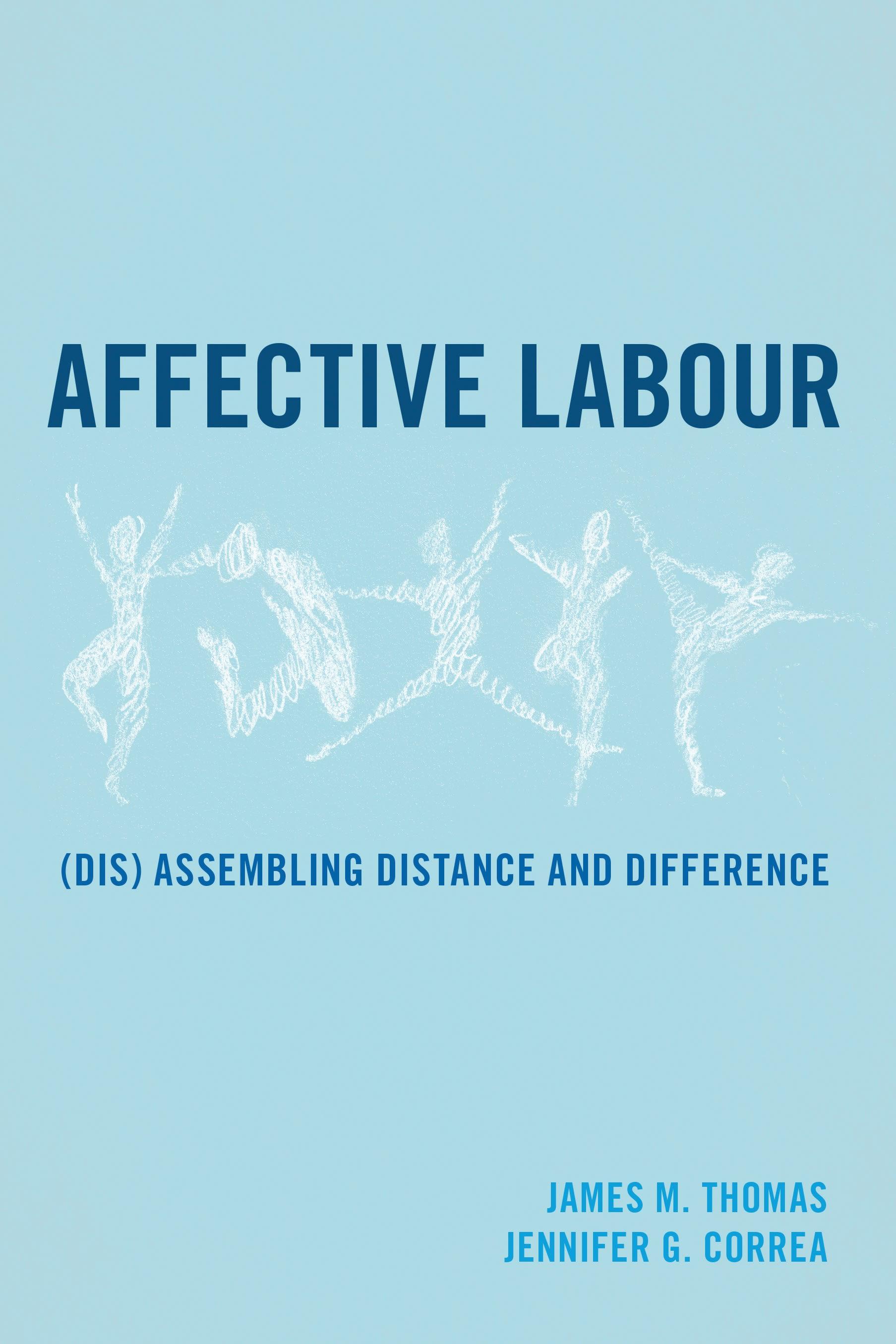
Affective Labour explores four distinct landscapes in order to demonstrate how collective feelings are organized by social actors in order to both reproduce and contest hegemony. Utilizing a variety of methods, including participant observation, in-depth interviews across field sites, and content analysis of mass media, Correa and Thomas demonstrate the centrality of affective labor in enabling and constraining prevailing norms and practices of race, citizenship, class, gender, and sexuality across multiple spatial contexts: the U.S.- Mexico border, urban nightlife districts, American college campuses, and emergent social movements against the police state.
The book demonstrates how the power of affective labour might be harnessed for progressively oriented world-building projects, including what the authors term an ‘affective labour from below.’ By tying an analysis of affective labour into movements for social justice, the authors aim to produce a critical theory of the world that can be practically applied.
The book demonstrates how the power of affective labour might be harnessed for progressively oriented world-building projects, including what the authors term an ‘affective labour from below.’ By tying an analysis of affective labour into movements for social justice, the authors aim to produce a critical theory of the world that can be practically applied.
Betal nemt med kort, Klarna, Apple Pay eller Google Pay. Ikke tilfreds? Du har altid 14 dages fortrydelsesret. Læs mere i vores vilkår. Har du spørgsmål, så send os en mail på hello@memmo.org.
Memmo gør det nemmere at studere – uanset hvor du er i verden. Hos os samler du dine kursusbøger og smarte studieværktøjer ét sted: resuméer, quizzer, podcasts og flashcards. Og så er der Ted, din studieven, der svarer på alt, du undrer dig over. Over 50 000 studerende studerer allerede her – bygget til at hjælpe dig med at lære hurtigere og stresse mindre.